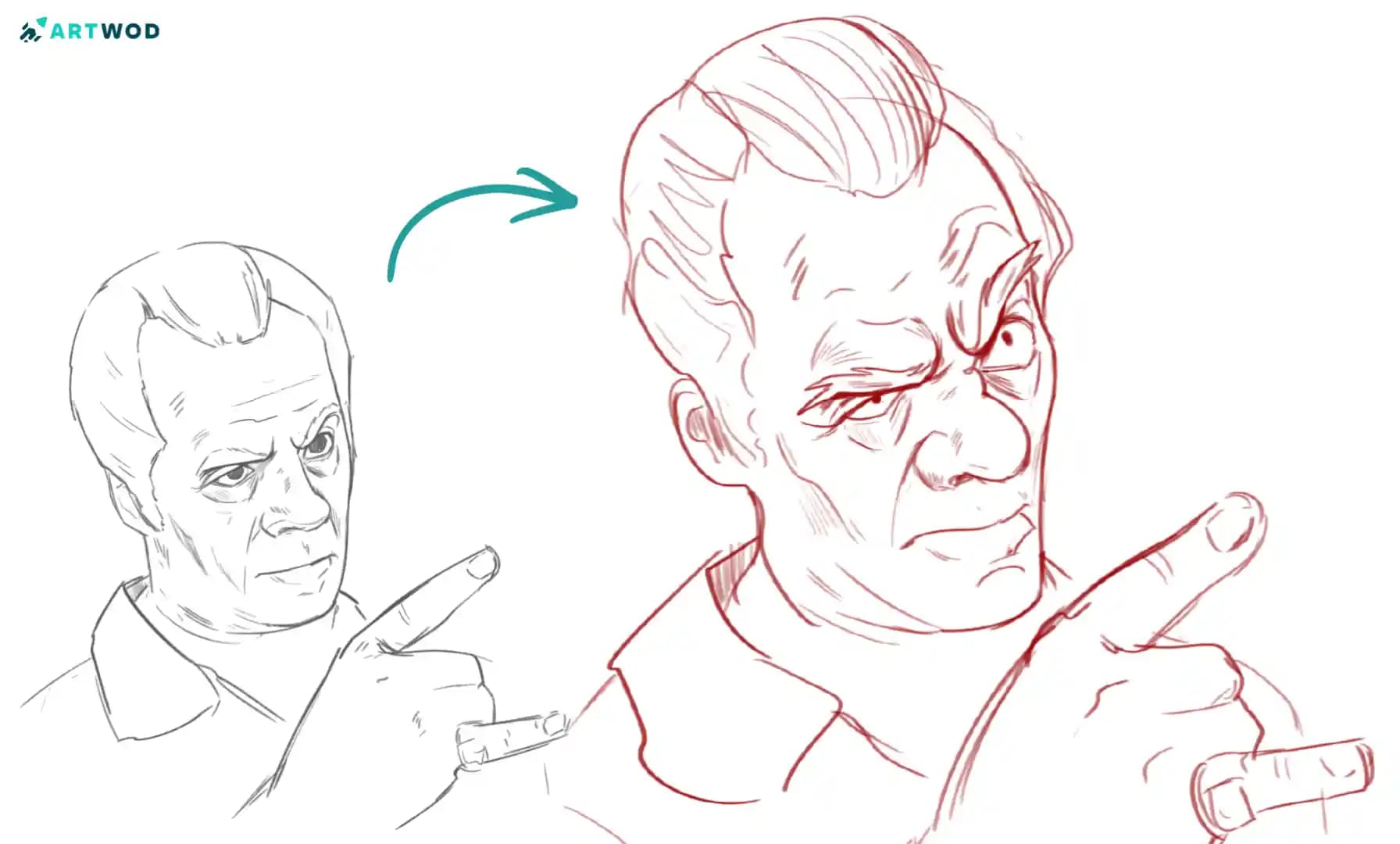
Why Portrait Drawings Fail to Capture Likeness
Why Your Portrait Drawings Don't Look Like the Person
You finish a portrait and something doesn't look right. The eyes are in the right place. The nose looks like their nose. You give up and trace the photo. But it still doesn't look like the person. How is this possible?! And what to do?!
Why Likeness Is Difficult in Portrait Art
The most common mistake artists make is chasing detail before nailing structure. You spend an hour on the texture of the iris and miss the fact that the eyes are half a centimetre too far apart. No amount of detail compensates for a structural error - it just makes the wrong thing look more polished.
Portrait likeness lives in the relationships between features, not in the features themselves. The distance between the eyes. The ratio of the nose length to the face height. The width of the mouth relative to the eyes. These proportional relationships are what your brain reads when it recognises a face. Get them wrong and the portrait will never look like the person, no matter how beautifully rendered.
Common Observation Mistakes Artists Make
Most likeness problems start with how you look, not how you draw.
The brain is aggressively lazy when it comes to faces. It substitutes generic symbols - "an eye", "a nose", "a mouth" - for the specific information in front of you. You think you're drawing what you see, but you're actually drawing what you know a face looks like. The result is a portrait that looks like a person, not this person.
The fix is to stop drawing features and start drawing shapes and distances. Don't draw an eye - draw the specific shape of this shadow, this highlight, this lid. Don't draw a nose - measure how far it sits from the corner of the eye. Force your brain out of symbol mode and into observation mode.
Understanding Facial Landmarks
Facial landmarks are the anchor points that structure the face - the brow ridge, the base of the nose, the corners of the mouth, the cheekbones, the hairline. Before you draw a single detail, these landmarks need to be correctly placed relative to each other.
Use the classic proportional guides as a starting point: eyes sit roughly halfway down the skull, not halfway down the face. The base of the nose sits roughly halfway between the eyes and the chin. The mouth sits roughly one third of the way between the nose and the chin. These aren't rules - they're a framework to measure against. Every face deviates from them in specific ways, and those deviations are where individuality lives.
Study your subject's landmarks before you draw anything. Where does their brow sit relative to their eyes? How high is their hairline? How wide is their jaw at the widest point? These measurements are the skeleton of the likeness.
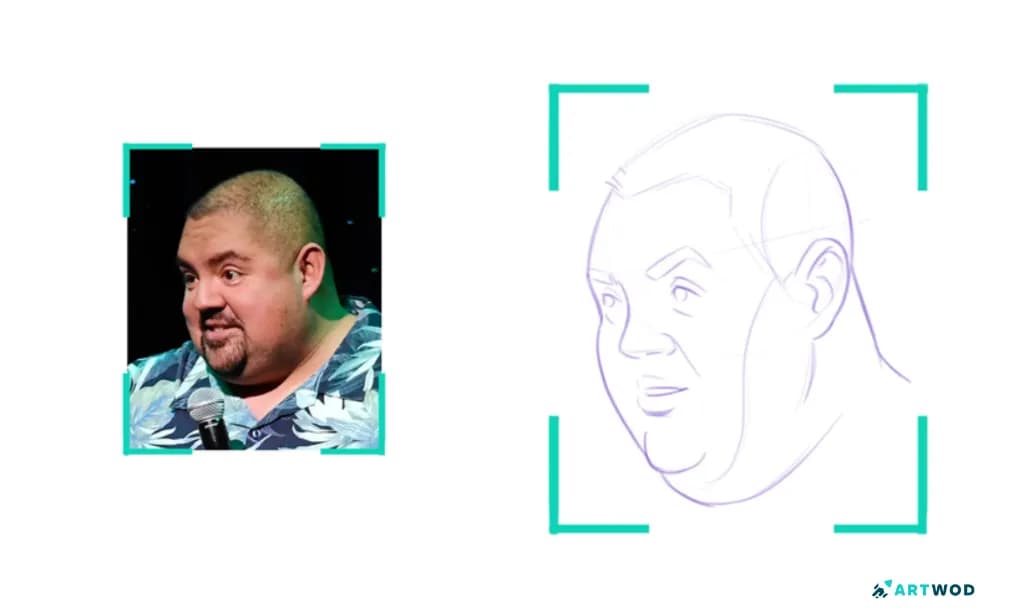
Art Workout from the Artwod Portrait Road
Eye, Nose, and Mouth Placement Issues
Even when artists know the proportional guidelines, placement errors are the most common source of likeness failure.
Eyes placed too low on the skull is the most frequent mistake - it makes the forehead look too short and the face too small. Noses drawn too narrow lose the specific width that defines a person's face. Mouths placed too close to the nose compress the lower face and destroy the character of the chin.
The solution is to measure constantly and compare. Before committing to any feature's placement, ask: how many eye-widths apart are the eyes? How many nose-lengths from brow to chin? Use your pencil as a measuring tool. Proportion errors are almost always visible before you've finished drawing - catch them early.
Head Shape Construction Errors
The head shape is the foundation everything else sits on - and it's the thing most artists rush past.
A slightly wrong head shape will throw off every feature placement, even if you measure them correctly relative to each other. The cranium is larger than most people draw it. The face is a smaller portion of the skull than it appears. The jaw angle varies dramatically between people and is one of the most recognisable aspects of a face.
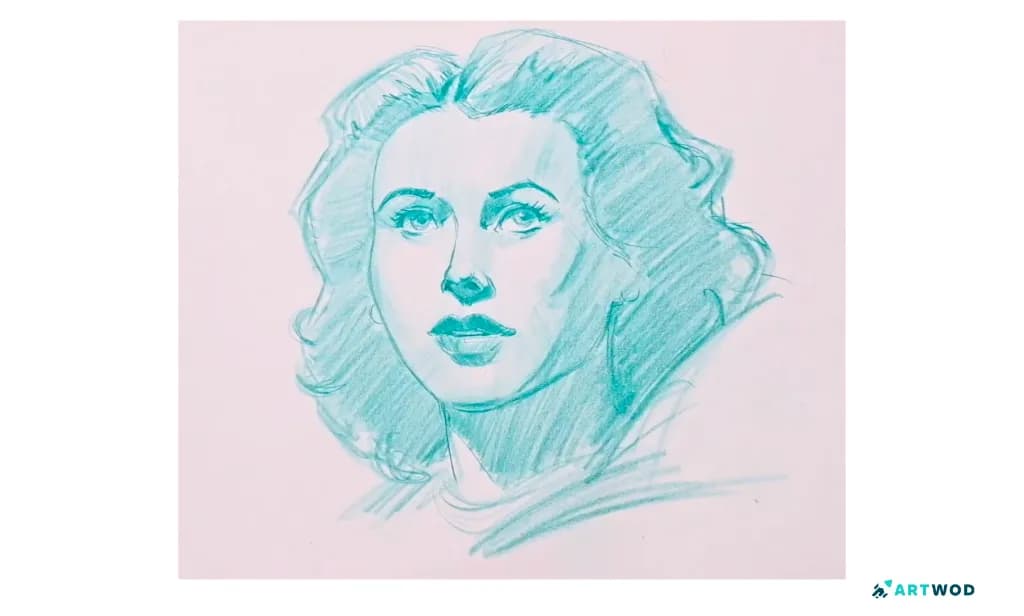
Blue pencil portrait drawing by Antonio Stappaerts
Why Copying Details Doesn't Create Likeness
This is the trap that catches almost every developing portrait artist.
You zoom in on the reference, copy every eyelash, every pore, every reflected highlight - and the portrait still doesn't look like the person. That's because likeness is a macro quality. It's read at a distance, before any detail registers. If the structural proportions are wrong, adding detail makes the portrait more convincing as a portrait, but not more convincing as this specific person.
Value and Lighting Influence on Likeness
Lighting has a profound effect on perceived likeness - more than most artists realise.
The same face lit from different directions reads differently. Flat, even lighting flattens the three-dimensional structure of the face and makes likeness harder to achieve. Strong directional lighting - where shadows clearly define the planes of the face - makes the structural relationships between features more visible and readable.
When you're struggling with likeness, try shifting to a stronger light source in your reference. The shadows will reveal the structure of the face more clearly and give you more information to work with.
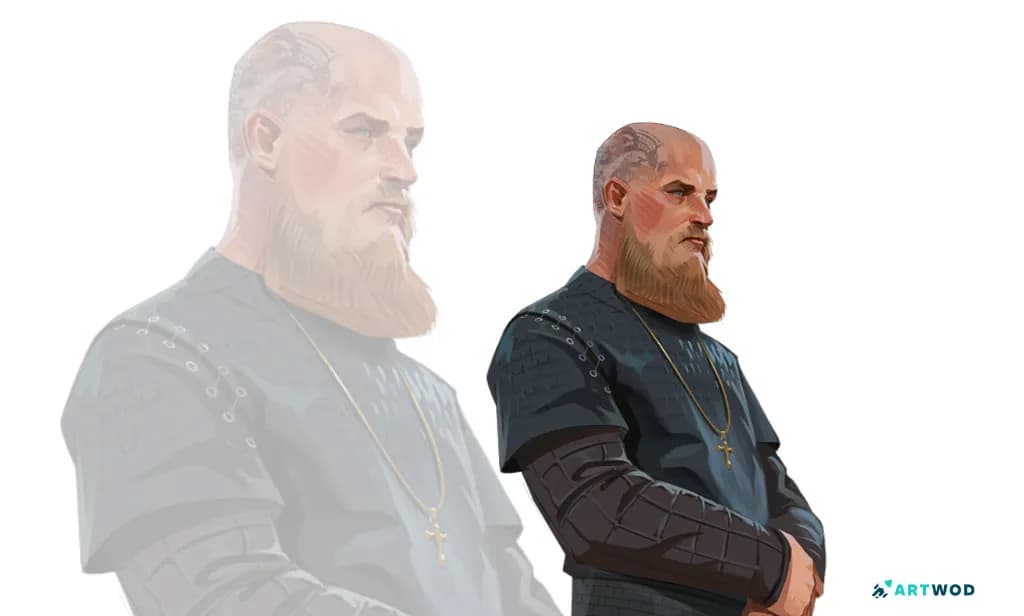
Ragnar Portrait by Antonio Stappaerts, digital 2d art
Improving Facial Structure Accuracy
Likeness problems are notoriously hard to self-diagnose. After hours of working on a portrait, you lose the ability to see it fresh - your brain starts filling in what it expects to see rather than what's actually there.
Consistent practice with structured measurement - using the pencil as a tool, comparing distances, checking landmarks - builds the habit of accuracy over time. The more portraits you do with this level of intentional observation, the more your eye calibrates to the specific relationships that define individual faces.
Using Critique to Improve Portrait Realism
This is where outside feedback becomes invaluable. A fresh set of eyes will immediately spot the structural error you've been staring past for hours. Upload your portrait to the Artwod Feedback Tool and get structured written and visual feedback from other artists. Sometimes one observation about a proportional relationship is all it takes to unlock the likeness you've been chasing.
Consistent critique across multiple portraits will also reveal your personal pattern of errors — the specific mistakes your brain makes repeatedly. Once you know your patterns, you can pre-empt them.
Related Posts