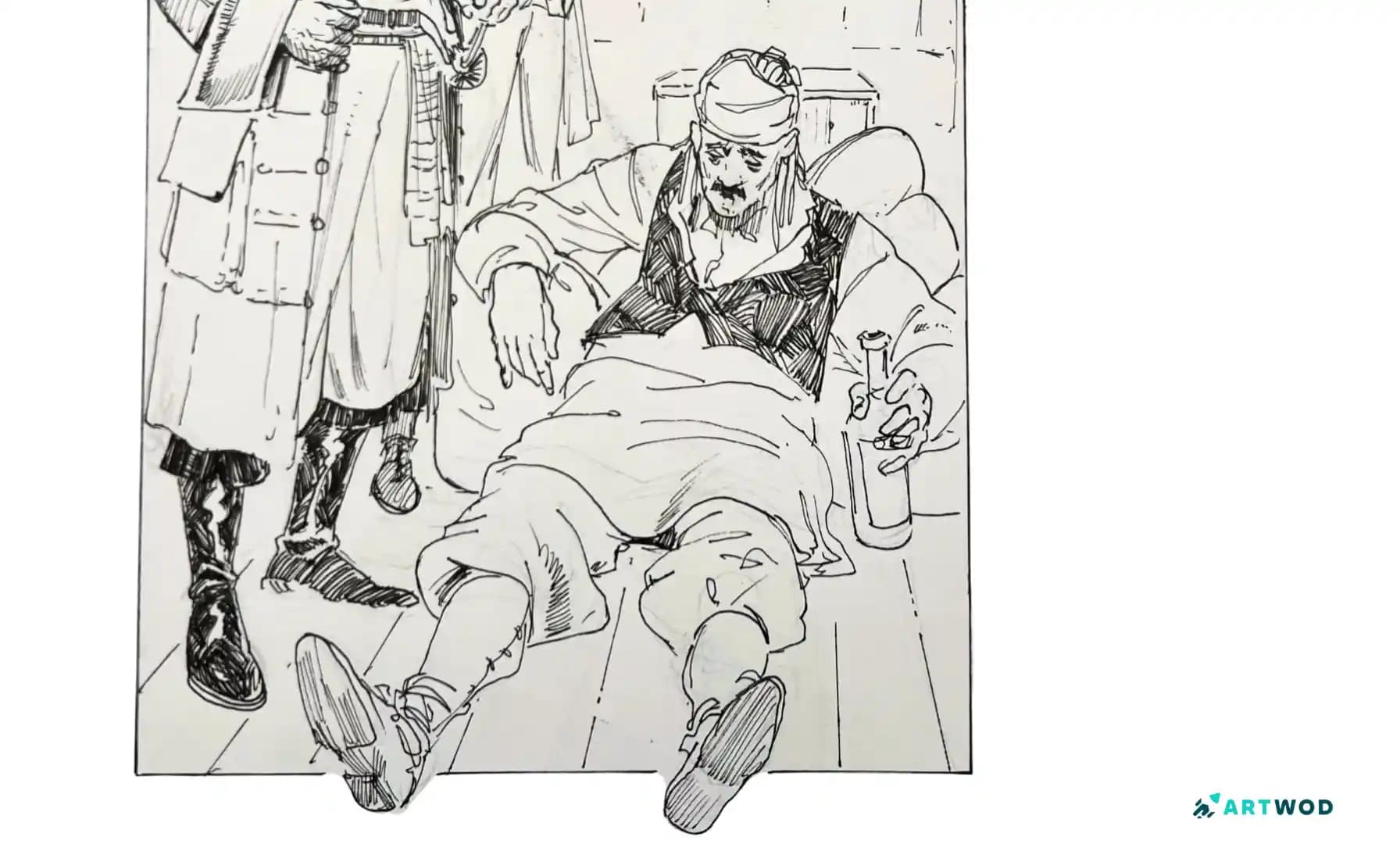
What to Do When You Feel Like Quitting Art: A Guide for Artists Who Are Struggling
What to Do When You Feel Like Quitting Art
I remember sitting in front of a canvas I'd been working on for three weeks, looking at it, and feeling nothing. Not frustration. Not disappointment. Only a flat, quiet thought: what's the point?
I didn't quit that day. But I wanted to. And if you're reading this, you probably know exactly what that feels like - the specific exhaustion of caring about something that doesn't seem to be going anywhere. The moment where the gap between what you imagine and what you can make feels too wide to cross, and some part of you wonders if you should just stop trying.
Here's what I've learned since then. Wanting to quit doesn't mean what you think it means. And knowing what to actually do about it changes everything.
Why wanting to quit doesn't mean what you think it means
The quitting impulse feels like a signal that you're not good enough. That you've hit a ceiling. That maybe you were never cut out for this.
It's almost always the opposite.
There's a specific kind of frustration that only happens when your taste outpaces your skill. When you've developed a clear enough eye to see what good work looks like, but your hands haven't caught up yet. That gap - between what you can envision and what you can currently make - is genuinely painful. But it's also proof that you have real artistic taste. You can't be frustrated by the gap if you can't see the gap. And you can't see the gap if your eye isn't already developed.
Most beginners don't feel this particular frustration because they don't yet have the taste to recognize when something is off. The fact that you do - the fact that your own work bothers you - means your eye is already ahead of your hand. That's not a reason to quit. That's a reason to keep going until your hands catch up.
Wanting to quit is almost always a sign that you care deeply, not a sign that you should stop.
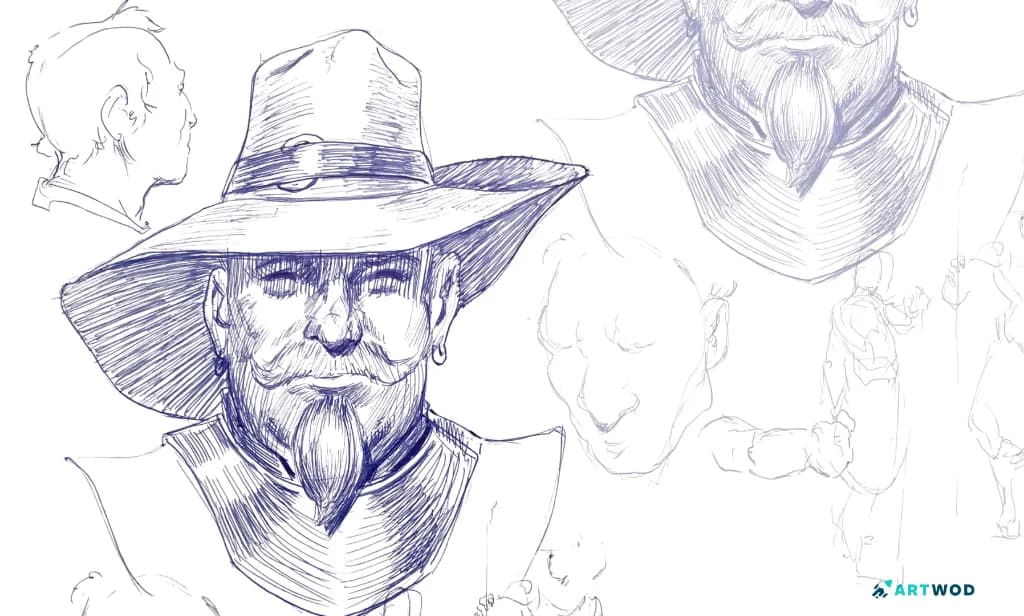
Traditional drawing by Antonio Stappaerts, man in a hat. Made with blue pen.
The different kinds of "I want to quit"
Not all quitting feelings are the same, and treating them like they are is why most advice on this topic doesn't actually help. The first thing to do when the feeling hits is to figure out which one you're actually in.
1. Creative block. You sit down to draw and nothing comes, or everything you make feels wrong. It's less "I'm done with art" and more "I can't get this to work and I don't know why." The frustration is targeted.
2. Comparison spiral is when you've been consuming other people's work - Instagram, YouTube, portfolios - and somewhere in that consumption you started measuring your own work against theirs. Now your work looks worse than it did before you started scrolling, even though nothing actually changed.
3. Existential doubt is the deepest one. It's a broader questioning of whether this is worth doing at all. Whether you have anything to contribute. Whether the time and energy you're putting in will ever add up to something.
Each of these has a different root. Which means each of them needs a different response.
What to actually do - matched to what you're actually feeling
If it's creative block, lower the stakes completely. Stop trying to make good work and try to make bad work instead. Open a sketchbook with no goal. Draw ugly things. Switch to a medium you don't normally use. The block is almost always a pressure problem - the expectation that what you make needs to be worth something. Remove the expectation and the block usually dissolves.
If it's a comparison spiral, curate your inputs ruthlessly. Who you follow online shapes how you feel about your own work in ways you don't fully register while it's happening. If looking at someone's work consistently makes you feel worse about your own, unfollow them. Not because their work isn't good - it probably is. But your mental environment is something you're allowed to design. Fill it with work that inspires rather than deflates.
If it's existential doubt, go back to why you started. Not the career reasons, not the goals you set, not what you hoped art would do for your life. The original reason. The thing that made you pick up a pencil before anyone was watching. Before there was an audience or a portfolio or a comparison to be made. That reason is still there. Sometimes you just need to remember it exists.
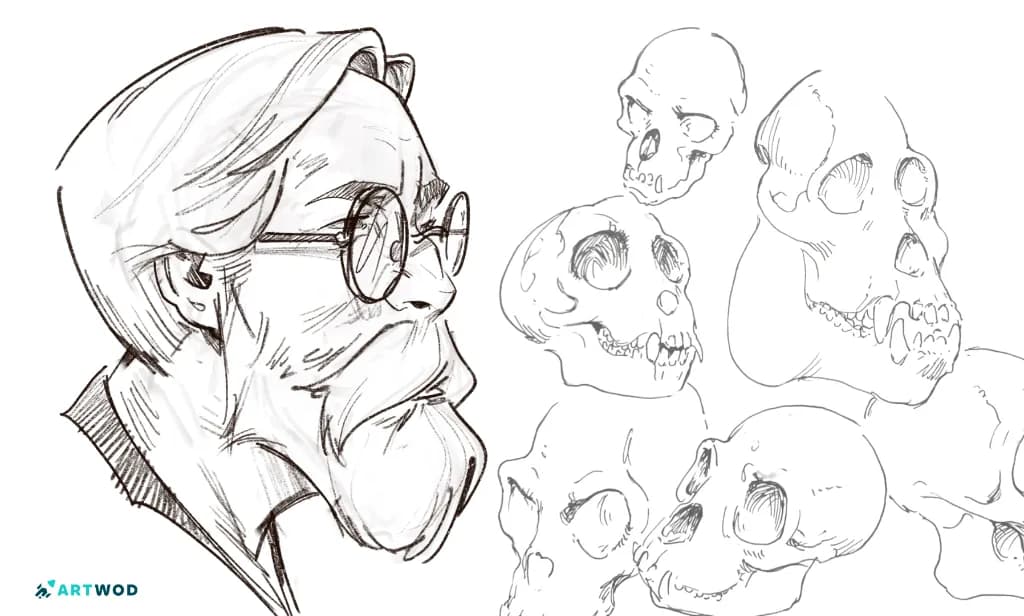
Drawings by Antonio Stappaerts, an old man in glasses and a collection od monkey skulls. Drawn in black pen.
The thing nobody tells you about the artists who didn't quit
They all wanted to. At some point, every artist whose work you admire sat with the same feeling you're sitting with right now. The canvas that didn't work. The year where nothing improved. The morning where they opened the sketchbook and couldn't make themselves start.
The difference between them and the artists who stopped isn't talent. It isn't some special reserve of motivation or resilience. It's that they stayed anyway. Not heroically, but quietly, stubbornly, imperfectly. They showed up again the next day and made something bad, and then the day after that, and eventually something shifted.
You don't hear about this part because finished work doesn't come with a record of all the sessions that almost didn't happen. The portfolio looks clean. The career arc looks intentional. But behind almost every artist you admire is a version of the exact feeling you're having right now - and a choice to continue anyway.
One practical thing to do right now
Don't try to fix everything at once. Don't make a plan, set new goals, or restructure your practice. Just do one small thing.
Open a sketchbook. Draw one object. Set a 10-minute timer and draw some boxes with no goal beyond filling the time. Let that be enough for today.
The return to art after a difficult period rarely looks like a triumphant comeback. It usually looks like a quiet Tuesday where you sat down and made something small, and it felt slightly less terrible than you expected. That's it. That's the whole thing. Start there.
And if part of what makes this hard is feeling like you're doing it alone - like nobody around you understands what this kind of struggle feels like - the Artwod Community Hub is worth knowing about. It's a space where artists at every level share work, give and receive real feedback, and exist alongside each other in the messy middle of the practice. Sometimes the thing that keeps you going isn't a technique or a tip. It's just knowing other people are going through it too.
Wanting to quit is part of the journey. Not a detour from it - part of it. The doubt, the frustration, the flat Tuesday where nothing feels worth it - these aren't signs that you chose the wrong path. They're signs that you care enough about the destination to feel the distance.
The fact that you're reading this means you haven't quit yet. That counts for more than you think.