Cute Happy Anime Expression Drawing: Make Smiles More Expressive
Cute Happy Anime Expression Drawing: Refine Shape and Expression
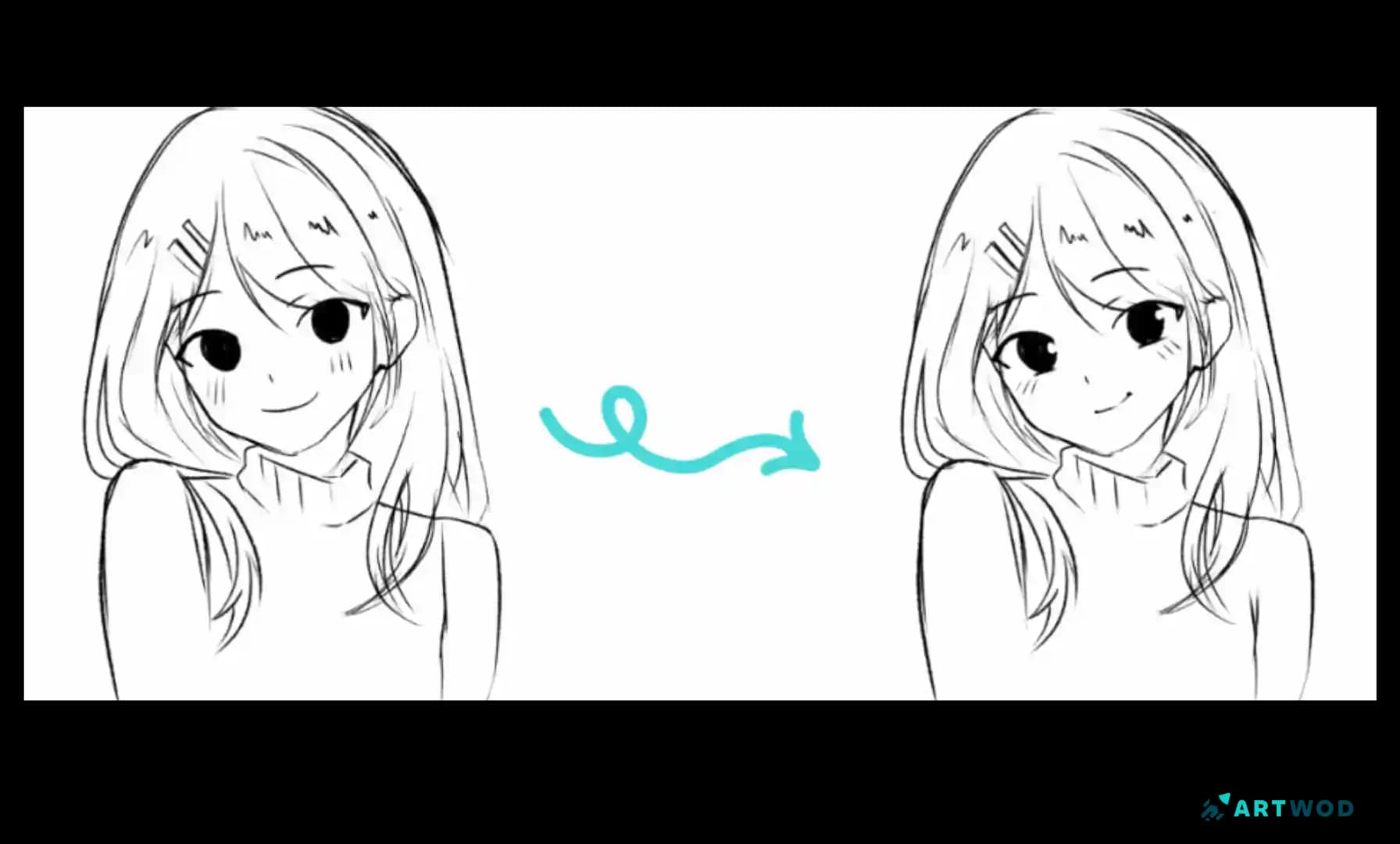
Artist @kezia shared a quick anime character drawing on the Artwod Community while practicing a cute, happy expression. The artist felt the face still looked like a normal expression with a smile simply added on top, and wanted help with facial anatomy and shape language. The paintover shows how a few small changes can make the expression feel noticeably more cheerful and cute.
Insights shared in this blog post are by: @gabrielle34427. You can also request feedback on your artwork in Artwod’s Art Community.
The Feedback Request: Making a Happy Anime Face Feel Cuter
In the Artwod submission, @kezia explained:
"I’m trying to draw a happy anime character, but the expression still looks like a normal face with a smile added. I feel like my facial anatomy and shape language need some work. Using a procreate, what should I practice to make the expression look cuter and more clearly happy?"
That is a useful distinction.
The character already has a smile, large eyes, rounded hair shapes, and a generally pleasant expression. But the artist is noticing that simply changing the mouth does not necessarily change the whole emotional design of the face.
The key question is therefore not just, "How do I draw a smile?"
It is:
How can the eyes, mouth, facial shapes, and small details work together so the entire face feels happy?
That is where shape language becomes particularly useful.
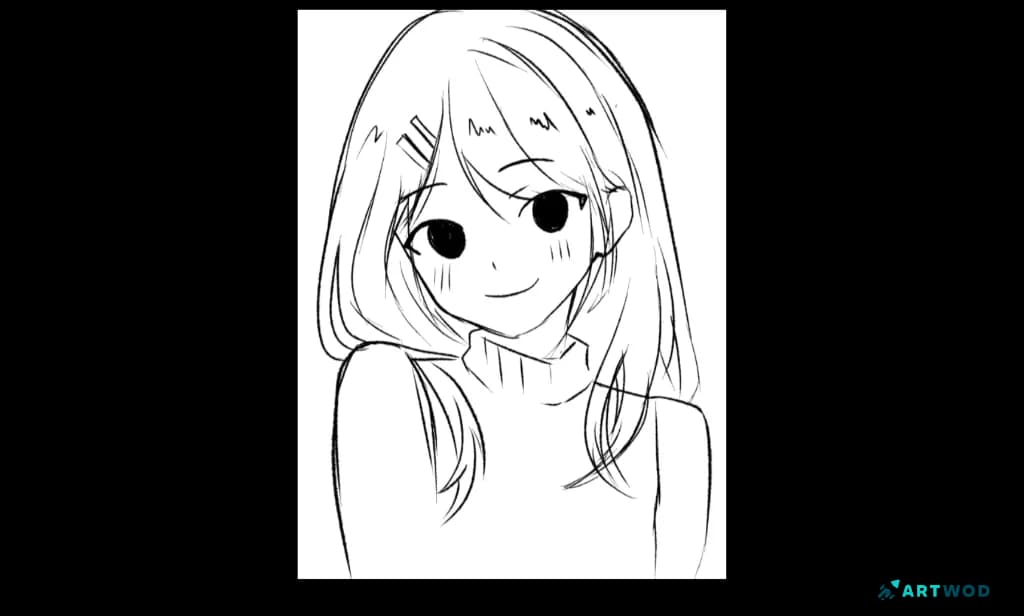
Anime character drawing with large dark eyes, a small smile, short bangs, and rounded hair shapes
Start With the Whole Expression, Not Just the Smile
When a happy anime face looks like a normal face with a smile added, the mouth may be doing all the emotional work.
A stronger approach is to let several features participate in the expression.
For a cute, happy anime character, consider:
The overall shape and openness of the eyes
The position and curve of the eyebrows
The shape of the mouth
The softness or roundness of the facial contours
Small cheek or blush accents
Highlights that make the eyes feel more lively
None of these elements needs to be extreme on its own. The important part is that they point toward the same emotional idea.
This makes the expression feel designed rather than simply modified.
Eyebrows can dictate how an expression reads, we can see this with this anime Artwod’s feedback submission, “I want this sketch to look cheerful, but why does it look angry?”
User @salyya asks:
I’m practicing trying to sketch anime expressions but the eyebrows never seem to sit properly on the face. they make the character look angry when they aren't supposed to. My facial proportions and shape language are off. Using markers, any feedback?
From the paintover slide, we can see the problem, these down turned eyebrows can look like a furrowed brow.
We can use this factor in our favor, by using the eyebrows, in combination with to make an expression feel more happy.
Use Shape Language to Make the Face Feel Cute
@kezia specifically mentioned shape language, and that is one of the most useful areas to practice here.
Shape language is essentially the visual personality created by repeated shapes.
Rounded, soft shapes can contribute to a cute and approachable appearance. Sharper or more angular shapes can communicate a different character or mood.
Look at the face as a collection of shapes rather than only anatomical features:
Rounded cheeks can soften the character.
Large, rounded eyes can create a more youthful or cute impression.
A small curved mouth can keep the expression gentle.
Soft hair shapes can reinforce the overall feeling.
Small curved marks can support the cheerful mood.
The important thing is consistency. If most of the character uses soft, rounded shapes, introducing an unnecessarily rigid or angular feature can make the expression feel less cohesive.
Make the Eyes Participate in the Happiness
The original drawing already has large, dark anime eyes. The paintover adds brighter highlights inside them, which makes the eyes feel more lively.
That is a small adjustment, but it matters because the eyes are one of the strongest emotional features in an anime face. Additionally, adding smile lines to the eyes can help express happiness. This is because, when we smile our eyes wrinkle, and without it a smile can be read as disingenuous or uncanny. This addition to eye highlights makes the smile feel more genuine.
When practicing happy expressions, try experimenting with:
Eye openness — compare relaxed, wide, and slightly narrowed eyes.
Pupil placement — make sure the gaze feels intentional.
Highlights — use a small highlight to bring more life into the eyes.
Upper eyelid shape — subtle changes can alter the character's emotional energy.
You do not always need dramatically different anatomy. Sometimes a small change in the eyes is enough to make a familiar face feel more animated.
One example from this Artwod feedback submission where the subject is at their birthday party shows how you can do minor adjustments to make someone look happy. Pushing the eyes up with a curved line, giving a little squint makes this subject look very cheerful.
Give the Smile Support From the Rest of the Face
The artist's concern that the drawing looks like a normal face with a smile added is particularly relevant to the mouth.
A smile works better when the surrounding face supports it.
For a cute happy expression, consider how the smile interacts with the cheeks and eyes. A small curved mouth can remain subtle while the rest of the face communicates warmth and happiness.
The paintover keeps the overall expression relatively simple while making small changes that help the face feel more lively.
This is a good reminder that cute does not have to mean exaggerated.
A restrained expression can still feel cheerful if the shapes around it are working together.
Add Small Details After the Main Expression Works
The paintover introduces brighter eye highlights and additional cheek marks. These are supporting details rather than the foundation of the expression.
That order is worth remembering.
First, make the face readable using the major shapes. Then use small details to push the emotion further.
A useful workflow is:
Draw the basic head and facial proportions.
Establish the eyes and mouth.
Check whether the character already looks happy.
Adjust the shape language if the expression still feels too neutral.
Add eye highlights, blush, or other small accents.
Compare the result with the original expression.
This keeps you from relying on decorative details to solve a structural problem.
Another example within this artword submission featuring multiple subjects with one girl smiling we can see great examples of subtle tells for emotions such as the smile lines and raised eyebrows.
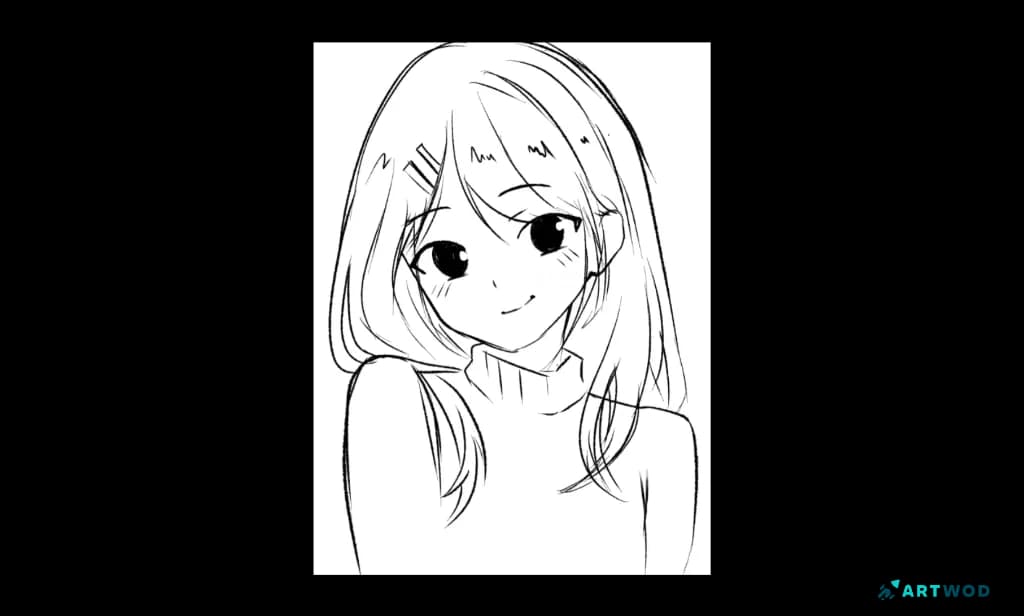
Anime expression paintover showing brighter eye highlights, softer facial accents, and a more refined smile
A Simple Practice Exercise for Cute Happy Expressions
Try drawing the same anime face four times. For me personally, seeing how other people show emotions can be helpful in figuring out how to show certain emotions in an anime artstyle. A great way to put this in to practice is using the practice section on Artwod!
Version 1: Neutral
Keep the eyes, mouth, and cheeks relaxed.
Version 2: Slightly happy
Add a small smile and subtle changes around the eyes.
Version 3: Clearly happy
Push the smile and eye expression further.
Version 4: Cute and happy
Keep the strongest elements from Version 3, then refine the shape language by making the major facial shapes more cohesive.
Compare all four drawings side by side.
Ask yourself:
Which version reads as happy immediately?
Which version feels the cutest?
Which changes actually created that difference?
Did the emotion come from one feature or several working together?
This is a much more useful exercise than repeatedly drawing the same smile because it forces us to focus on subtle changes that show the intensity of an emotion.
Common Mistakes When Drawing Cute Happy Anime Expressions
A few habits can make a happy expression feel less convincing:
Adding a smile without changing anything else
Making the eyes emotionally neutral
Using details to compensate for weak facial structure
Mixing very different shape languages across the face
Adding blush or highlights before checking the main expression
Making every feature equally exaggerated
If the face still looks neutral, step back from the details and look at its major shapes again.
What Other Artists Can Learn From This Drawing
A smile alone does not create a happy expression. The eyes, cheeks, facial shape, and mouth should support one another.
Shape language affects emotion. Rounded and soft shapes can help reinforce a cute visual identity.
Small changes can have a large effect. Eye highlights and cheek accents can add life without requiring a complete redraw.
Cute does not require exaggeration. Subtle features can work when they are designed as a cohesive group.
Practice expressions as variations. Drawing neutral, mildly happy, and strongly happy versions makes emotional differences easier to understand.
These principles can also help when practicing other anime expressions such as excitement, embarrassment, curiosity, or surprise.
How Community Feedback Can Help With Expressive Drawing
Expression problems are often difficult to diagnose from your own drawing. You may know that a face looks "too normal" without knowing whether the problem is the mouth, eyes, proportions, or overall shape language.
That is exactly what makes @kezia's question useful: the artist clearly explains both the intended emotion and what feels wrong about the current result.
When sharing an anime expression for feedback, explaining the emotion you are trying to communicate gives fellow artists a much clearer starting point. Instead of simply asking whether the drawing looks good, you can ask whether it actually reads as cute and happy, and which features are weakening that impression.
That kind of focused feedback can give you something specific to practice in the next drawing. Via the Artwod Community you can get feedback from other artists too.
FAQs
Make the eyes, mouth, facial contours, and smaller details work together rather than relying on the smile alone. Consistent soft and rounded shapes can also reinforce a cute appearance.
Why does my anime character look normal even with a smile?The other facial features may still be communicating a neutral expression. Try adjusting the eyes, cheeks, eyebrows, and overall shape language so they support the smile.
How do you make an anime face look cuter?Use cohesive shape language, often with softer and more rounded forms, while keeping the facial features proportionally connected. Small details such as eye highlights and cheek accents can reinforce the effect.
How do you draw expressive anime eyes?Experiment with eye openness, eyelid shape, pupil placement, and highlights. The eyes should support the emotion rather than remain visually neutral.
What is shape language in anime drawing?Shape language is the visual feeling created by the shapes used throughout a character. Repeated rounded, angular, sharp, or soft forms can influence how the character's appearance and expression are perceived.
How can I practice drawing happy anime expressions?Draw the same character with neutral, slightly happy, clearly happy, and strongly cute expressions. Comparing the versions helps you identify which changes actually communicate the emotion.
@kezia's drawing shows an important lesson about expressive anime art: a happy expression is more than a smile. If the eyes, facial shapes, mouth, and small details all communicate the same feeling, the character can become noticeably cuter and more cheerful without needing an exaggerated redraw. I find that eyes are one of the most important features of the face when communicating emotion. It’s often what people look at first when analyzing an expression. It’s important to keep that in mind, and remember the mouth is not the only part of making an expression work.
If your own character looks like a normal face with a smile added, try looking at the expression as a complete design. Adjust the major shapes first, then use details such as eye highlights or cheek marks to reinforce what is already working.
And if you are unsure why an expression is not reading correctly, sharing the drawing and explaining the emotion you want to communicate can make peer feedback much more useful. The anime category under the feedback tool is the perfect place to get advice on how to improve your anime artwork!