Anime Boy Neck Drawing: Improve Neck Anatomy and Proportions
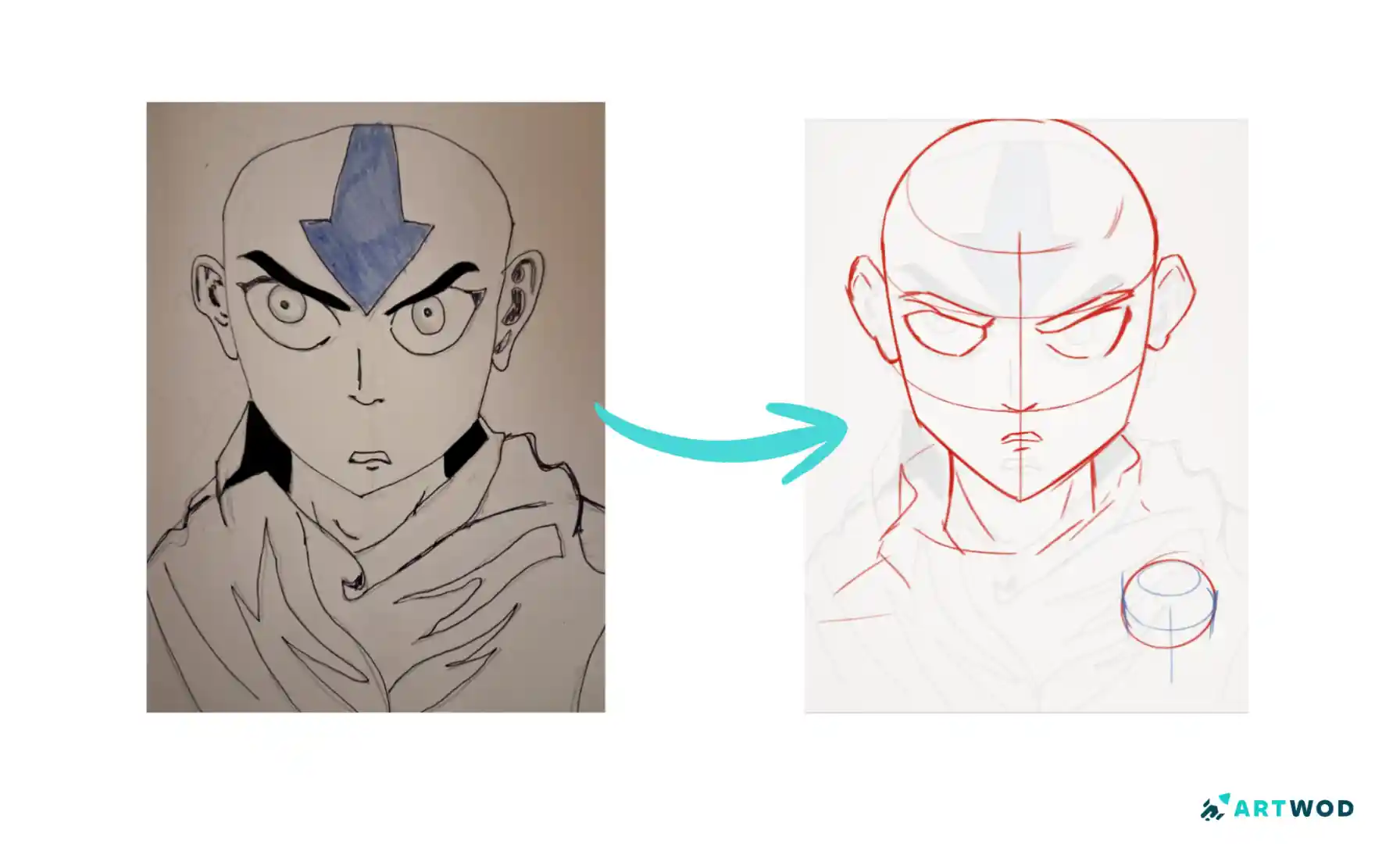
Artist @dgbdraw shared a pencil sketch on the Artwod Community. Do you recognize him? Yes, this is Avatar Aang! The main concern was that the neck looked too thin compared with the shoulders, and the artist wanted help with anatomy and proportions. The paintover provides a useful construction-based approach: connect the neck to the head and shoulders instead of treating it as an isolated shape.
Insights shared in this blog post are by: @gabrielle34427. You can also request feedback on your artwork in Artwod’s Art Community.
The Feedback Request: Why Does the Neck Look Too Thin?
In the submission, @dgbdraw explained:
“trying to get better at drawing anime boy necks. I’m trying to sketch an anime boy and his neck keeps looking really thin compared to the shoulders. I’m struggling with anatomy and proportions here. Using pencil, any feedback on how i should approach it?”
That is a common problem when learning anime figure drawing and figure drawing in general.
A neck can look too thin even when its individual lines appear reasonable because its apparent width depends heavily on the head, jaw, trapezius, shoulders, and overall character proportions.
The paintover addresses this by rebuilding the head and neck together and adding clearer shoulder construction.
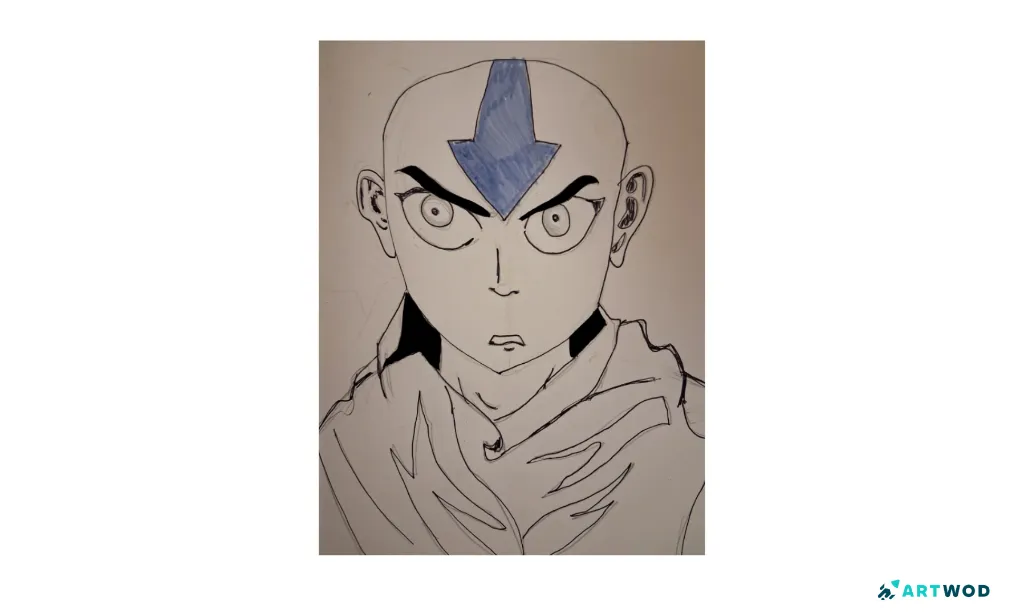
Pencil anime boy portrait sketch with a narrow neck, large head, angled shoulders, and layered clothing
Don't Draw the Neck as Two Vertical Lines
One of the easiest ways to make an anime neck look disconnected is to draw two lines descending from the head and then attach the shoulders afterward.
Instead, think of the neck as a three-dimensional structure connecting two larger forms:
The head
The torso
The neck has volume and changes direction as it connects the base of the skull to the shoulders.
In the paintover, the neck is defined with broader structural lines that connect naturally into the upper torso. The shoulder area is also simplified into a rounded construction form.
Keep in mind the muscle groups within the neck that define the shape and consider the volume, instead of just seeing the lines. The paintover defines the sternocleidomastoid, which causes that distinct V shape. I think it's good to note that sternocleidomastoid muscles’s contour lines should follow the muscles trajectory.
This makes the neck feel like part of the body rather than a narrow stem underneath the head. If you want to learn how to draw Anime Figures specifically, check out our Anime Road!
Start With the Head and Jaw
Before deciding how wide the neck should be, establish the head.
The paintover places a clear centerline through the face and constructs the head as a larger three-dimensional form.
That matters because the neck attaches beneath the jaw and skull.
If the head is large but the neck is drawn independently, the neck can easily become too narrow.
Ask:
Where does the neck actually emerge from underneath this head?
Then consider how that connection continues toward the shoulders.
The Neck Should Relate to the Shoulders
@dgbdraw's main concern is specifically that the neck looks thin compared with the shoulders.
That comparison is important.
Neck width should not be judged in isolation. Look at the transition between:
head → neck → shoulders
If the shoulders become much wider while the neck remains extremely narrow, the character can look structurally disconnected.
This does not mean the neck should simply be made much thicker.
Instead, establish the shoulder width and then construct the neck as a proportionate connection between the head and torso.
The paintover featuring a quick sketch of a man gives a more clear relationship by drawing the trapezius and then drawing the clothes over that. This fixes the relationship between the neck and the shoulders, by pulling up the shoulder through defining the back muscles. I suggest always doing underlying structure first, then drawing the clothes overtop. Clothes and details can often hide construction issues, making it harder to place what may look “off” about a drawing.
Think About the Neck as a Cylinder
A useful construction exercise is to treat the neck as a simple cylinder or tapered column.
It does not need to be perfectly cylindrical.
The point is to give yourself a volume to work around.
In the paintover, the shoulder area includes a cylindrical construction guide, which helps establish the rounded direction of the upper body.
You can use a similar idea for the neck:
Establish the base of the skull.
Draw a simple neck volume descending from it.
Connect that volume into the shoulders.
Adjust the width according to the character's proportions.
Refine the final contour afterward.
This is much more reliable than guessing the two outer neck lines independently.
The Artwod course intro to drawing could be a big help for the basic construction of the neck, particularly form manipulation.
Pay Attention to the Trapezius
The neck does not simply stop where the shoulders begin.
The upper back and shoulder muscles create an important transition around the base of the neck.
For a simplified anime drawing, you do not need to draw detailed muscle anatomy. But understanding the general direction of the trapezius helps you decide how the neck should flow into the shoulders.
If the neck suddenly ends in two horizontal shoulder lines, the figure can look stiff. Instead, allow the neck and shoulder forms to overlap and transition into one another.
The trapezius can be simplified down into a diamond shape that connects to the back and the deltoids in the shoulders. What I would do to adjust the original drawing is adding the diamond-shape of the trapezius muscle that leads down to the shoulders more clearly.
Don't Automatically Make the Neck Thicker
If the neck looks too thin, the obvious solution is to widen it. Sometimes that works. But it can also create a different proportion problem.
Before changing the width, check:
Head size
Jaw width
Shoulder width
Neck placement
Shoulder angle
Torso construction
A neck can appear too thin because the shoulders are too broad, the head is too large, or the neck is attached too high.
Fix the relationship rather than changing one measurement blindly.
This feedback submission, featuring a women bust portrait wearing a uniform, shows solutions outside of just neck thickness. The paintover adds clarification between the traps and deltoid muscles. Aside from width, the actual length of the neck might be the problem. I find drawing the full traps can help with structuring them from the front.
Use the Jaw as Your Starting Point
For an anime boy portrait, the jaw gives you a useful reference for the upper neck.
Instead of starting the neck from the sides of the face, consider where the neck connects beneath the jaw and around the back of the skull.
The front of the neck and the side of the neck do not necessarily follow the same straight path.
This becomes especially important when the character's head is tilted or turned.
Even a small change in head direction can change how much of the neck is visible.
This Artwod submission, featuring a woman with her hair blowing in the wind shows how to correct the jaw to be in line with the pose. Where the head lies in perspective is a good place to start, as depending on the angle we may see the bottom of the jaw, as done in the paintover. With proper structure of the jaw, the sternocleidomastoid can be connected properly to the back of the head.
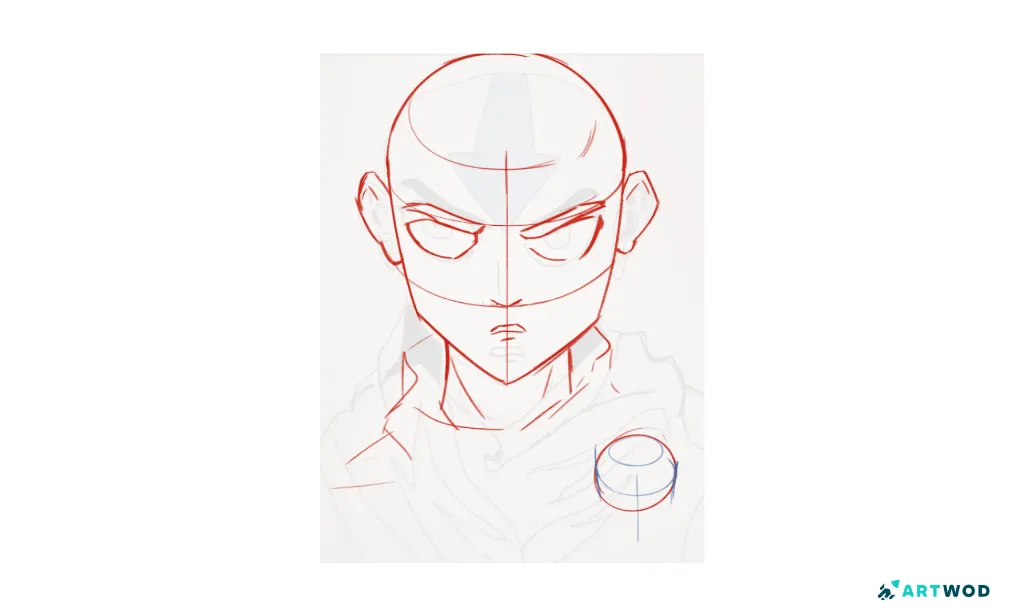
Anime boy neck paintover showing head construction, neck placement, shoulder structure, and a cylindrical shoulder guide
A Simple Neck Drawing Process
Try this construction process when practicing.
1. Build the headStart with a simple head shape and establish the centerline.
2. Define the jawMake sure the jaw has a clear relationship with the head and face.
3. Mark the base of the skullUse the back and underside of the head to determine where the neck connects.
4. Construct the neck as a volumeUse a simple tapered cylinder rather than immediately drawing the final contours.
5. Establish the shouldersPlace the shoulders and upper torso before refining the neck width.
6. Connect the formsMake the neck flow naturally from the head into the shoulder and upper-back structure.
7. Refine the anime styleOnce the construction works, simplify the lines according to the character design.
Check the Neck From Different Angles
A neck that looks correct in a front-facing drawing may fall apart when the head turns.
Practice the same anime boy neck from:
Front view
Three-quarter view
Side view
Slight upward tilt
Slight downward tilt
The visible neck structure changes with each angle.
This helps you understand the neck as a form rather than memorizing one standard anime neck shape.
Common Anime Neck Drawing Mistakes
Watch for these problems when practicing:
Drawing the neck as two straight vertical lines
Making the neck independently of the head
Ignoring the relationship between neck and shoulders
Making the neck too narrow simply because the character is stylized
Making it too wide without checking the head and torso
Forgetting the trapezius and upper-back transition
Refining the neck before establishing the overall figure construction
If the neck feels wrong, zoom out and inspect the entire head-neck-shoulder relationship.
What Other Artists Can Learn From This Drawing
Construct the neck as part of the figure. It should connect the head and torso rather than exist as an isolated shape.
Use simple 3D forms. A cylindrical construction makes the neck's volume easier to understand.
Check proportions relationally. Neck width depends on the head, jaw, shoulders, and torso.
Study the shoulder connection. The trapezius and upper torso create an important transition.
Practice different head angles. Neck structure changes when the head turns or tilts.
Don't solve every problem by adding width. First determine whether the issue is actually the neck itself.
How Community Feedback Can Help With Anime Anatomy
@dgbdraw's question is focused on a specific recurring problem: the neck looks too thin compared with the shoulders.
That makes it easier to examine the drawing structurally rather than simply saying that the neck looks "off."
Feedback on anatomy can be especially useful when several proportions interact. A neck problem may actually come from the head, jaw, shoulder width, or torso construction.
When asking for feedback, describing the specific relationship that feels wrong—as the artist did here—helps make the problem easier to diagnose.
FAQs
Start with the head and shoulders, then construct the neck as a simple three-dimensional form connecting them. Refine the final lines only after the proportions and connections work.
Why does my anime boy's neck look too thin?The neck may genuinely be too narrow, but the problem can also come from an oversized head or overly broad shoulders. It could also be as simple as the length of the neck giving the illusion of thinness if it's not proportional. Check the entire head-neck-shoulder relationship before changing the width.
How wide should an anime boy's neck be?There is no single fixed width. It should relate to the character's head, jaw, shoulders, body proportions, and intended stylization.
How do you connect the neck to the shoulders in anime drawing?Treat the neck and shoulders as connected forms. The trapezius creates triangle-like forms from the neck to the shoulders. Let the neck transition into the upper torso and shoulder structure rather than ending in two isolated vertical lines.
Should anime boy necks be thick?They can be relatively slender, but they still need to feel structurally connected to the head and shoulders. The appropriate width depends on the character design and overall proportions.
How can I practice drawing anime necks?Draw the head, neck, and shoulders together from front, three-quarter, and side views. Use simple cylindrical construction before practicing the final anime-style contours.
@dgbdraw's anime boy sketch shows why neck anatomy is easier to understand when you stop treating the neck as an isolated pair of lines. Remember the neck is made of several muscles all coming together, the contours should reflect this. Its width and shape depend on the head, jaw, shoulders, and torso working together.
Build the head first, construct the neck as a simple volume, establish the shoulders, and then connect the forms. If the neck looks too thin, check the surrounding proportions before simply making it wider.
The goal is to make the neck feel like a natural structural bridge between the head and shoulders, while still keeping the clean simplification that makes anime drawing distinctive. The Artwod community helps connect you with other artists who can give you feedback on artwork you share focusing on helping you learn. If you want to get feedback of your own, post your art in the anime category.