How to Set Art Goals That Survive
Everyone has written the page. First of January, fresh sketchbook, a list that says draw every day, finally learn anatomy, improve my colour. By mid-February the sketchbook has four pages in it and the list has quietly become something you avoid looking at (and next January you will write a near-identical list, which is the part psychologists find most interesting).
This is a well-documented pattern rather than a personal failing. Here is what the research says about why goals collapse, and how to build one that does not.
Why Do Most Art Goals Fail?
Psychologists Janet Polivy and Peter Herman described something they called false hope syndrome: people attempt self-change, set the bar unrealistically high, fail, and then set the same unrealistic goal again. The failure never gets attributed to the goal being badly built. It gets attributed to the person not trying hard enough.
Artists do this with volume. Draw every single day. Fill a sketchbook a month. We overwhelm ourselves with unrealistic goals and fail them later.
The repair is to design the goal on a normal day instead of an inspired one.

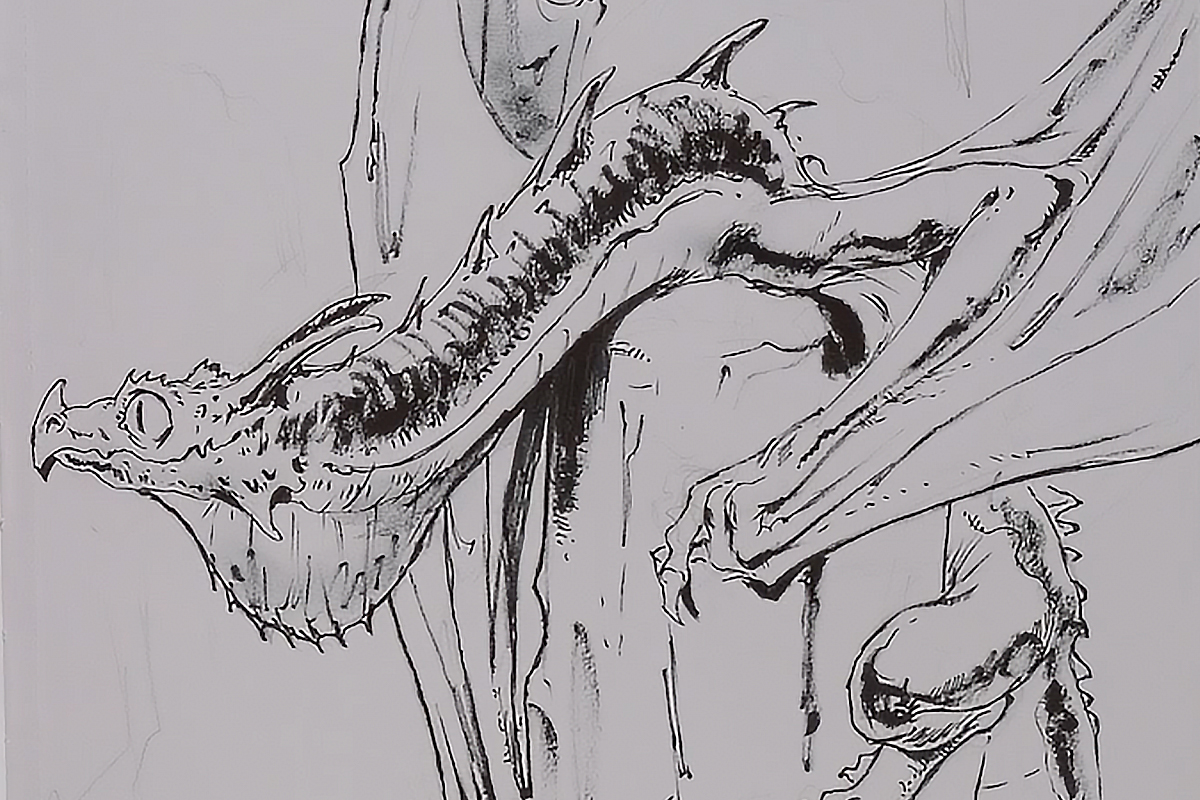
2 traditional drawings by Antonio Stappaerts, ink portraits of undead and a sailor
Does Picturing Your Finished Portfolio Help?
Almost certainly the opposite, which surprises most people.
Gabriele Oettingen’s research on mental contrasting found that positive fantasies about a desired future are associated with lower effort and poorer outcomes. The current explanation is that the daydream delivers a portion of the reward in advance. You already felt what it is like to be the artist with the incredible portfolio, so the urge to go and earn it drops.
What works better is holding the wish and the obstacle together. Picture the outcome you want, then picture the specific thing that will stop you. Not a vague lack of discipline. The actual Tuesday evening where you are tired, the tablet is in the other room, and there is a new episode you would rather watch.
How Specific Does an Art Goal Need to Be?
Edwin Locke and Gary Latham spent several decades on this question across hundreds of studies. The finding is not surprising: specific and difficult goals produce better performance than vague encouragement to do your best.
Compare these:
"Improve my anatomy" vs. "Draw thirty one-minute gestures from reference".
"Get better at colour" vs. "Paint five master studies in a limited palette".
Second versions tell you what the session looks like. You will know whether you did it, which is the whole point.
If figures are where you want to aim, our Figure Road is built around exactly this kind of focused repetition.
What Actually Makes You Follow Through?
Peter Gollwitzer’s work on implementation intentions shows that deciding in advance when and where you will act dramatically improves follow-through, compared with holding the same intention without a plan. The format is simple: when X happens, I will do Y.
“After dinner, I draw thirty gestures at my desk.”
“On the train home, I fill one page of thumbnails.”
“When I close my laptop on Sunday, I set up the week’s reference folder.”
Phrased like this, goals become plans, not just intentions.
If you only take one thing from this post, write that sentence down for your own practice before you close the tab.
How Long Until It Stops Feeling Like Effort?
Longer than the internet promised you.
A UCL study led by Phillippa Lally tracked people forming new habits and found a median of around 66 days before a behaviour reached automaticity, with individual times ranging from 18 to 254 days. The popular 21-day figure does not come from research into habit formation at all.
This matters because week three is where most people quit. It still feels like effort, so they conclude it is not working. By the research, week three feeling like effort is simply week three.
Set your expectations at a couple of months before drawing becomes something you do rather than something you make yourself do.
Loading comparison…
Reveal the original or paintover
How Do You Know It Is Working?
Keep everything, and date it.
A 2016 meta-analysis by Benjamin Harkin and colleagues found that monitoring progress toward a goal measurably improves the chance of reaching it, with stronger effects when progress is physically recorded or reported to someone else. The act of tracking is doing real work, separate from the practice itself.
For drawing, this is easy. One folder, dated subfolders, everything goes in including the bad ones. Especially the bad ones.
Then compare your work against your own work from two months ago. Comparing it against an artist with ten years on you tells you nothing about your rate of improvement, and it is the fastest way to talk yourself out of continuing.
Posting studies in the Artwod Community Hub does both jobs at once, since you get a dated record and feedback from people who can see what you cannot.

Setting your goal at Artwod - goals and Woddy looking at himself
Set Your Art Goal in Artwod
Artwod now asks you one question when you start, and the platform adapts to your answer.
Choose Drawing Foundations, Character Design, Environmental Drawing, Portrait Drawing, Anime Art or Animals and Creatures, and your roads, workouts and recommendations arrange themselves around that path. Self-explorer is there for the deliberate exploring described above.
It takes about four seconds, and it turns a library into a direction. You can change it whenever your focus changes.

Keep practising
Explore roadmapsHelp an artist with feedback
Find work to critique