How to Draw Nature Scenes: A Step-by-Step Guide for Artists
How to Draw Nature Scenes: From Simple Shapes to Finished Compositions
Nature is one of the most rewarding things to draw - and one of the most overwhelming. Trees, rocks, water, foliage - everything is irregular, complex, and seemingly impossible to simplify. The secret is that nature is actually full of underlying geometry. Once you learn to see it, drawing nature scenes becomes a lot less intimidating.
This guide walks you through a structured process from basic shapes to a finished, polished nature scene. Try this art workout and see your skills grow! 🌱Step 1: Draw a Simple Composition of Boxes and Cylinders
Before any leaves or rocks appear, start with geometry.
Sketch a small composition using only boxes and cylinders. Boxes can become boulders, cliff faces, or tree trunks. Cylinders become branches or logs. This step is about establishing the basic structure and spatial relationships of your scene - what's in the foreground, what's in the background, how the elements relate to each other.
Don't think about nature yet. Think about shapes in space.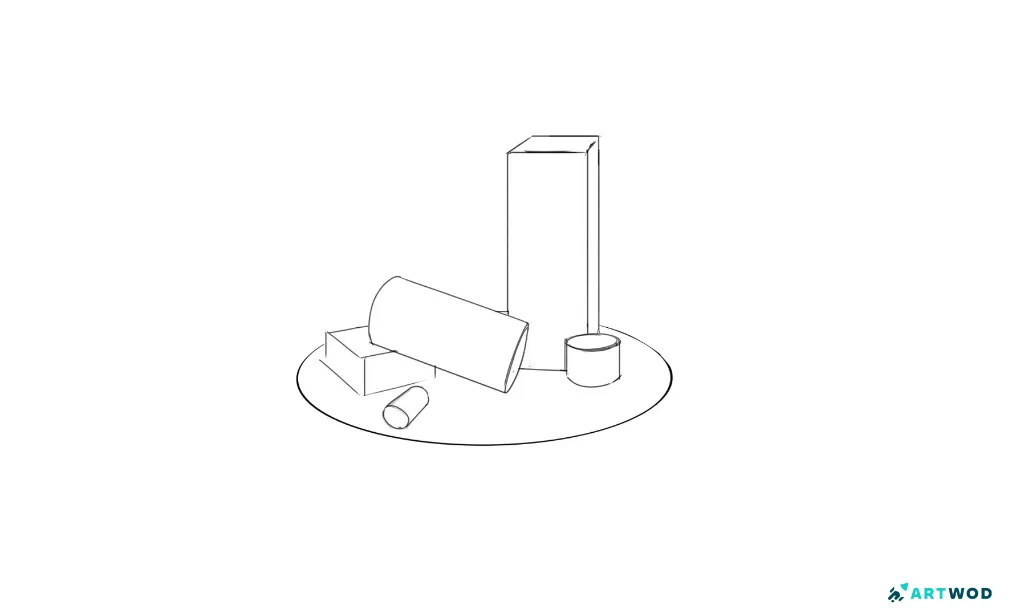
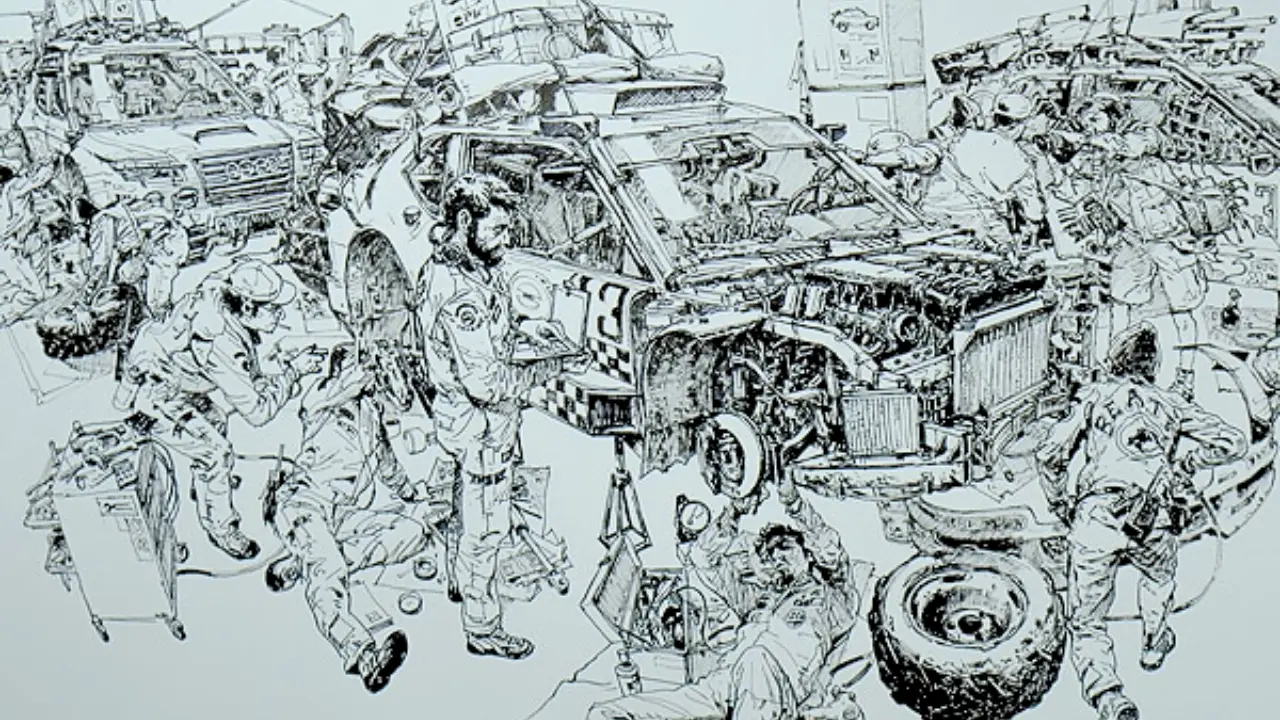
Step 1: How to Draw Nature Scenes: From Simple Shapes to Finished Compositions
Step 2: Modify the Shapes by Cutting Pieces Out
Now start breaking the geometry.
Nature doesn't have perfect edges. Take your boxes and cylinders and start cutting into them - chip corners off boulders, carve irregular silhouettes into tree trunks. This is where your geometric forms start to feel organic and alive.
The key is to stay intentional. You're not randomly scribbling - you're making deliberate cuts that suggest erosion, growth, and wear. Less is more at this stage.
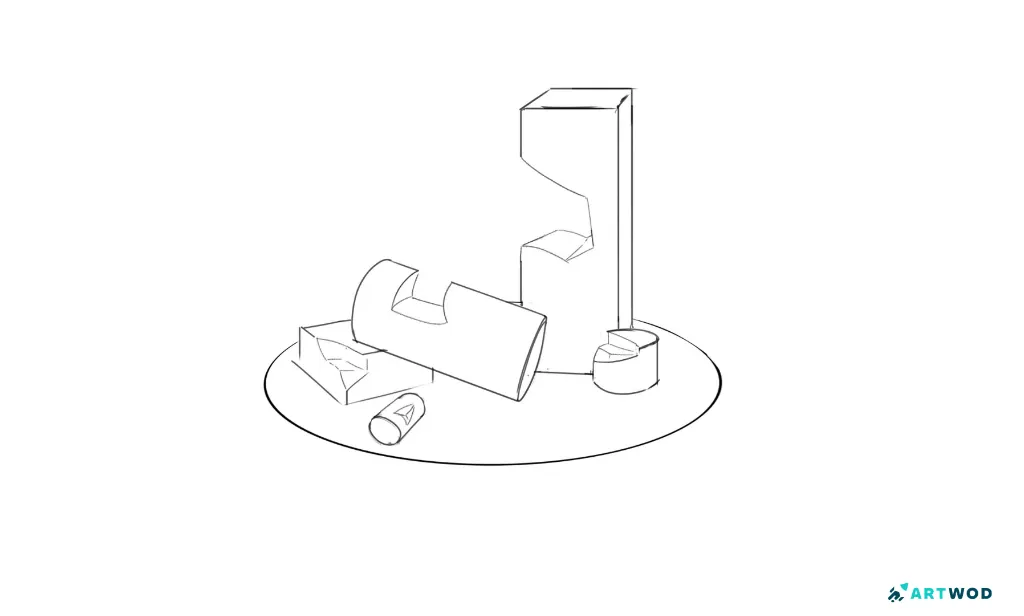
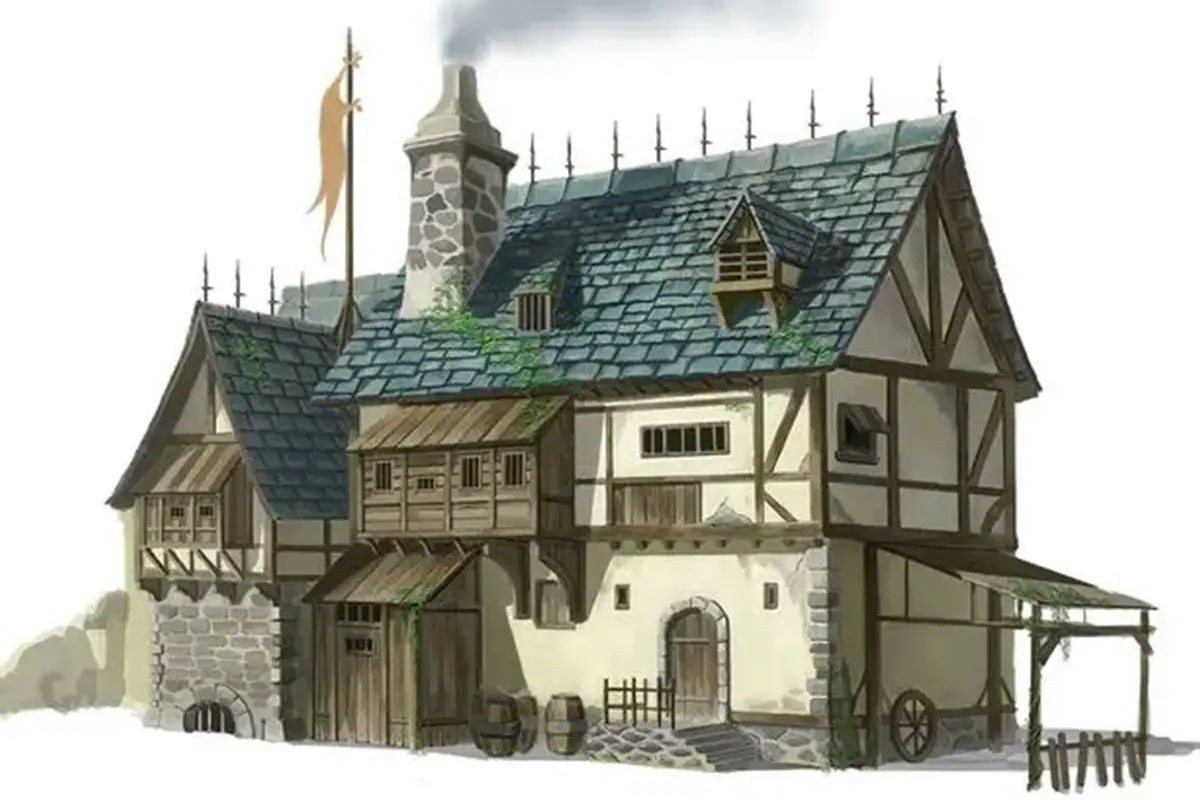
Step 2: How to Draw Nature Scenes: From Simple Shapes to Finished Compositions
Step 3: Do studies of some rocks
Before you draw a full scene, spend time with rocks specifically.
Rocks are the backbone of most nature scenes and one of the hardest things to draw convincingly. They have weight, plane breaks, and surface texture that takes observation to understand. Find reference - photos, real rocks, master studies - and draw them carefully. Pay attention to how planes catch light, how edges vary between sharp and worn, how cracks and chips give them character.
This is also a great moment to get feedback on your studies. Upload them to the Artwod Feedback Tool and get structured written and visual feedback from real artists before building your full scene.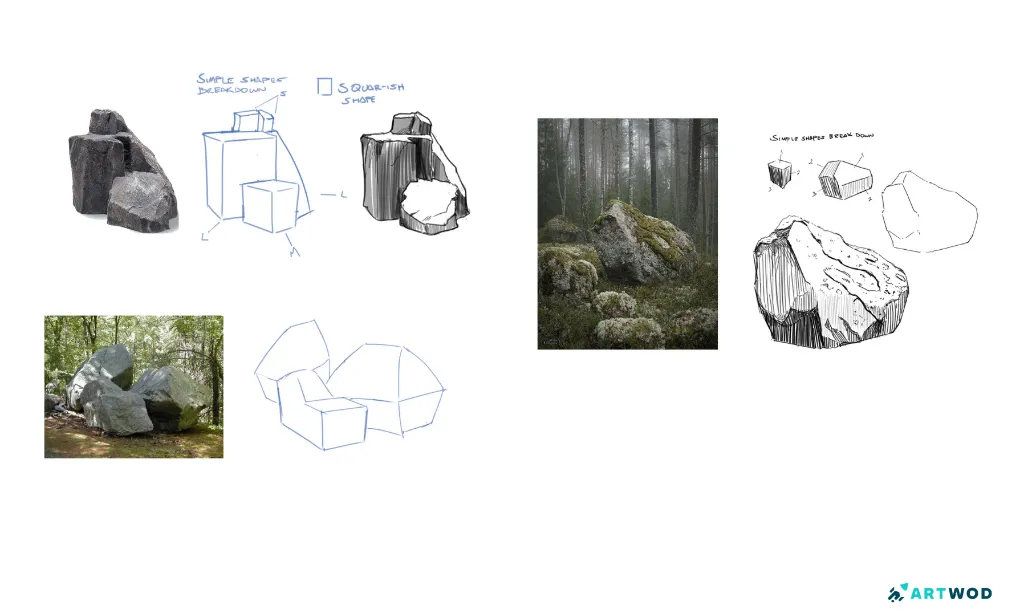
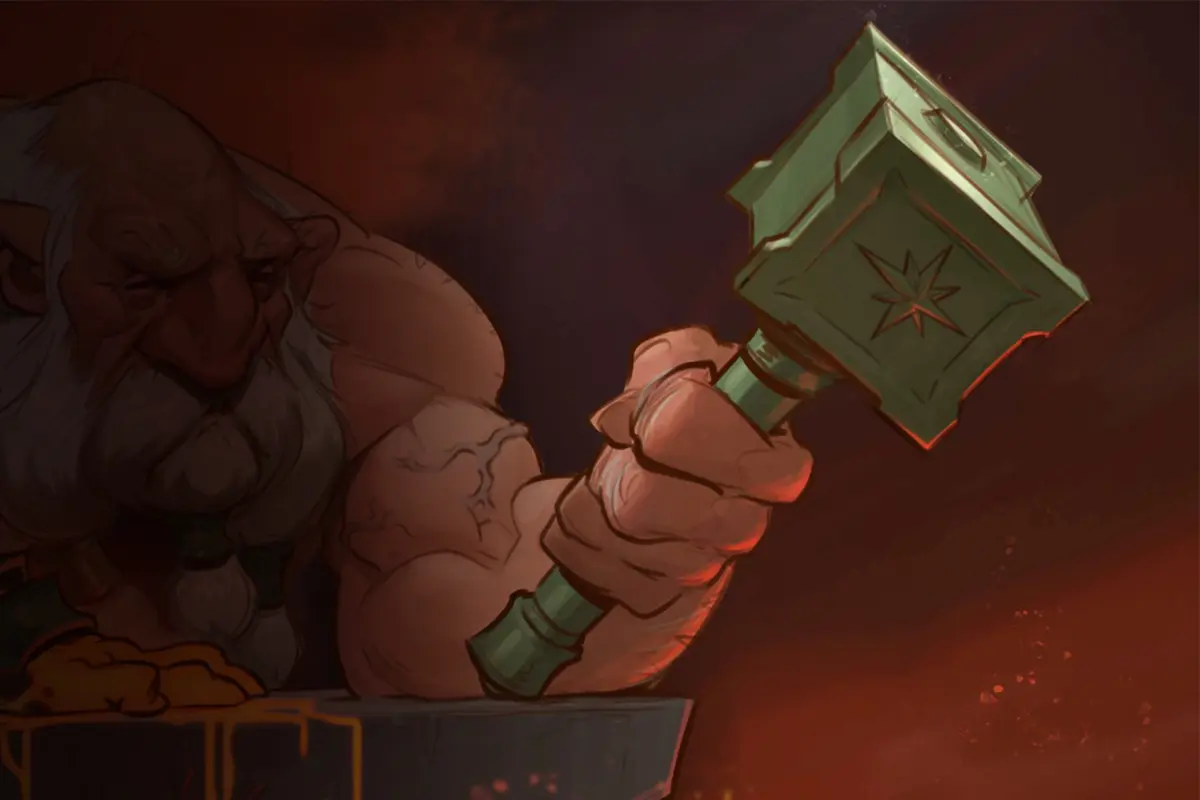
Step 3: How to Draw Nature Scenes: From Simple Shapes to Finished Compositions
Step 4: Draw a nature scene within a new composition
Now bring it all together.
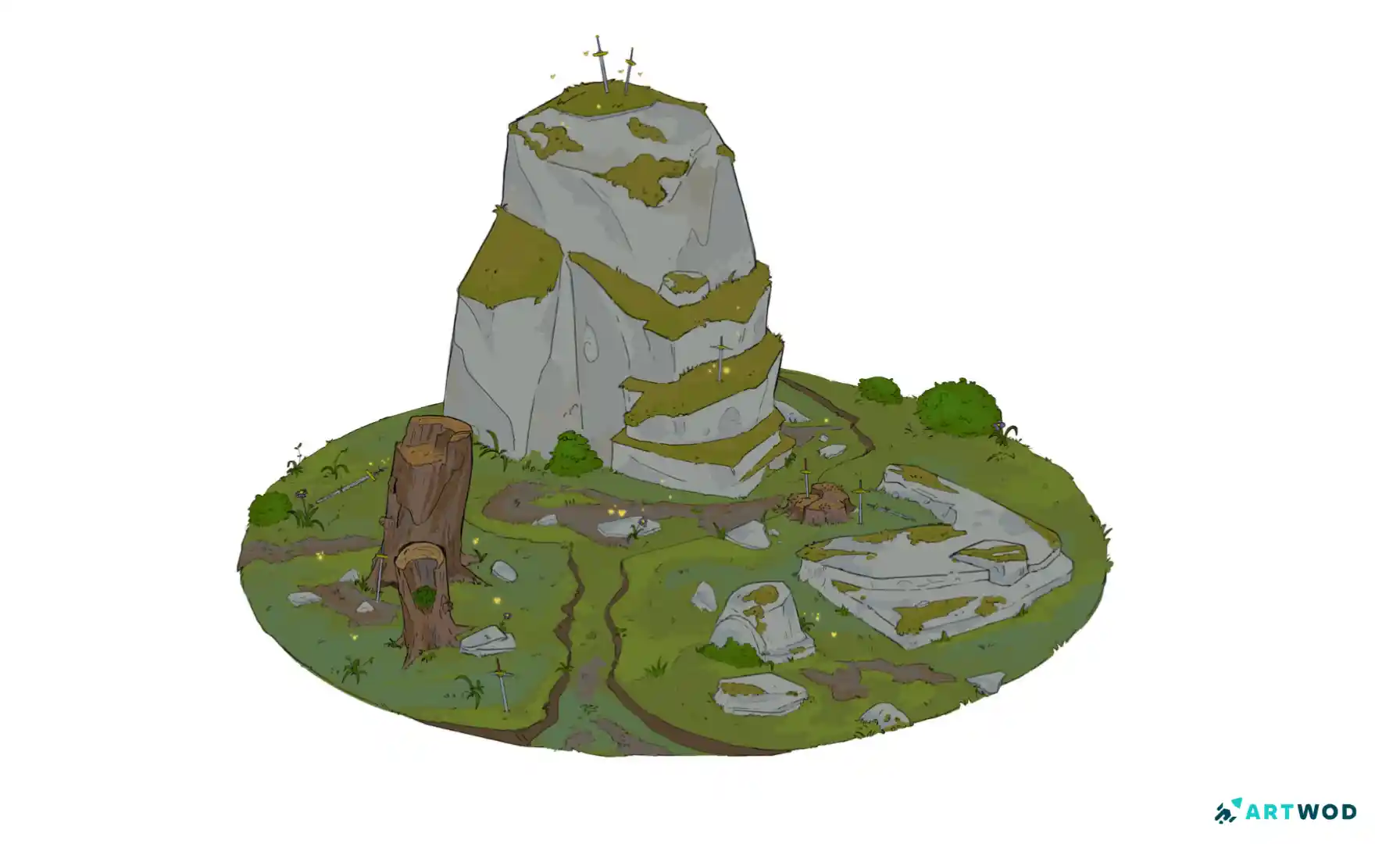
Using everything from the previous steps - your compositional instincts from Step 1, your organic edge-making from Step 2, and your rock knowledge from Step 3 - draw a full nature scene. Start with a fresh composition, block in your major shapes, modify them into organic forms, and add rocks, trees, and ground elements.
Think about depth, overlap elements, and make sure your eye has somewhere to travel through the scene.
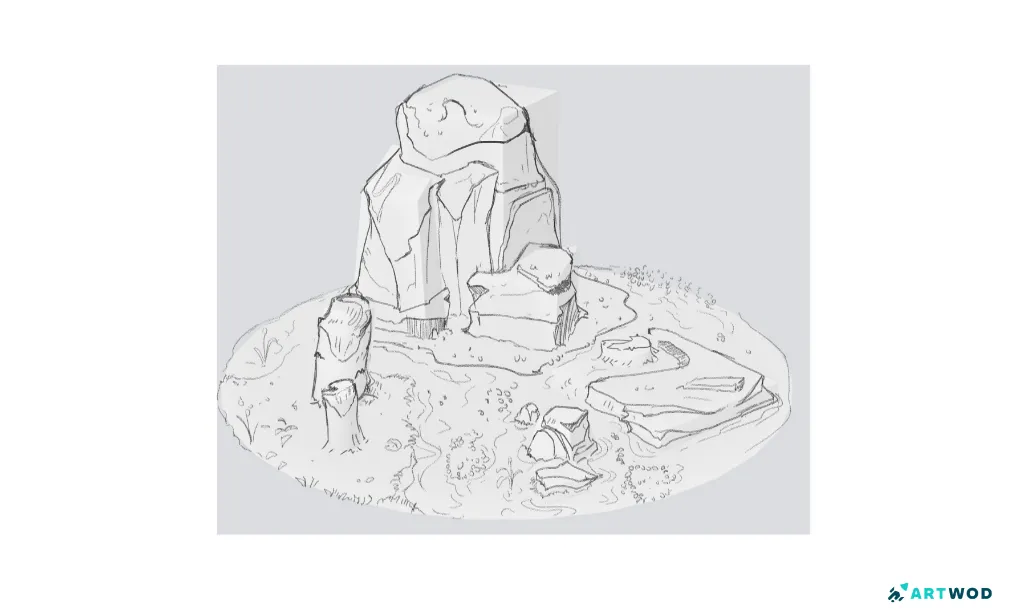
Step 4: How to Draw Nature Scenes: From Simple Shapes to Finished Compositions
Step 5: Polish the drawing
With your scene in place, now refine.
Tighten your lines, clarify plane breaks, and add surface detail where it counts. Refine your silhouettes and clean up anything that reads as confused or unintentional.
Keep it in line at this stage - no values or color yet. A clean, confident line drawing is the best foundation for everything that comes next.
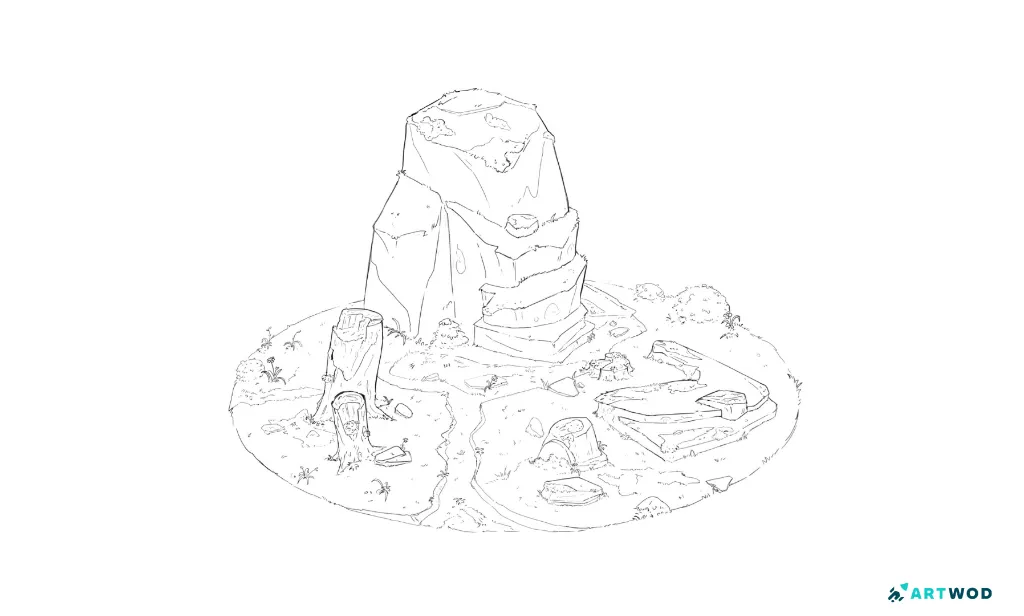
Step 5: How to Draw Nature Scenes: From Simple Shapes to Finished Compositions
Bonus step: Color your drawing
Once your line drawing is solid, introduce color.
Start with a simple value pass - light, mid, dark - before committing to any hues. Nature has a lot of green, which means color variation matters more than you'd think. Push your shadows cooler and your lights warmer, or find a limited palette that unifies the whole scene.
Nature scenes reward patience and observation. Build the structure first, break it intentionally, study the details that matter, then put it all together. Don't skip the geometry - it's what makes organic forms feel grounded and real.
Share your nature scene on the Artwod Discord and upload your WIP to the Feedback Tool to find out exactly what's working before you take it further.
Related Posts