How to Draw From Imagination: A Guide for Artists
How to Draw From Imagination (Not Reference)
Here's a paradox for you. Artists today have more tools than at any point in history - Pinterest boards, 3D posing apps, entire photo libraries in their pocket. And yet the ability to draw from imagination feels harder to develop than ever.
Why does this happen? When everything is a click away, you never have to build the internal library that makes imagination possible in the first place. Drawing from imagination is the purest form of creativity, so whether you're a beginner or an intermediate artist, here's what you need to do.
What the old masters actually did
Leyendecker had a hard rule of always relying on live models, but exaggerating anatomy and proportions. Rubens hired models. Rembrandt sketched people in the streets because that was the only way to study a face. Sargent carried a sketchbook everywhere because there was no camera roll, no photo reference, no way to check a hand position except to look at an actual hand or draw it from memory.
The reference they built was earned through thousands of hours of direct observation - and it lived in their heads, not on a hard drive. That internal library is what let them paint from imagination at all.
That foundation is what we're talking about. And the good news is that the tools we have today can help us build it faster than any previous generation of artists - if we use them correctly.
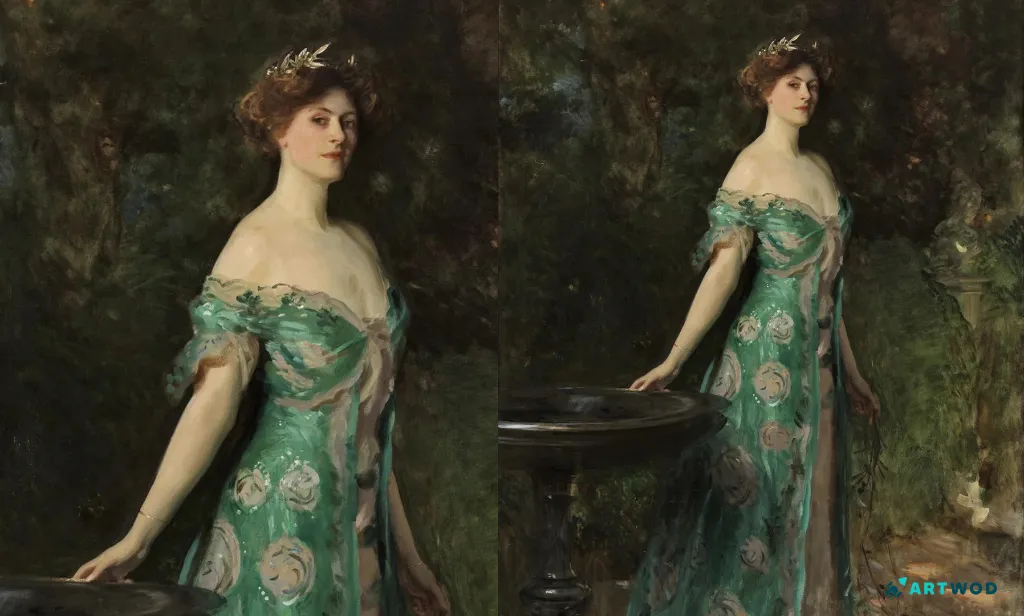
ortrait of Millicent, Duchess of Sutherland by American artist John Singer Sargent, painted in 1904, oil on canvas
The modern paradox
Digital tablets, 3D posing software, Procreate brushes that simulate every traditional medium - these tools are genuinely extraordinary. They let us learn faster, check proportions instantly, iterate without wasting materials, and work at a quality level that would have taken previous generations years of extra training to reach.
But they can become a crutch. And a crutch is only useful if you're injured.
If you only ever draw what's in front of you - if every figure has a reference, every hand is traced from a photo, every face is copied from a screen - you never build what's inside you. The tools do the remembering so you don't have to. And without that internal library, imagination has nothing to pull from.
The old masters had no choice but to internalize what they observed. We have to choose to.
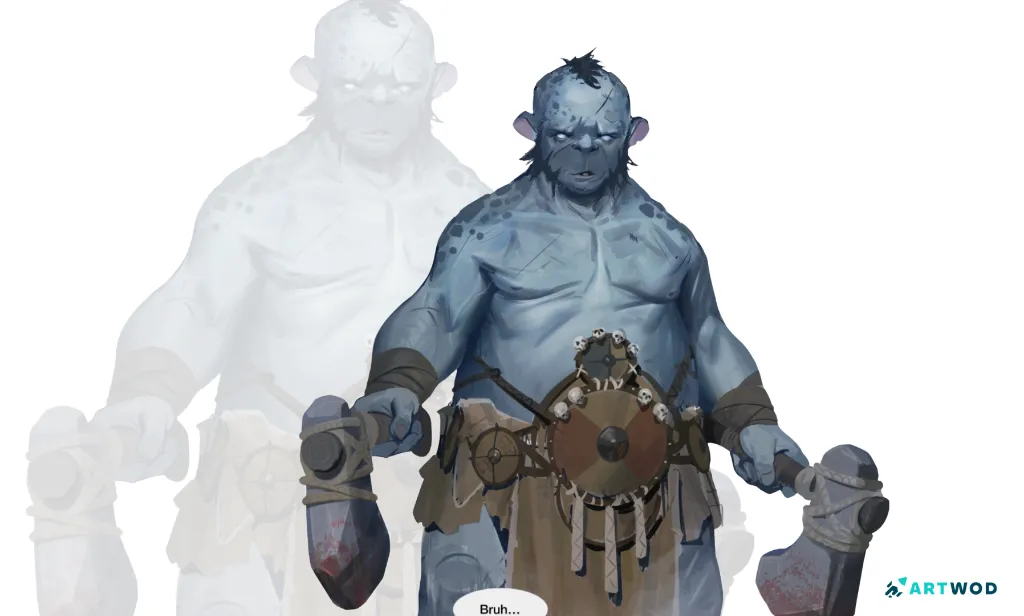
Troll drawing by Antonio Stappaerts, digital 2d drawing
How to actually draw from imagination
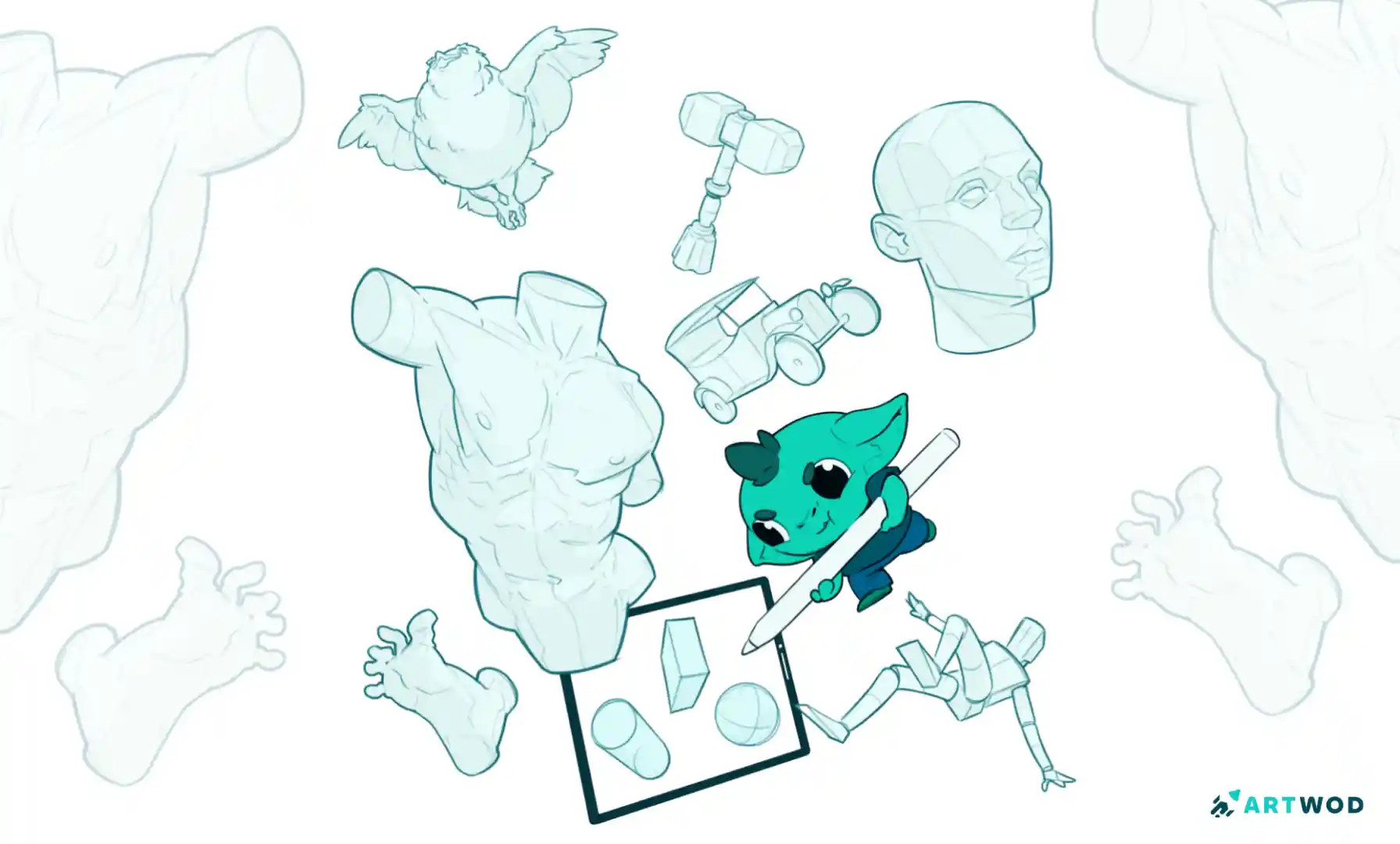
The real unlock - the thing that separates artists who can draw from imagination from artists who can only copy - is form. Specifically, learning to see everything as simple volumes and then manipulating those volumes in your head.
A hand isn't fingers. It's a box with cylinders attached. A torso isn't a shape. It's a rib cage and a pelvis, both three-dimensional, both tiltable, both rotatable in space.A head isn't a mask. It's a sphere with planes. Once you can feel those forms turning in your imagination - once you can rotate a rib cage in your head and know what it looks like from below, from the side, from a three-quarter angle - you can place them anywhere, in any light, without needing a photo to confirm it.
Form manipulation is the practice of pushing those volumes deliberately. Stretch them, squash them, rotate them, exaggerate them. Draw a cylinder from twelve different angles. Draw a box in extreme perspective. Draw a simplified skull from below, from above, from a position you've never drawn before. The discomfort is the practice. Every unfamiliar angle you force yourself through becomes an angle you own.
Daily imagination warm-ups accelerate this significantly. Before you open any reference, draw a head from three different angles. Draw a hand in a position you've never drawn before. Draw a figure doing something specific - sitting, throwing, falling - without looking anything up. The goal isn't to make something good. The goal is to identify what you don't know yet.
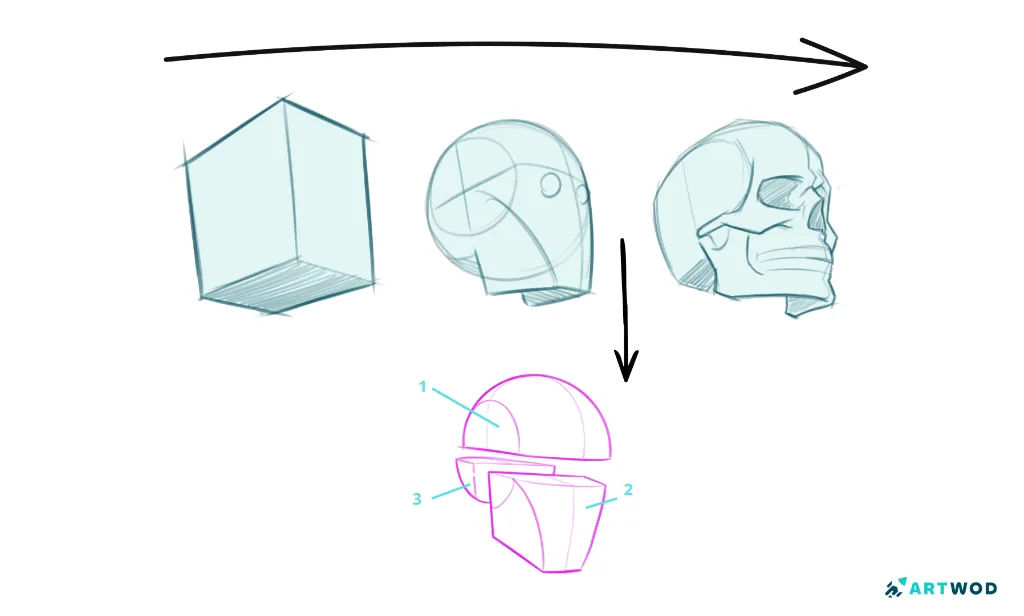
From a box to Loomis to Skull
FAQ
How long does it take to learn to draw from imagination?
It depends entirely on how deliberately you practice. Artists who study forms actively - through construction drills, memory redraws, and daily imagination warm-ups - build the internal library much faster than artists who only draw from reference. Artwod's roadmaps give you a structured path through exactly this kind of deliberate practice, so you're not guessing what to work on next.
Where do I start if I've never drawn from imagination before?
Start with form. Before anything else, learn to see subjects as simple volumes - boxes, cylinders, spheres - and practice rotating them in your head. Artwod's Intro to Drawing road is built around this kind of foundational thinking. It's the fastest way to build the mental model that imagination drawing depends on.
How do I know if my imagination drawing is actually improving?
The clearest signal is whether you can draw familiar subjects from unfamiliar angles without reference. If a head you've drawn a hundred times still looks wrong from a low angle, the form isn't internalized yet. Submit your imagination studies to the Artwod Community Hub and ask specifically whether the construction is holding up - another artist will tell you exactly where the form is working and where it's breaking down.
Can I still use reference while learning to draw from imagination?
Yes - and you should. The goal isn't to avoid reference, it's to use it actively. Study from reference, close it, reconstruct from memory, compare. That cycle is what turns observation into internalized knowledge. Artwod's practice section has exercises built around exactly this kind of active reference study.
What's the difference between drawing from imagination and drawing from memory?
Memory is recalling what something looked like. Imagination is understanding a form well enough to construct it in any position, at any angle, in any light. Memory gets you a copy. Imagination gets you control.
Related Posts
Keep practising
Explore roadmapsHelp an artist with feedback
Find work to critique