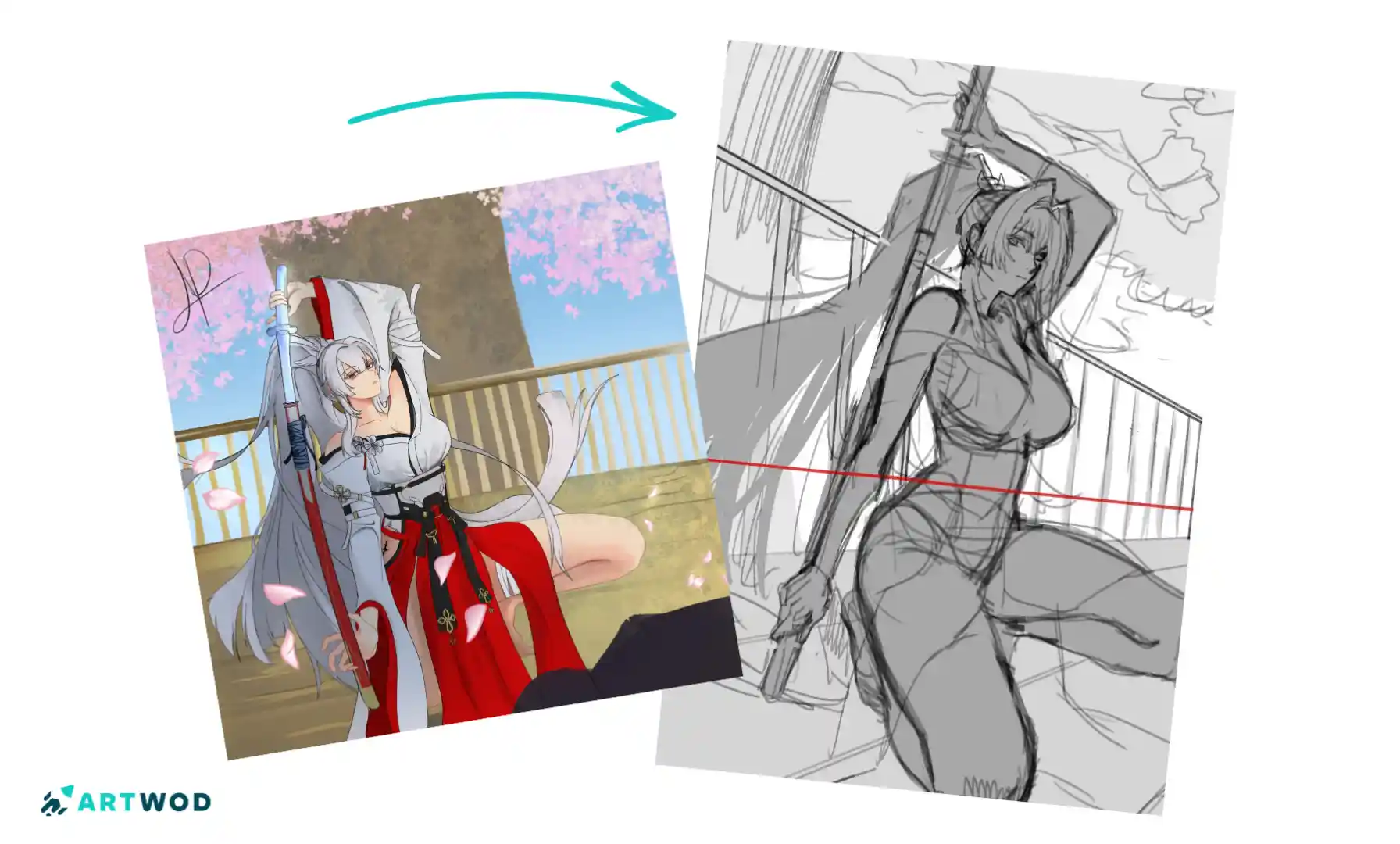
Hiyuki from Wuthering Wave: Figure Drawing in Illustration
Hiyuki from Wuthering Wave: Figure Drawing in Illustration
You know the feeling when a figure drawing is technically correct, but looks so stiff it seems like a wooden mannequin? This happens often to beginner artists, because they don’t really understand how figure drawing works in 2D space.
So today we’re going to take an example from our Artwod Community and breakdown the artwork and the feedback for educational purposes.
The Artwork and the Problem
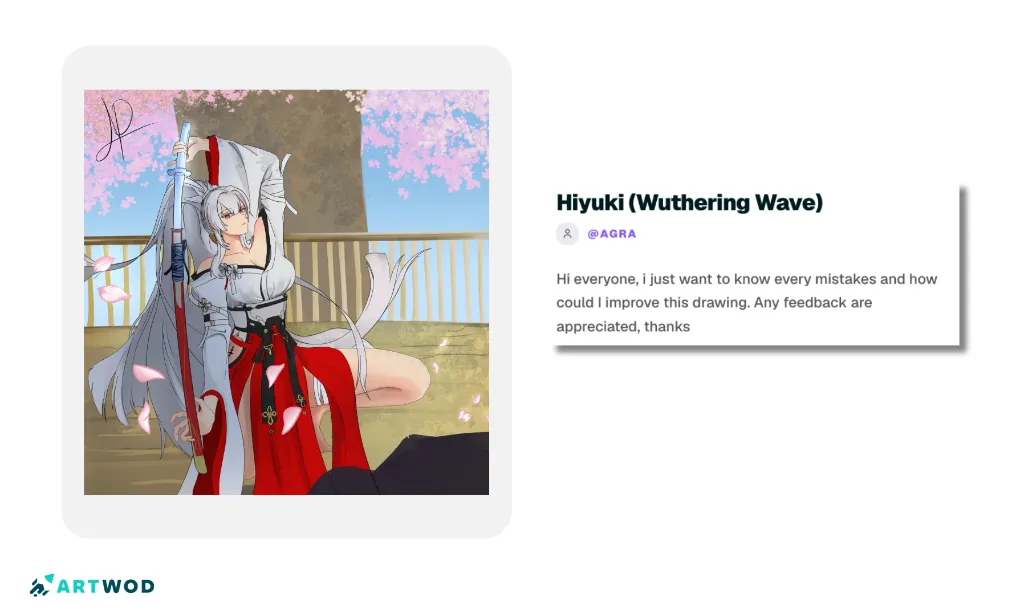
Hiyuki from Wuthering Wave figure drawing submitted by an artist seeking feedback on mistakes and improvement
The anime drawing, “Hiyuki (Wuthering Wave),” was posted by @agra in the Figure category. The artist doesn’t shy away from complex poses and backgrounds, AND the pose itself is extremely difficult. And we applaud that courage!
The question was quite broad: they wanted to know about the mistakes in the drawing and how they could improve it. That kind of question is common when a drawing feels wrong but the artist cannot immediately identify why.
The difficulty is that figure drawing problems often overlap. A proportion that is slightly off can affect the pose. A structural problem can make anatomy look incorrect. A weak gesture can make otherwise accurate body parts feel stiff.
The most useful response is therefore not to chase every small imperfection independently. Start with the largest relationships.
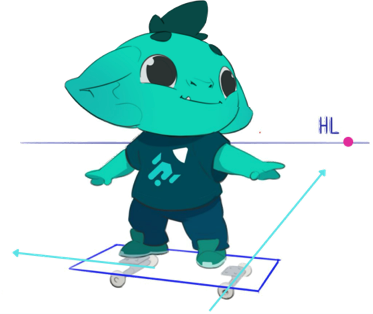
Start With Perspective
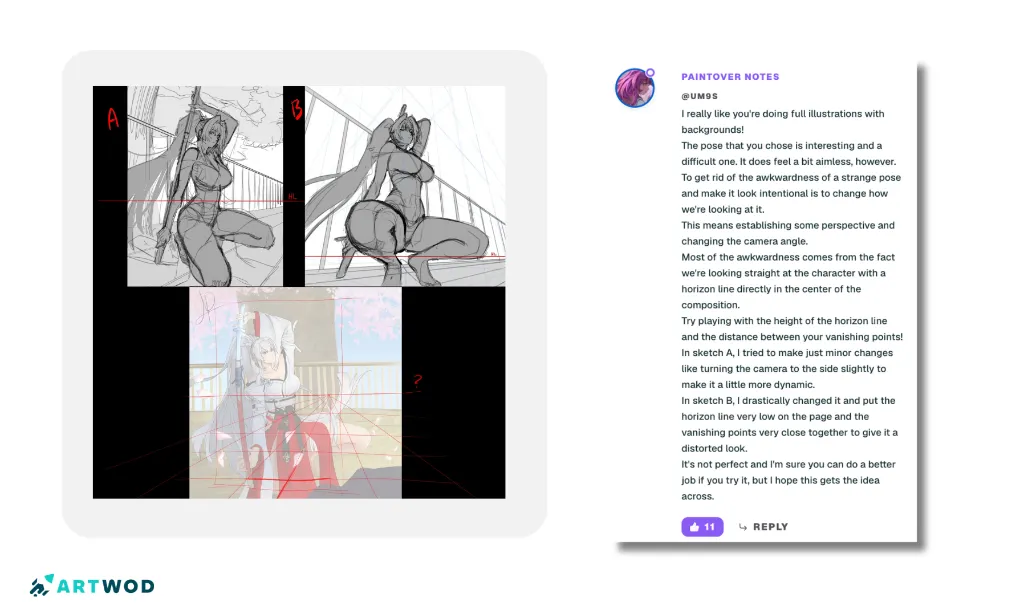
Paintover feedback on a Hiyuki from Wuthering Wave figure drawing
Add the Figure
After establishing the perspective for the surroundings, you need to place the character in them. Before checking individual muscles, hands, facial features, or clothing, look at the figure as a collection of large forms.
Many artists suggest starting with gestures, but drawing a simple line of action in the surroundings can make things more confusing. As a beginner, you always need structural support.
A useful construction pass can reduce the character to:
A head mass - use a box, then transform into 3D Loomis head.
Rib cage - use a box or oval
Pelvis - use a box or the disk method
Major limb masses - use cylinders
Simple joints - use spheres
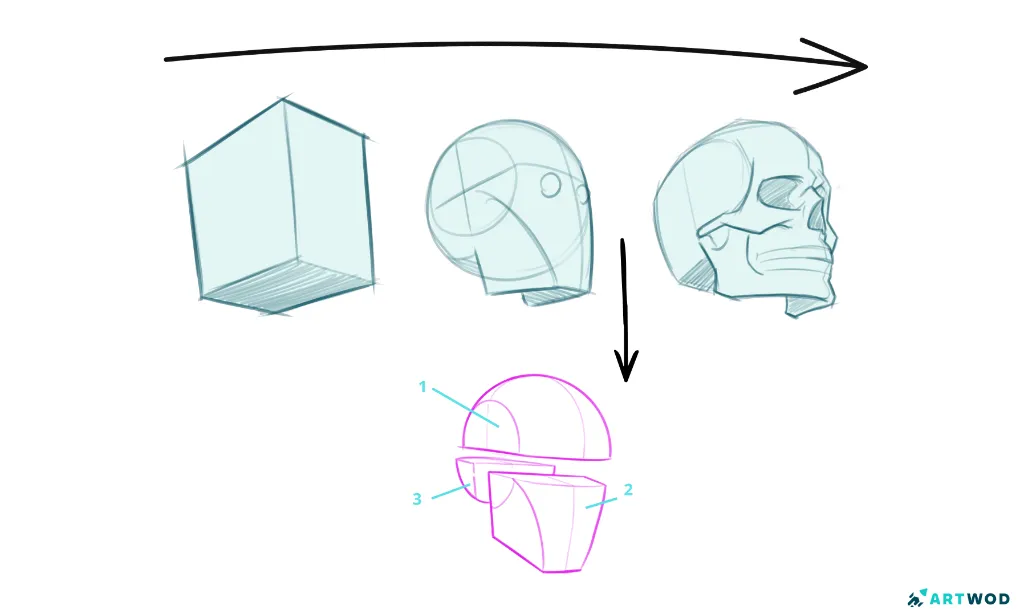
How to draw a Skull? 3D loomis and box method
All those can be drawn as a mannequin first, and only then can be developed into a proper figure. Try acting on the pose if you have doubts - there’s no shame in that and you can understand better how the human body works.
This way you expose structural problems that can be difficult to see once clothing, hair, facial features, and other character details are present.
If the large structure is convincing, smaller anatomical decisions become much easier to evaluate!
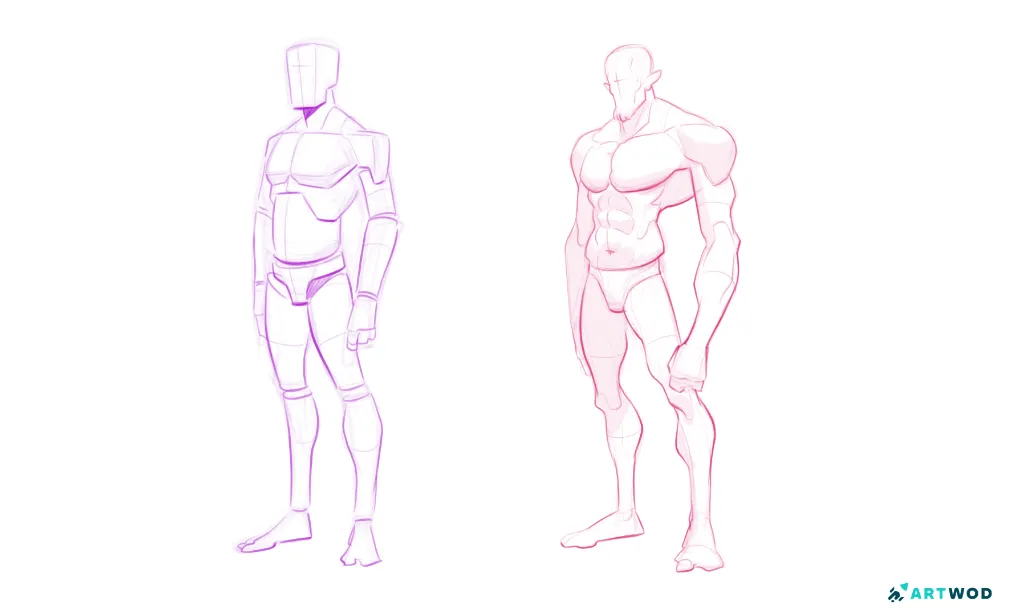
From mannequin to figure drawing. Improve your figure drawing by drawing the mannequin first
Check Proportions Before Anatomy Details
Look at:
Head size relative to the body
Shoulder width
Rib cage and pelvis proportions
Arm length
Forearm-to-upper-arm relationship
Leg length
Hand and foot size
Distance between major joints
The important question is not simply whether one body part is "too long."
Ask:
How does that difference affect the rest of the figure?
A slightly oversized head, for example, changes the perceived proportions of the entire character. Likewise, a misplaced shoulder can make an arm appear anatomically wrong even when the arm itself has reasonable proportions. Proportions are something easy to miss, consult with other artists!
Gesture Comes Before Detail
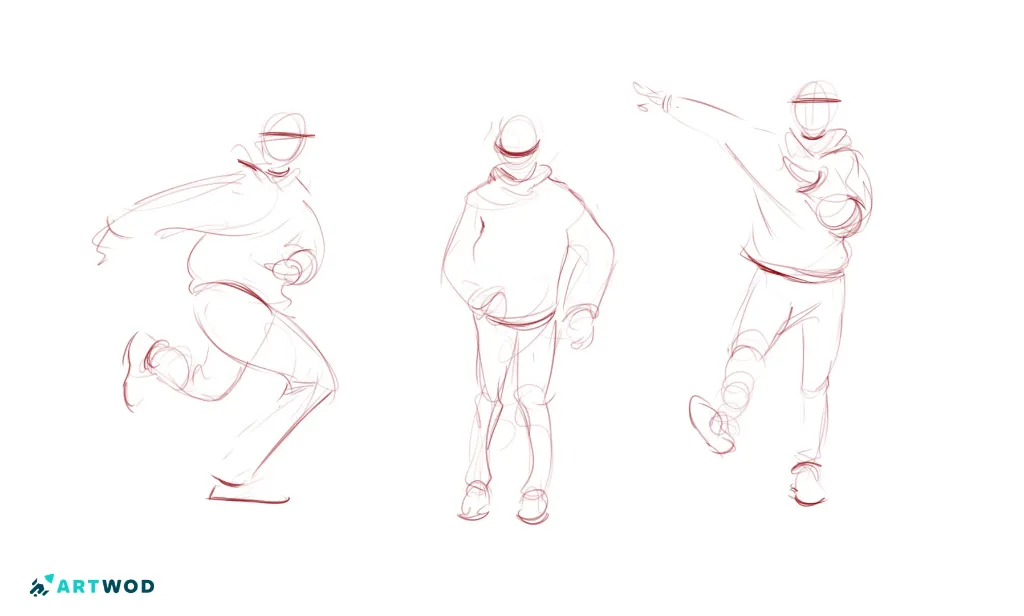
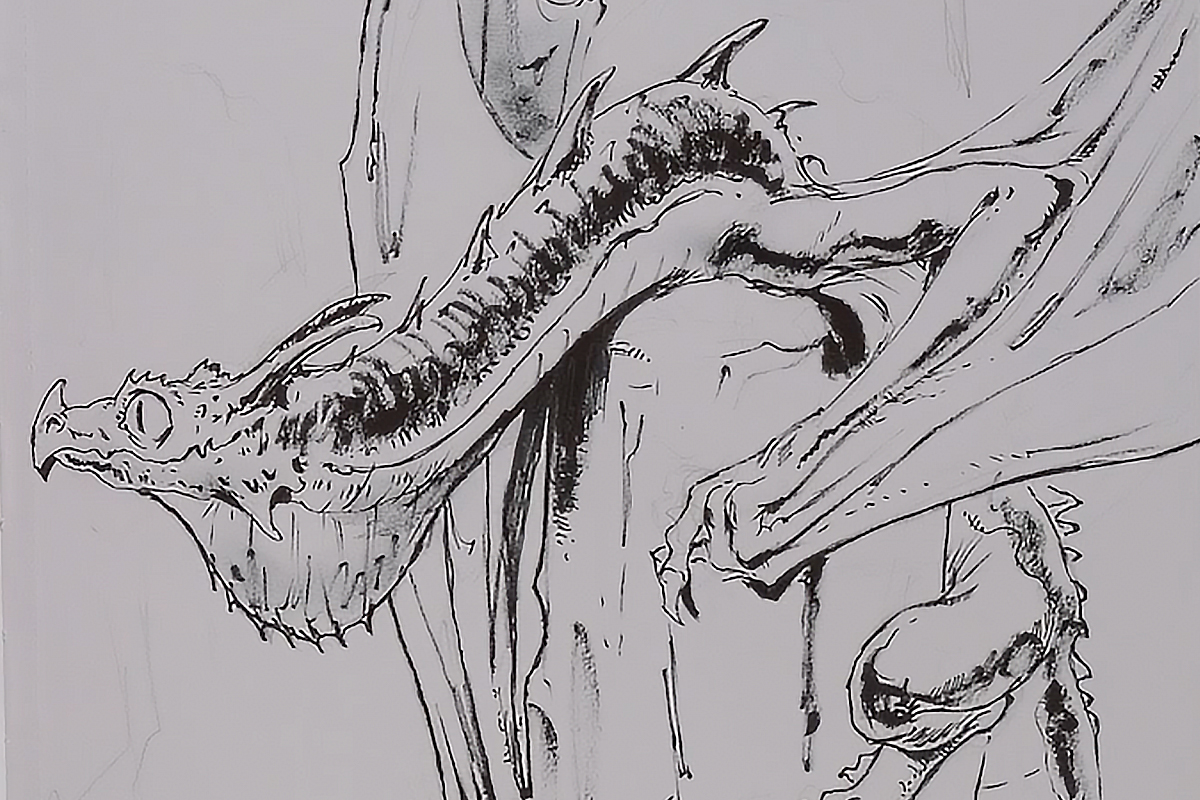
Gesture digital 2d drawings
Now you can think more about gesture to add a sense of plasticity and movement.
A gesture drawing reduces the character to the essential flow of the pose.
Try identifying:
The direction of the spine
The tilt of the shoulders
The tilt of the pelvis
The direction of the limbs
Where the figure's weight is concentrated
The overall rhythm of the pose
If these relationships are unclear, the finished figure can feel stiff even when the anatomy is carefully rendered.
This is why gesture is worth checking before spending time correcting smaller forms.
A Practical Figure-Drawing Workflow
When working on another character drawing, try solving the figure in this order:
Step 1: Check the gestureIdentify the main movement of the pose before worrying about anatomy. Draw a simple stick figure following that movement.
Step 2: Place the major massesEstablish the head, rib cage, and pelvis.
Step 3: Connect the limbsBuild the arms and legs from simple forms and check their proportions.
Step 4: Check the silhouetteFill the figure with a single value and look at the overall shape. A readable silhouette can reveal proportion and pose problems quickly.
Step 5: Check if the gesture is still working
Only after the structure works should you examine individual anatomical areas.
Step 6: Refine the characterAdd clothing, hair, facial details, hands, feet, and other design-specific elements after the underlying figure is working.
This order prevents detailed work from hiding structural problems.
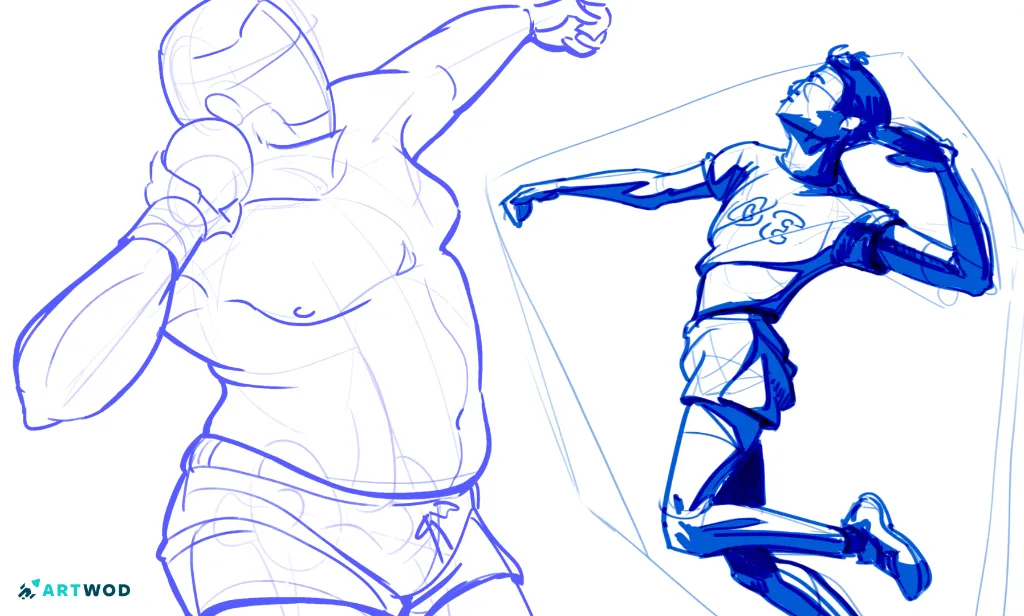
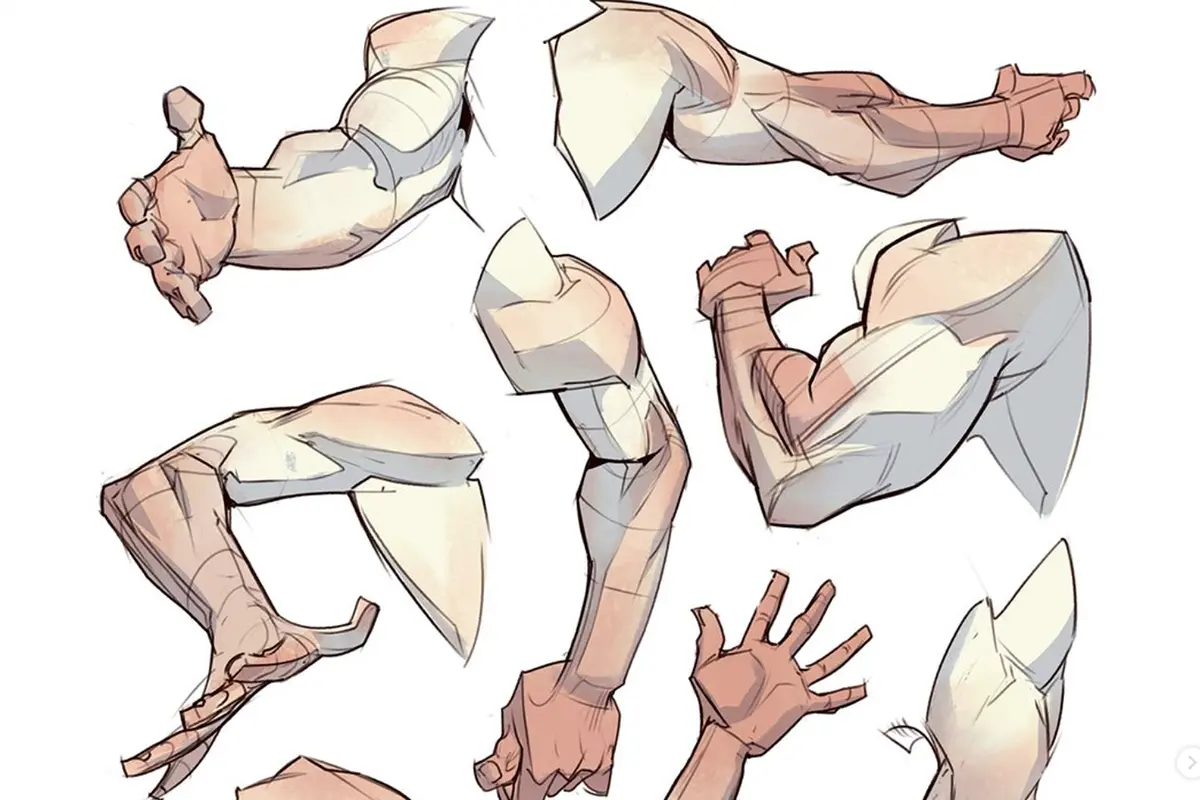
Anatomy studies by Hannah
How to Find the Biggest Mistake First
When reviewing your own figure drawing, do not ask only:
"What's wrong?"
Instead, ask:
"What is the ONE thing I can fix now, to make it better?"
Then temporarily ignore everything else.
You can also try viewing the artwork:
At thumbnail size
Mirrored horizontally
As a silhouette
Each method can reveal different problems.
Mirroring is particularly useful because it disrupts your familiarity with the drawing. Problems that have become invisible after repeated viewing can suddenly become easier to notice.
An even better way to find a mistake would be submitting to an Art Community. Finding an Art Buddy that gives you feedback and that you can vent to makes things so much easier.
Common Figure-Drawing Mistakes
Correcting details before proportions: A beautifully drawn hand cannot compensate for an incorrectly positioned arm.
Ignoring the gesture: Anatomically reasonable parts can still create a stiff pose when the overall movement is unclear.
Building directly from the outline: Thinking only about the contour can make three-dimensional structure harder to control.
Skipping construction: Without underlying forms, it becomes difficult to understand why a proportion feels wrong.
Trying to fix everything simultaneously: Too many corrections at once can make it difficult to identify which change actually improved the drawing.
Practice Time: Redraw Hiyuki as Simple Forms
A useful exercise based on this type of figure problem is to simplify the character before attempting another detailed version.
Draw the character using only the head, rib cage, pelvis, and limb masses.
Ignore clothing and small details.
Draw the same figure again while focusing only on gesture.
Create a third version concentrating on proportions.
Compare the three studies.
Only then begin a more detailed drawing.
The objective is not to produce a polished Hiyuki illustration immediately. It is to train yourself to recognize the structural decisions underneath a finished character.
Getting Feedback on Figure Drawing
When sharing your own work with the Artwod community, a specific question can make the feedback more actionable. Instead of only asking whether the drawing looks correct, you can ask whether the proportions feel consistent, whether the pose reads clearly, or which structural area should be corrected first.
That turns a general request for critique into a focused learning opportunity.
FAQ
Start with gesture, proportions, and basic body construction before refining anatomy and details. This gives you a stronger structural foundation for the finished figure. You can find a guided path to better figures in our Intro to Figures road.
How do I find mistakes in my figure drawing?Check the largest relationships first: gesture, head-to-body proportion, rib cage and pelvis placement, limb lengths, and silhouette. Then move toward smaller anatomical details. Or you can submit your work to our Community for help!
Should I learn anatomy before figure drawing?Anatomy is important, but figure drawing also requires gesture, proportion, construction, and spatial understanding. Studying anatomy alongside these fundamentals is generally more useful than relying on anatomy knowledge alone. Try our Intro to Figures Road to improve your figure drawing skills.
How can I check figure proportions?Compare major body parts against one another rather than judging them individually. Thumbnail views, silhouettes, and mirrored versions can also make proportion problems easier to spot. Get suggestions from other artists in our community!