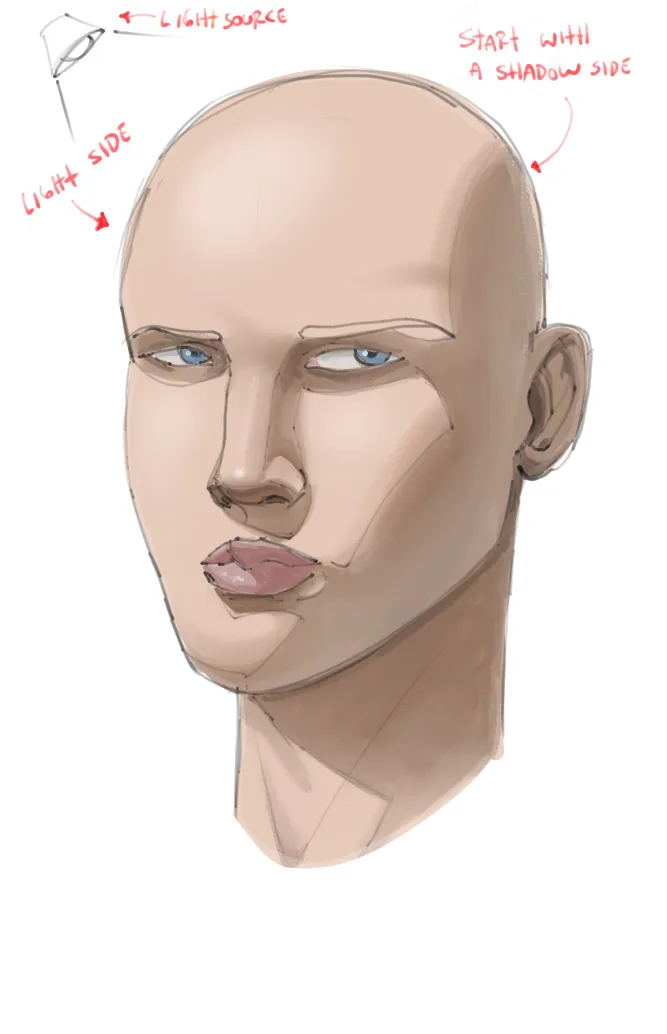
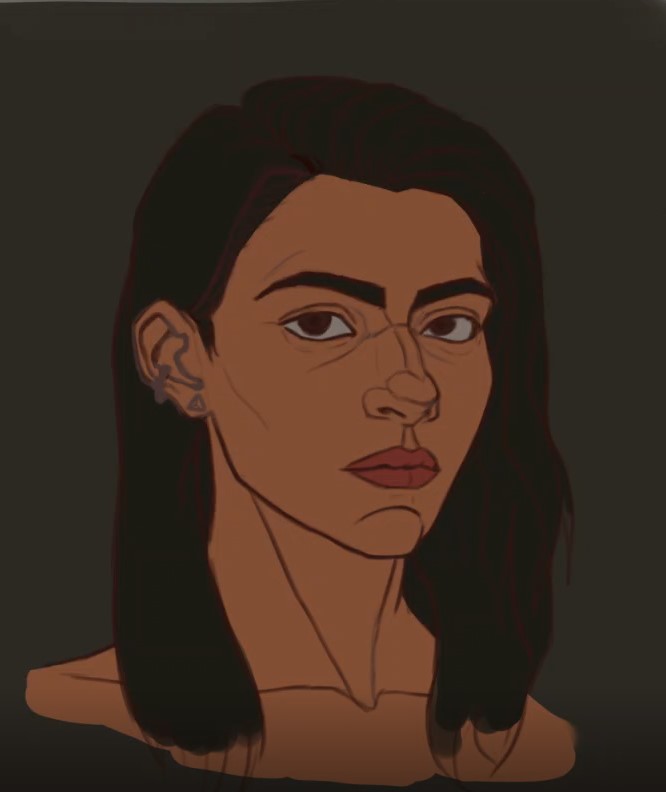
I'd recommend starting with the line art and focusing on establishing the overall shape and structure of the face. Try to define the facial contours, proportions, and major features first. This will help you understand the boundaries and underlying forms of the face before moving on to rendering. Once you're happy with the line art, you can start applying flat colors. After that, identify your main light source and determine how the light interacts with the different planes and surfaces of the face. Then, block in the shadow areas using a single value first. This will help you establish a clear separation between light and shadow before adding more complexity. Once the basic values and lighting are working well, you can gradually move on to rendering, refining transitions, and adding smaller details. I'd also strongly recommend studying the fundamentals of light and shadow before getting too deep into rendering. Understanding how light behaves will help you make more informed decisions instead of simply adding shadows and highlights based on appearance. Some particularly useful concepts to study are core shadow, bounce light, ambient occlusion, cast shadow, halftones, highlights. I'd suggest studying these concepts separately and observing how they appear in real-life references, especially portrait photography. Try to understand why each shadow or highlight appears where it does, rather than simply copying its shape. I hope this feedback helps you develop a better understanding of facial structure, lighting, and rendering. Take your time with the fundamentals, because a solid understanding of light and form will make the rendering process much easier and more convincing in the long run!
Paintovers (1)
Comments 2
So, before you start adding all the color variations and rendering, you should pick a light direction, and separate the shadow side from the light side. Once you have established that, it's way easier to then add more values and color notes. I hope this helps :)
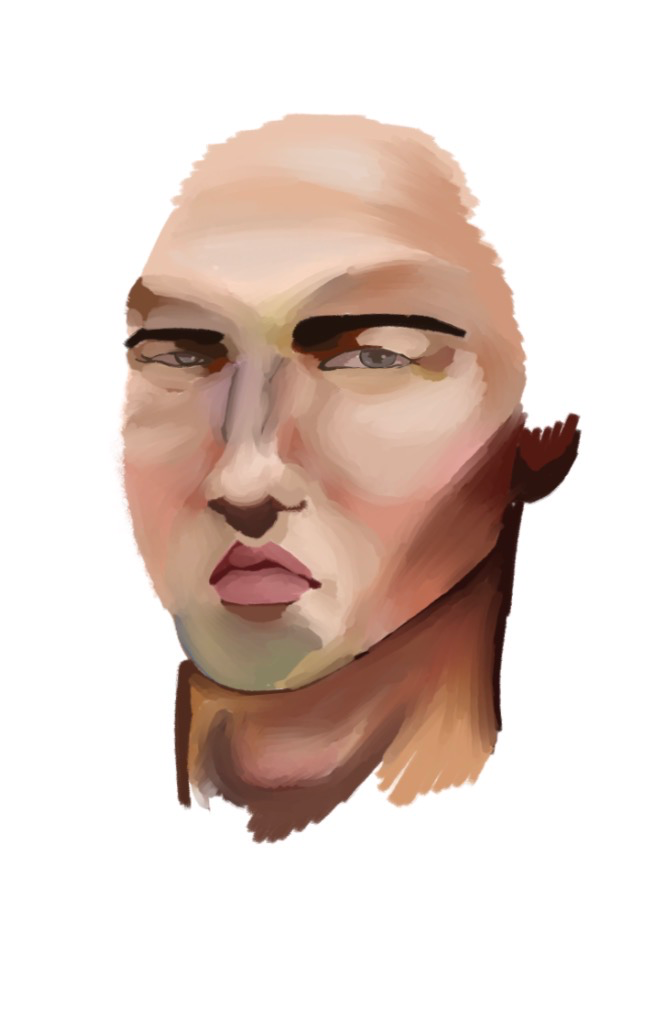
Help with my art(update)

Artist's notes:
I fixed a bit it but i have a feeling something is still wrong, anything helps.
11