
spicyrobot8 months ago
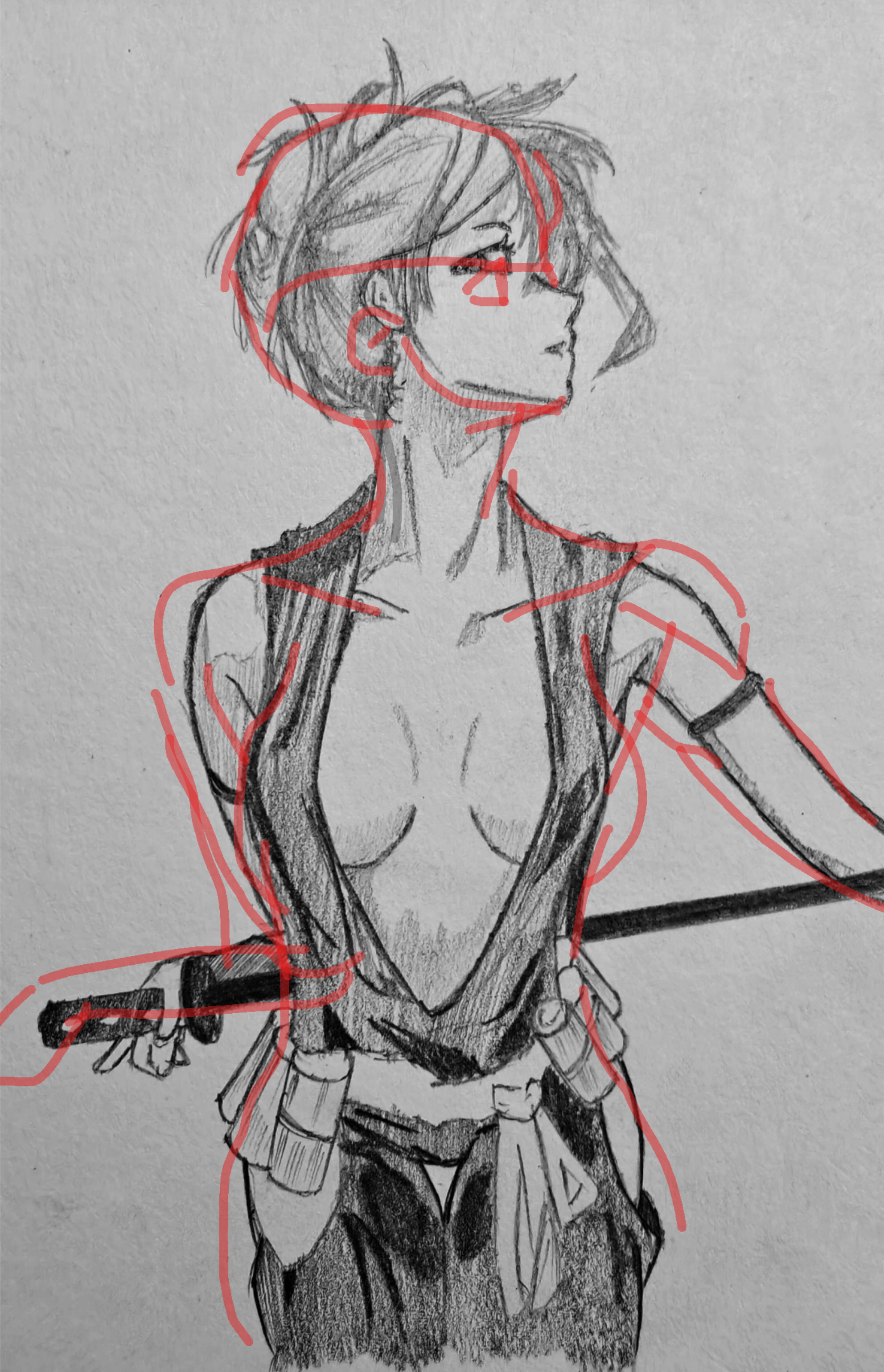
make head bigger lower the eyes arm longer for leg bigger
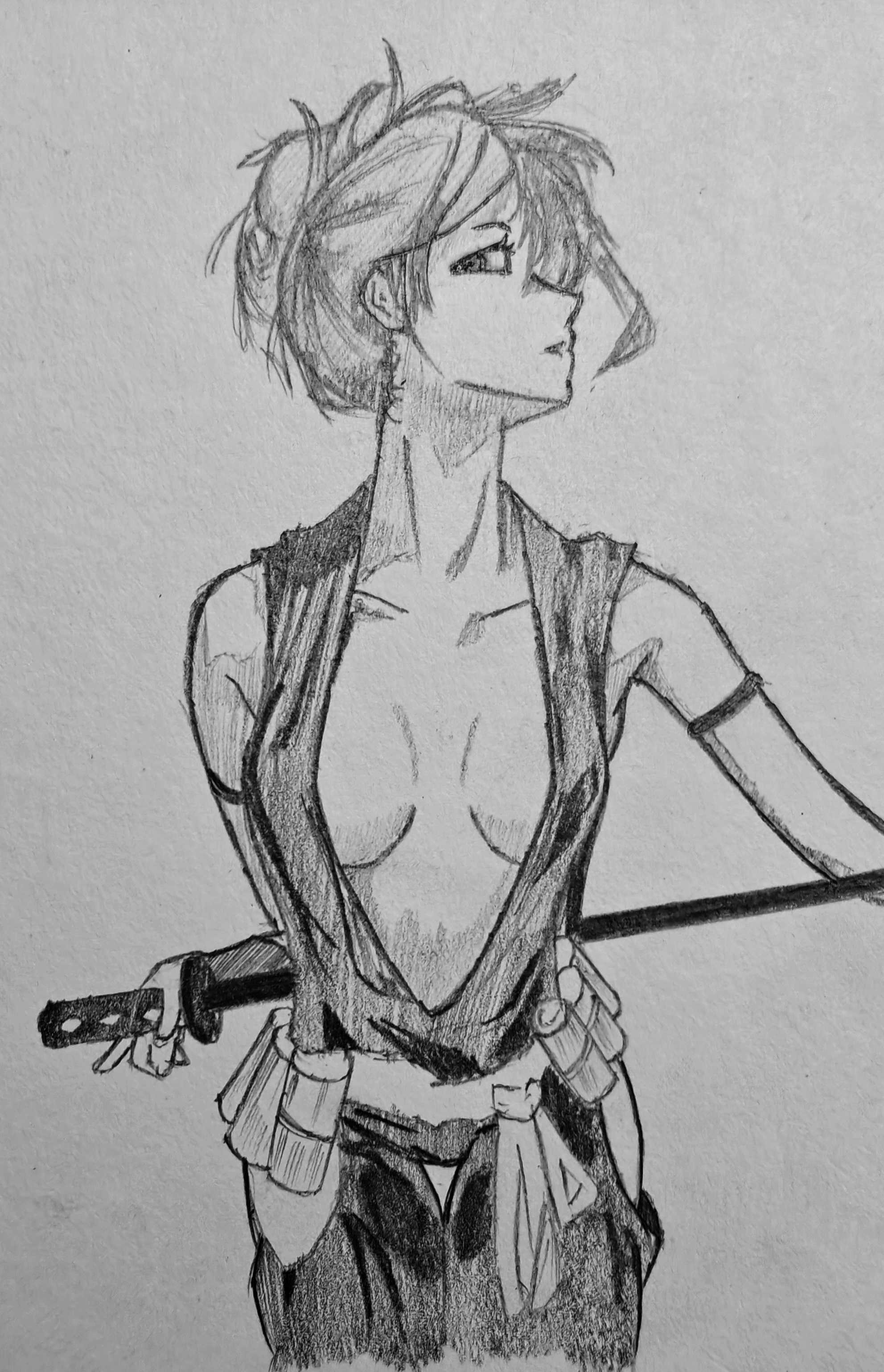
I feel like the face is really off and arms are really poor as well. Feedback would be really appreciated on how I can get better at them.
make head bigger lower the eyes arm longer for leg bigger
first of all i really like the hair, and the clothing as well as the overall design and pose idea. However i think there are some structural problems here. your neck is way too long and the forearm of your swordarm is way to short, the hand i would say is also a little too small. in my opinion it would also look better if you didnt chose that angle of the sword arm. for a better readable sillouette i wouldnt hide the elbow behind the body. additionally i think your shoulders should be further away from the body. you could also show a bit more of the ribcage. For the hip i am not really sure what is going on there, your torso and breast are viewed from the front while your hip is extremely tilted back(my explanation of your very short hip lengh(blue line)) and then your legs are viewed as streight again. i cant really explain it better since i am also not a professional but maybe someone else can call out better what seems wrong to me there. For the face i think the henrik already sad it all. i hope my messy feddback helped you a bit, keep it up!! Greetings Horus
You did a really nice job taking your time with your lines, and that patience shows. That’s a strong habit to build early on. Since you’re still getting familiar with structure and form, it would really help to start the head using simple volumes, such as a sphere for the cranium and a simple block or wedge for the jaw, before moving on to features. This gives you something solid to build on. When adding facial features, try to think about wrapping them around the form of the head rather than placing them flat on the page. Drawing through the volumes and using light cross-contour lines can help you understand how the eyes, nose, and mouth sit on the curved surface. It’s also useful to stay aware of how the planes of the head are twisting and turning in space, especially around the brow, cheekbones, and jaw, as this helps the head feel more three-dimensional. As you build, double-check proportions early, such as the size of the cranium, the length of the face, and the placement of features, before committing to cleaner lines. You’re off to a good start. Keep constructing simply, drawing through your forms, and letting the drawing develop step by step.
