Why Giving Art Critique Improves Your Own Drawing Skills
How Giving Art Feedback Makes You a Better Artist
Most artists think that the only way to get better at drawing is to lock themselves in a dark room, open a sketchbook, and grind out thousands of solitary mileage hours. But here's a problem with that strategy: you cannot fix a mistake that your own brain is chemically blind to.
When you spend hours staring at your own canvas, your brain habituates to your errors. It normalizes your broken perspective and warped proportions because it knows what you intended to draw, rather than what you actually drew.
If you want to fast-track your growth, you need to step away from your own desk and look at someone else's. Actively breaking down another artist's work and learning how to give structured critique is the ultimate hack to sharpening your own execution. Here is why analyzing other people's art makes you a lethal draftsman.
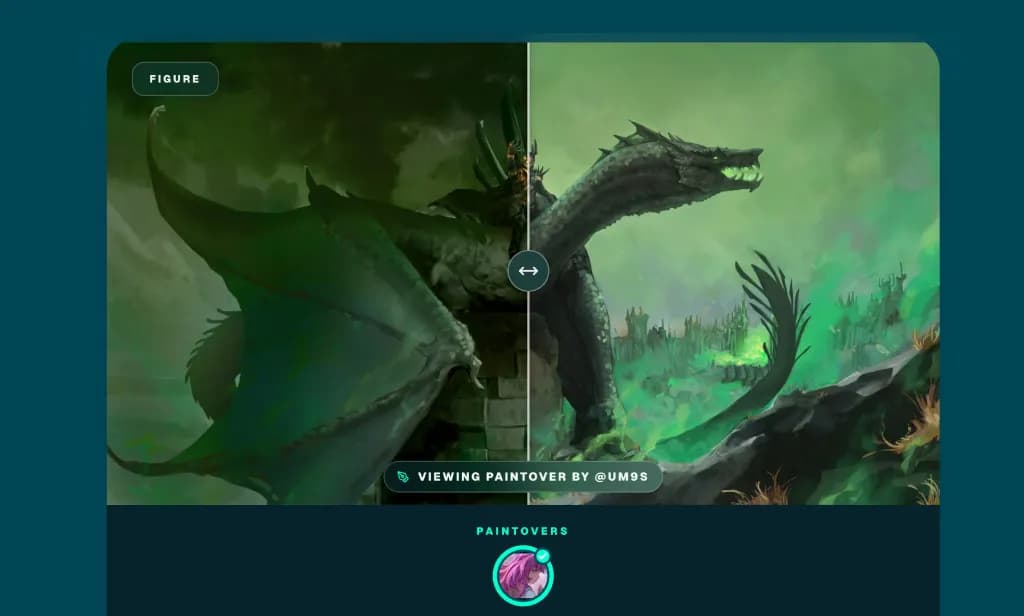
Artwod community hub submission and art feedback, dragon rider painting digital 2d art, green colors
3 Ways Giving Feedback Secretly Upgrades Your Skills
When you look at your own drawing, you are emotionally attached to it. When you look at a stranger's drawing, you have zero emotional bias. You can clearly see the exact moment their perspective line drifts off the horizon or their anatomy loses its volumetric structure. By training your eyes to spot execution flaws instantly on their canvas, you build an automatic internal alarm system that triggers when you make those exact same mistakes on your own. This is exactly why critique improves visual analysis skills.
2. Teaching is the Ultimate Form of LearningThere is a profound psychological difference between knowing a concept and explaining it. You might think you understand the Artwod bounding box method, but the second you try to type out an explanation or draw a redline over someone else's flat sketch, you force your brain to formalize that knowledge. Why teaching reinforces artistic understanding is rooted in the psychology behind analytical learning - if you can’t clearly articulate why their perspective looks broken, you don't actually understand perspective yourself.
3. You Deconstruct the "Magic" of RenderingWhen you look at a masterpiece, it's easy to get overwhelmed by the final render. But when you look at a student's struggle, you see the blueprint bare, allowing for learning form through observation. Giving feedback forces you to look beneath the surface detail and diagnose the foundational pillars: composition, value hierarchies, and spatial design. This makes identifying composition and rendering mistakes second nature to you.
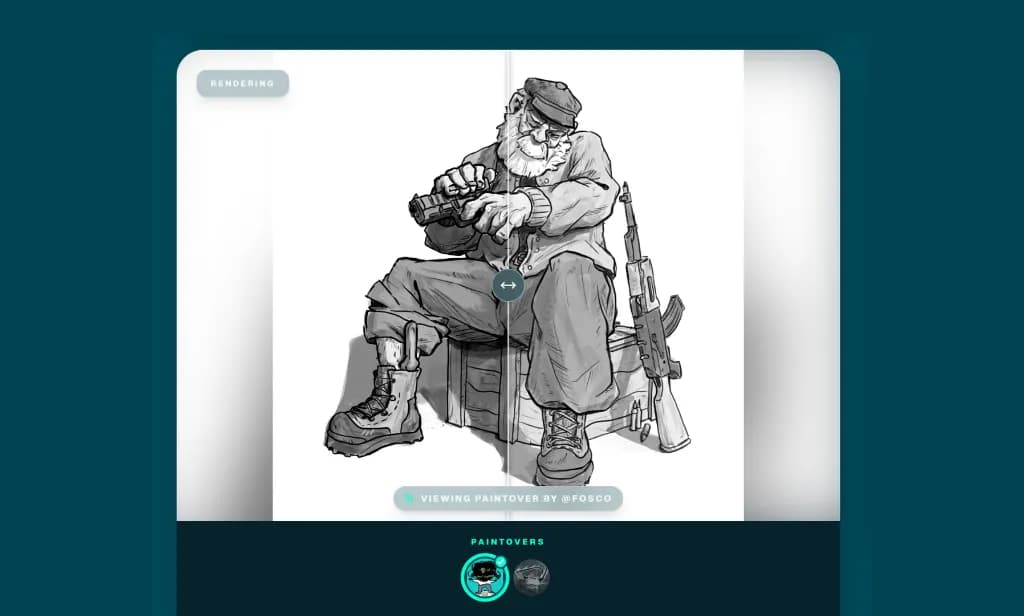
artwod community hub feedback and submission, digtial 2d art, an old man in black and white cleaning his gun, sitting
Mastering the Fundamentals Through Critique
How critique strengthens artistic fundamentals: By tracking concrete rules on other artists' canvases, you naturally reinforce them in your own brain. You get to see how different artists handle structural problems, which directly aids in improving perspective awareness through critique.
How giving feedback improves your own workflow: By stepping out of your own head, you clean up your personal drawing pipeline. You start planning your 3D forms better because you've seen the exact common feedback patterns artists begin noticing when someone tries to skip those critical setup steps.
Building artistic communication skills: In a professional studio environment, art is never a solo sport. You will be expected to evaluate, adapt, and collaborate daily. Community contribution and artistic growth go hand-in-hand - learning to speak clearly about form makes you an invaluable asset to any production pipeline. Look at historical examples of artists improving through critique participation; growth accelerates the moment you join a functional feedback loop.
The best place to sharpen your diagnostic eye is right in our community backend. Jump into the trenches, analyze real submissions, and give art feedback across our specialized categories:
Deconstruct spatial grids with a perspective linework critique
Fix structural poses using figure construction critique
Analyze facial structures via portrait critique examples
Audit organic volumes with anatomy art corrections or animal drawing critique examples
Examine scene design using environment composition feedback or diagnose light logic with rendering study feedback