Portrait Drawing Mistakes Artists Make and How to Fix Them
Common Portrait Drawing Mistakes Artists Should Fix
Capturing the human face is rewarding, but notoriously unforgiving. Because our brains are hardwired to recognize faces, even a tiny structural error stands out immediately, leaving your drawing feeling "off."
When a portrait fails, artists usually blame their shading. In reality, the issue almost always lies deeper - in proportions, anatomy, and construction. Here is how to fix the most common mistakes.
Common Facial Proportion Mistakes
The Mistake:
The Solution: Remember the universal half-way rule. In a front-facing view, the horizontal centerline of the entire head structure passes directly through the eyes. Always measure from the very top of the skull down to the chin to find your true halfway mark before drawing features
Eye Placement and Alignment Problems
The Mistake:
The Solution: Eyes rest inside rounded orbital sockets on a curved skull. In a three-quarter view, the far eye compresses horizontally. Always draw an alignment wire across the brow and cheekbones to ensure both eyes track along the same structural curve.
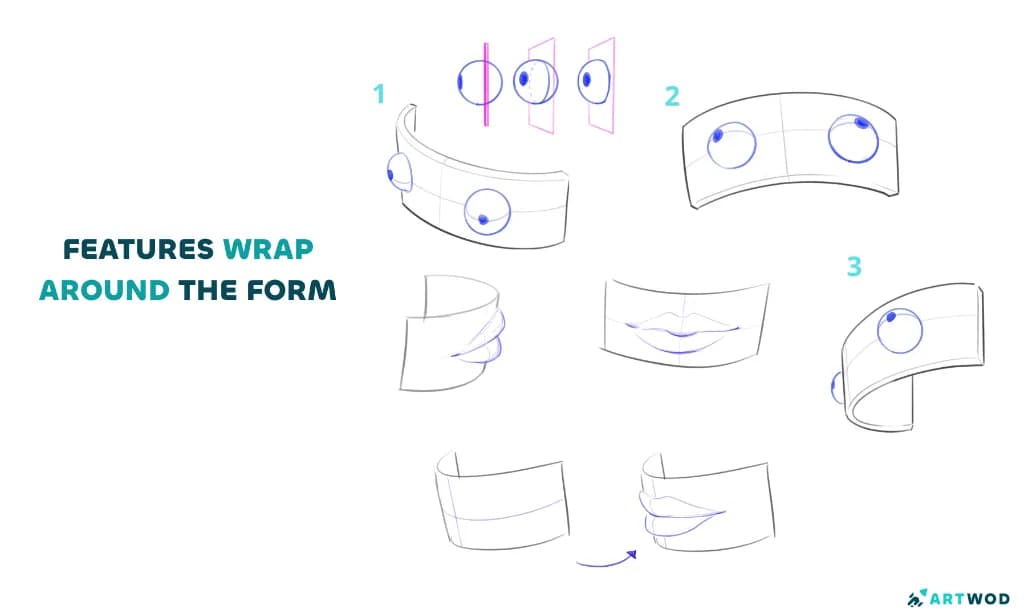
2d digital drawings of eyes and lips wrapping around a curved plane, practical examples
Head Construction Mistakes Beginners Make
The Mistake:
The Solution: Use a solid 3D sphere to represent the braincase, then slice off the sides (like the Loomis Method) to account for the flat temporal regions. This creates a definitive jawline and a clear separation between the front and side of the head.
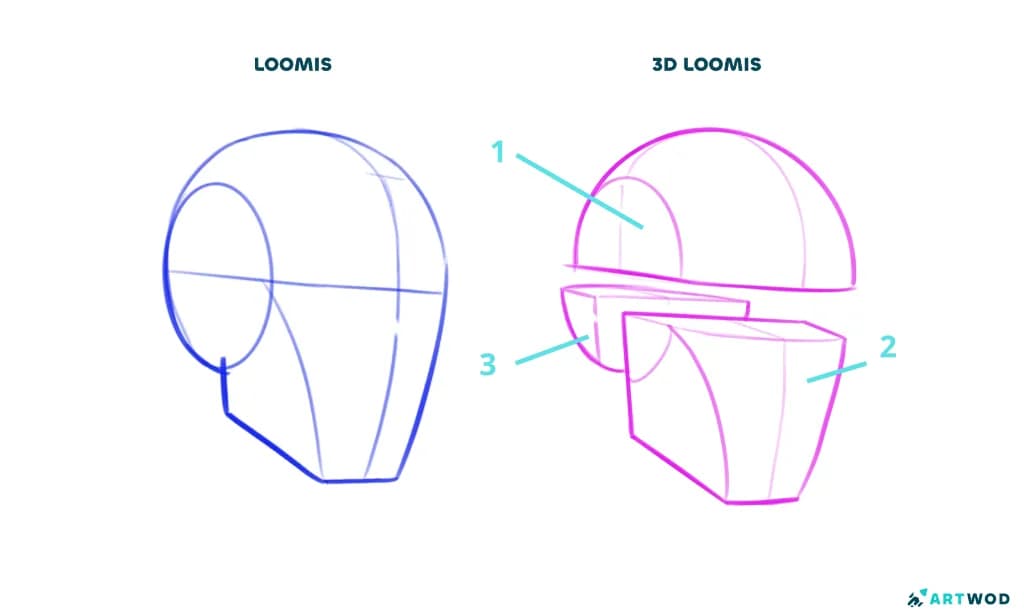
3D Loomis Head example in pink pencil next to normal Loomis head in blue pencil
Anatomy Issues in Portrait Drawing
The Mistake:
The Solution: Study skeletal landmarks. The bridge of the nose is solid bone, while the lower half is flexible cartilage. The lips must wrap seamlessly around the cylindrical barrel of the teeth.
Lighting and Shading Mistakes in Portraits
The Mistake:
The Solution: Group your values into two clear families: light and shadow. Before adding gradients, map out your hard shadow shapes (terminator lines). If a plane faces away from the light, it must live cleanly inside the shadow family.
Why Portraits Feel Stiff or Lifeless
The Mistake:
The Solution: Start with a fun shape, not construction lines (intemediate approach, so be caredul!). Pay attention to how the neck connects the head to the ribcage. The neck tilts forward, and muscles create dynamic diagonals that inject life into the pose before you ever draw a feature.
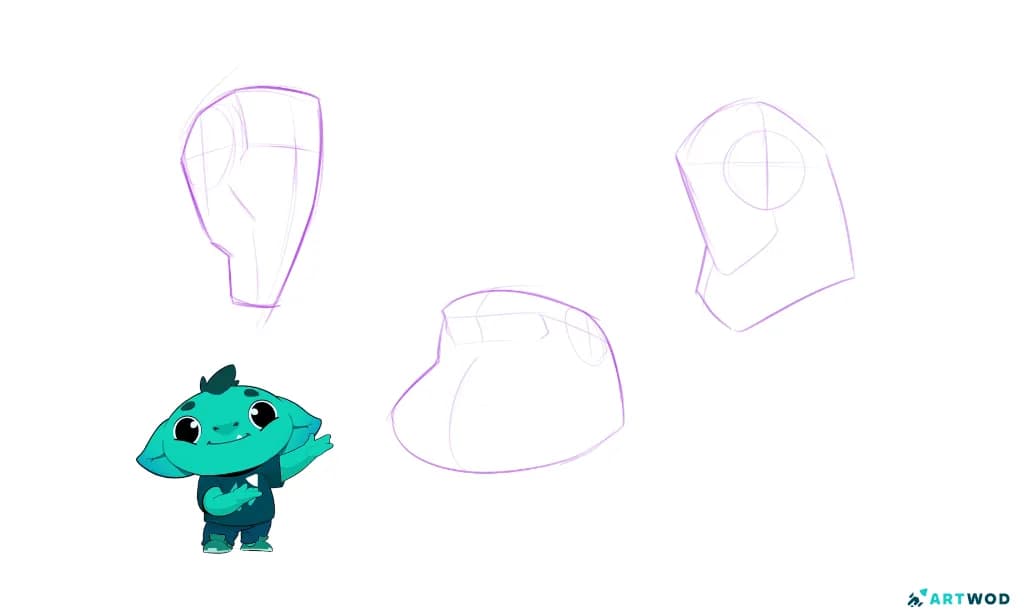
Digital 2d Drawing of shapes in pink pencil, practical exercise for students. Artwod Mascott Woddy (little green creature) on the left indicating the shapes.
Facial Symmetry Misconceptions
The Mistake:
The Solution: Accept organic asymmetry. Subtle differences in eye shape or eyebrow heights add immense character. Furthermore, even a slight head tilt or perspective shift instantly warps symmetry due to foreshortening.
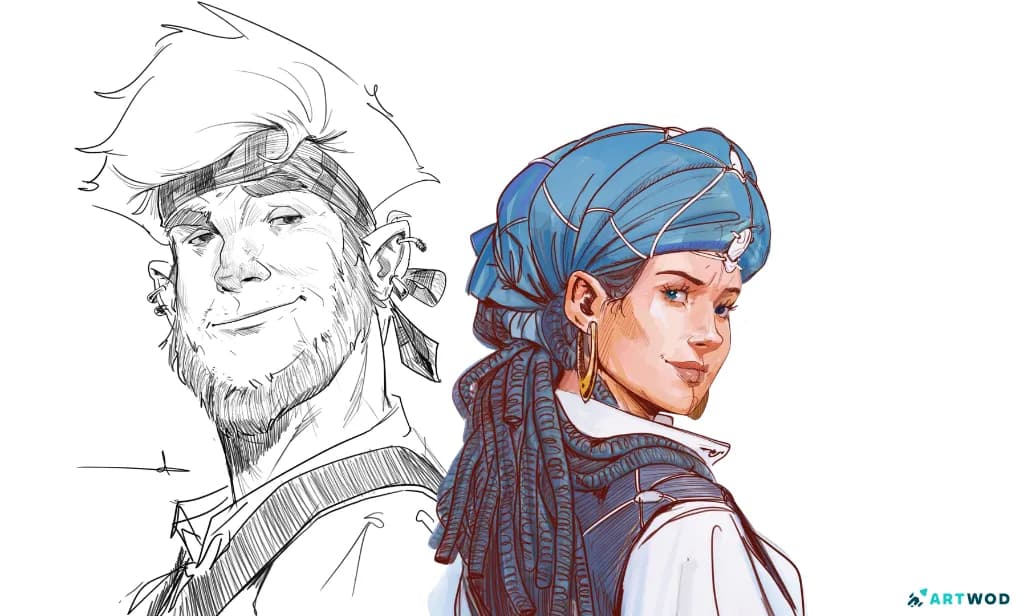
2 digital 2d drawings by Antonio Stappaerts, man pirate in black pencil and colored woman pirate
Rendering Mistakes in Portrait Art
The Mistake:
The Solution: Control your edge quality. A believable portrait requires a balanced mix of hard, firm, soft, and lost edges. The bridge of the nose requires crisp, hard edges, while the cheeks require soft gradients.
Improving Portraits Through Critique
Because your brain naturally tries to correct your own visual mistakes while you work, it is nearly impossible to spot your own proportional errors after staring at a canvas for hours. Objective feedback is essential to breaking out of your plateaus. Take advantage of digital tools to audit your work. Mirror your canvas horizontally or look at your traditional drawing through a physical mirror. This trick instantly resets your brain's bias, exposing warped features, crooked alignments, and skewed anatomy instantly. If you want to bypass the guessing game completely and get professional course correction on your structural alignments, you need an expert eye. You can submit your portrait studies directly to our dedicated portrait art feedback hub to get targeted, systematic breakdowns of your anatomy from industry professionals.
Portrait Drawing Exercises for Faster Improvement
The 3D Loomis Head:
The Feature Tracking: Fill a page with 10–15 simple construction spheres rotated in random directions. Practice drawing only the brow line and the center line of the nose wrapping around those spheres to master spatial tracking before investing time into rendering.
If you want to stop drawing flat, lifeless faces and start building portraits that command true structure, depth, and unmistakable likeness, you need consistent, structured feedback.
Stop letting hidden anatomical blind spots stall your progress. Upload your latest sketches to Artwod's centralized art feedback platform today, dismantle your bad habit loops, and unlock the definitive roadmap to mastering the human form!
Related Posts