Original Characters Drawing: How to Develop a Manga-Inspired Style
Original Characters Drawing: How to Develop a Manga-Inspired Style
The Artwork and the Problem
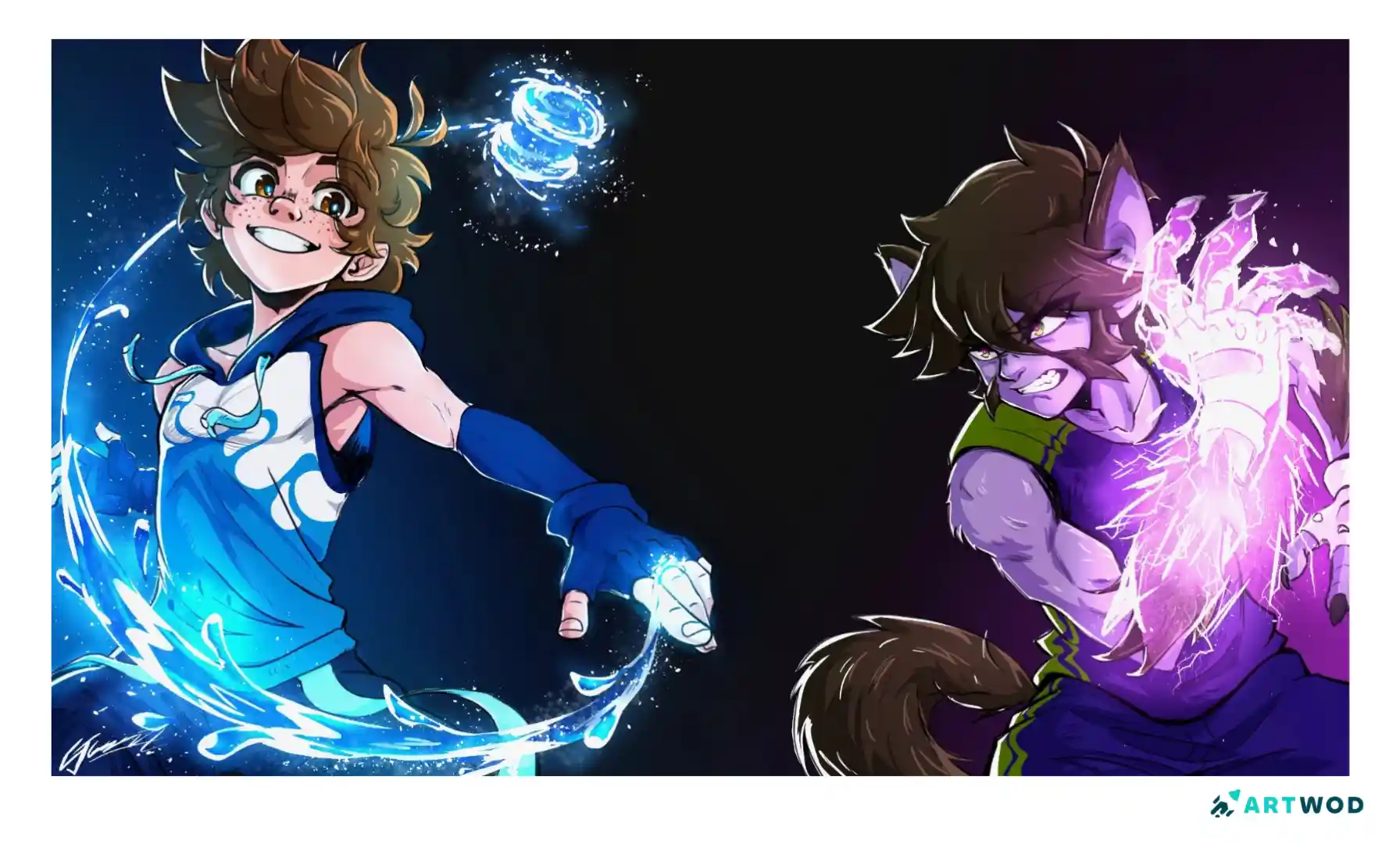
That's exactly the situation in this Artwod submission. @battlehawkart posted a two-character comic piece with a clear manga/eastern aesthetic ambition, a solid compositional read, and a genuine question: is this messy or am I missing something fundamental?
The short answer from the community: neither. The piece is strong. The feedback was specific, technical, and genuinely useful - which is exactly what makes it worth breaking down here.
Three reviewers left notes, and they all pointed to different things - which tells you something about how layered character design actually is.
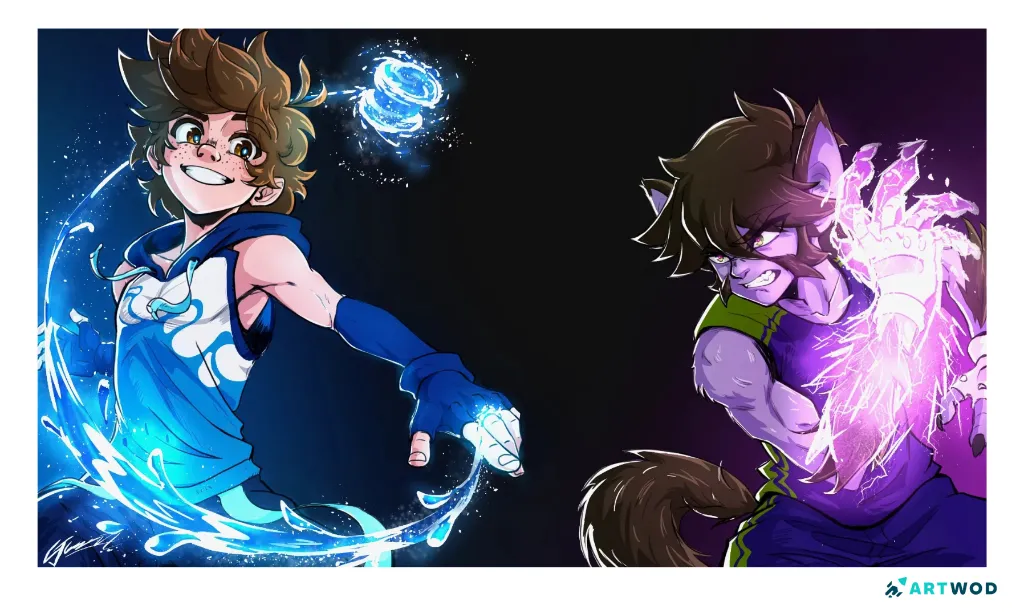
Original characters drawing submitted for feedback on anatomy, design, clothing, 3D forms, and visual interest
The Actual Feedback
@antonio flagged two things. First, the lighting from the magical element the characters are casting isn't bleeding onto them enough. When a light source exists in a scene - a spell, a fire, a neon sign, a torch - it changes the colour and value of everything around it. If the characters are casting something bright, that light should be visible on their skin, clothing, and hair. Ignoring it breaks the internal logic of the image even when everything else is technically correct.
Second, a harsh line on the right character's bicep was making the form feel too extreme. Worth softening to let the muscle read more naturally. And the hair and sideburns on that same character were reading as one flat shape, which collapsed the depth in that area. Separating them - even slightly - pushes the hair forward and the sideburn back, adding dimension without touching the design itself.
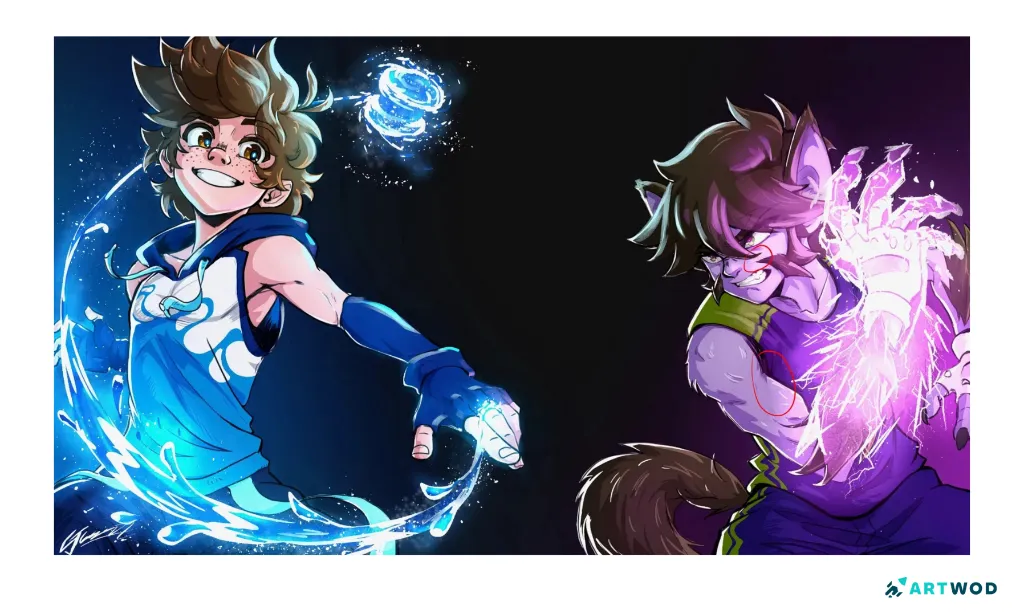
Original character drawing paintover demonstrating changes to anatomy, forms, clothing, and character construction
@redvelvett22 went deeper into the manga stylisation question, and this is where it gets genuinely useful for anyone developing an eastern-influenced style. Eastern styles actually use more anatomical realism than people assume - including wider eye spacing than western cartoons. Compare Studio Trigger (Kill la Kill, Promare) with something like Steven Universe and the difference is immediately visible. The proportions are different, the detail conventions are different, the way shapes are prioritised is different. These aren't mistakes on either side - they're stylistic conventions. Knowing them is what makes a style feel intentional rather than approximated. If you're interested in developing a strong anime style, check our our Anime road - 5 minute exercises for daily practice will boost your skill in no time.
The arm extending toward the viewer also had room for stronger foreshortening. When a limb comes toward the camera, it should feel compressed and closer - exaggerating that is what gives those dynamic panel compositions their energy. It's one of the most expressive tools in the manga toolkit and one of the most underused by artists in the process of developing
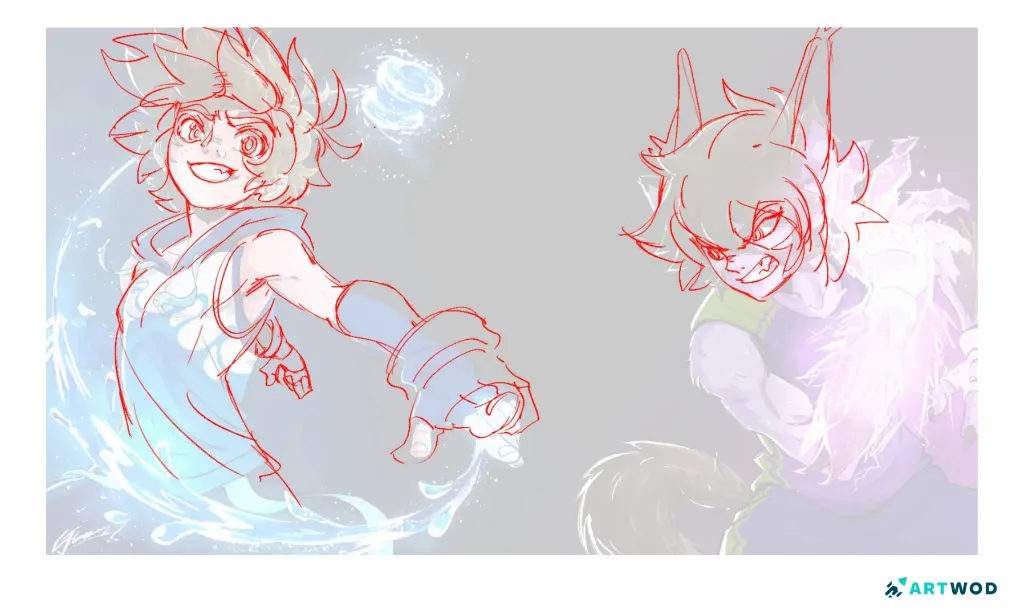
Original character drawing paintover demonstrating changes to anatomy, forms, clothing, and character construction
How to develop a Manga Style
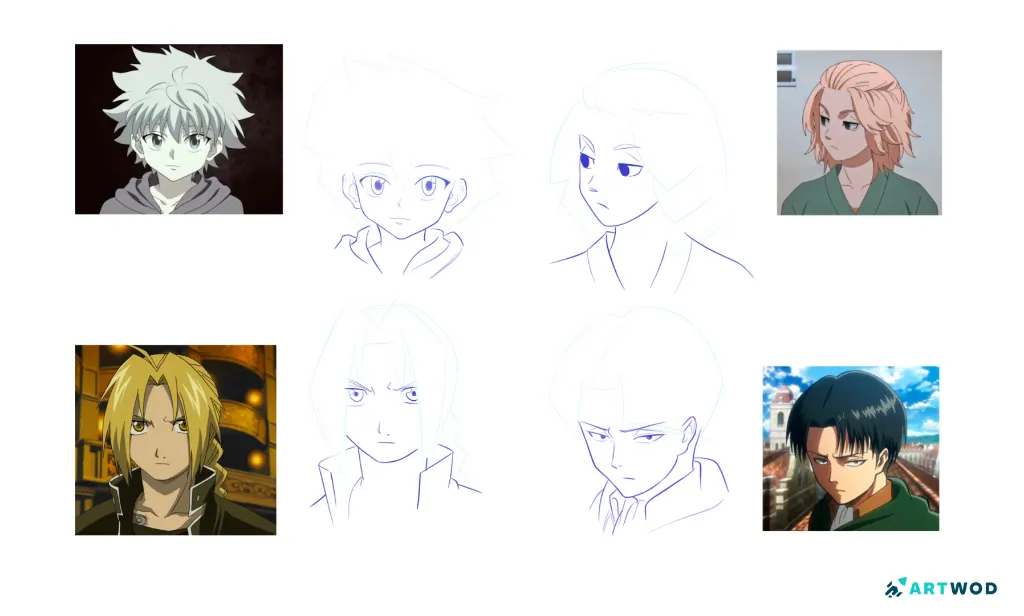
Try drawing the hair of these anime characters! How did it go? - Submit to our Community!
Why Does Your Work Feel Messy?
“Messy” is a difficult diagnosis because it can describe several different problems.
A drawing may feel messy because:
Too many lines have equal visual importance.
Construction lines remain visually dominant.
The silhouette is unclear.
Forms overlap without clear separation.
Clothing details compete with the body structure.
The viewer cannot tell which feature should attract attention first.
Before cleaning up the drawing, determine which of these problems is actually occurring.
Check your silhouettes. Fill the character with flat black and look at the shape that's left. If things are merging in ways that feel unintentional - shapes blending into each other, forms losing their individual identity - that's a depth and separation problem. Fix the separation and the messiness usually resolves itself.
Design Should Support the Character
The artist also mentioned character design as an area they wanted to develop.
Good character design does not necessarily mean adding more visual information.
It can come from making a few choices work together:
Shape language
Proportion
Clothing
Hair
Silhouette
Accessories
Pose
Expression
When developing original characters, ask what makes each character distinguishable from the others.
Could you recognize the character from the silhouette alone?
Could you describe their visual identity without mentioning every small detail?
These questions can help reveal whether the design has a clear foundation or is relying too heavily on surface detail.
Make the Forms Believable Before Making Them Interesting
The artist wanted to make their drawings both interesting and believable.
Those goals can sometimes pull in different directions.
Believability comes from coherent structure, proportion, perspective, and form.
Interest can come from exaggeration, shape language, pose, expression, composition, and design.
You do not need to choose between them. A useful workflow is:
Make the structure believable → then push the design.
Once the underlying forms work, you can exaggerate proportions, clothing shapes, poses, or expressions while maintaining enough structural logic for the viewer to accept the stylization.
This is particularly useful for comic and manga-inspired drawing, where realism can be deliberately altered without abandoning believable construction.
Manga Style Practice: Study and Apply
This art workout is specifically for artists developing a manga or comic style. It takes two sessions.
Session one is pure study. Pick one artist whose work is close to what you want to make. It could be a Studio Trigger animator, a specific mangaka, a western comic artist with eastern influences - whoever is your actual reference point. Spend 30-45 minutes doing master studies. Don't try to draw in their style. Just copy what you see, as accurately as you can, and pay attention to the decisions you're making. Eye distance. Ear placement. Where the nose sits. How hair is divided. How foreshortening is handled on hands and arms. How fabric folds. Write down what you notice.
Session two is application. Take one of your existing characters and redraw them applying the conventions you noticed. Don't change the character design - just apply the stylistic logic of the artist you studied to your own work. See what shifts.
Do this across three or four different artists whose work you admire and patterns will start to emerge. Those patterns are the foundation of your own style - not something you invent from scratch, but something you build by understanding what already works and making it yours.
Common mistakes when developing a comic or manga style
Copying surface aesthetics without understanding the underlying conventions. The eye spacing, ear placement, and proportions in eastern styles aren't arbitrary - they follow consistent internal logic. Understanding the logic is more useful than imitating the look.
Using western anatomy as the default and eastern stylisation as decoration on top. These are different systems with different conventions for proportion, line weight, and detail hierarchy. Treat them as separate starting points.
Ignoring light sources that exist within the scene. If you drew a light source in, you committed to it. Follow through.
Treating overlapping forms as flat shapes. Hair sits in front of the face. Clothing sits in front of the body. Arms sit in front of torsos. Each layer needs a small visual separation from what's behind it.
Asking "is this messy?" before asking "what specifically is the viewer's eye doing?" Messiness is almost always a hierarchy problem - something is competing for attention that shouldn't be. Identify what that thing is before you start cleaning.
Getting Feedback on Original Character Drawings
The hardest part of self-critique is that you've been looking at the same drawing long enough that your eye stops catching problems. You stop seeing the bicep line as harsh because you've accepted it. You stop seeing the sideburn merge because you know what it's supposed to be.
Another artist doesn't have that familiarity. They see what's actually there. And if they draw in a similar style or have relevant technical knowledge, they can point to something specific - not just "this feels off" but "this form is too extreme" or "these shapes need separation."
That's what makes community feedback particularly useful at this stage of development. The Artwod Community Hub is built for exactly this - submit your work, explain what you're aiming for and what you're unsure about, and get specific feedback from artists who are actually looking at what you made.
FAQ
How do I improve my manga or comic art style?
Study the specific artists whose style you want to develop rather than manga as a broad category. Pay attention to proportional conventions like eye spacing, ear placement, and foreshortening, and apply what you notice to your own characters.
And if you want someone to tell you, what to practice every day, check our our Anime road! Bite-sized exercises designed by artists to help your skill grow.
Why does my character drawing feel off even when the anatomy seems right?
Stylistic conventions in manga and eastern comics differ from anatomical realism in specific ways - wider eye spacing, higher ear placement, more extreme foreshortening on dynamic poses. If your drawing uses realistic conventions in a style built on different ones, it can feel slightly wrong even when nothing is technically incorrect.
How do I make a light source feel believable in a character drawing?
Any light source that exists in your scene needs to affect the colour and value of the objects and characters near it. Reflected light from a spell, fire, or any other in-scene source should be visible on nearby skin, clothing, and hair.
How do I add depth to a stylised character drawing?
Small visual separations between overlapping forms - a slightly darker edge where hair meets face, a subtle value shift where an arm crosses the torso - create a strong sense of three-dimensional space without requiring realistic shading.
How do I get useful feedback on my character drawing?
Share the work and explain specifically what you're trying to achieve and what feels uncertain. A targeted question gets more actionable feedback than a general request. The Artwod Community Hub is a good place to do this - submit your work, explain your goal, and ask artists to focus on the specific area you want to solve.
Should I study anatomy before developing a manga style?
Basic anatomical understanding is useful because it gives you a foundation to stylise from intentionally rather than accidentally. But studying the specific style you want to develop - through master studies of artists you admire - is equally important and can happen in parallel. And don't forget about our anime road ! We created it to help specifically with that!
Keep practising
Explore roadmapsHelp an artist with feedback
Find work to critique