How to Sketchbook: A Beginner's Guide to Sketching Without Pressure
How to Sketchbook (Without the Pressure)
Most artists own a sketchbook. Far fewer actually use it. There's something about the blank page that makes people freeze, even when they draw confidently on tablets, on canvas, on anything else. The sketchbook becomes sacred, and sacred things don't get touched.
If you've ever bought a beautiful sketchbook (or several... or several dozens) and then refused to draw in it because you didn't want to ruin it, you already know what this article is about. Sketching is a skill, but more importantly, it's a mindset. And the mindset is what most people get wrong.
Here's how to actually use your sketchbook.
Mindset first
Before you touch a pencil, the most important thing is the headspace you bring to the page. A sketchbook is not a portfolio. It's not a final piece. It's a thinking space - a place to make mistakes, work things out, follow random ideas wherever they go.
If you sit down expecting to make something good, you've already lost. You'll either spend forty minutes on a single drawing trying to perfect it, or you'll close the book ten seconds in because the first line wasn't right. Either way, you didn't sketch.
The right mindset is closer to journaling than to drawing. You're not trying to produce. You're trying to explore. Some pages will be ugly. Some will be brilliant. Most will be neither. That's the whole point.
If you want a structured place to build this kind of habit, Artwod's practice section has exercises designed exactly for this - practical exercises to improve and space for free drawing as well!
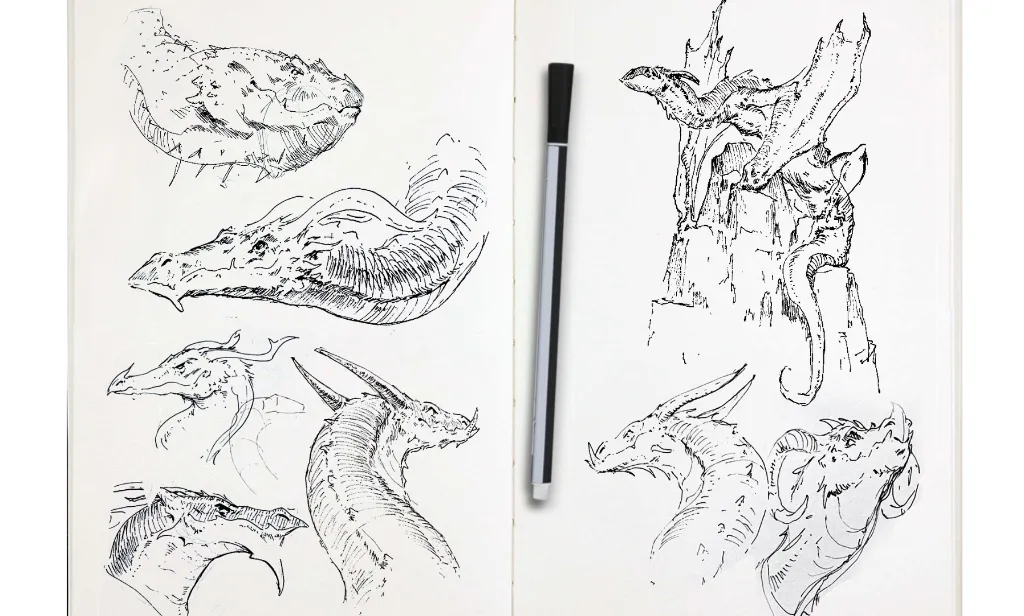
Sketchbook page filled with dragons, black pen dragon heads, traditional art by Antonio Stappaerts
Drop the expectations
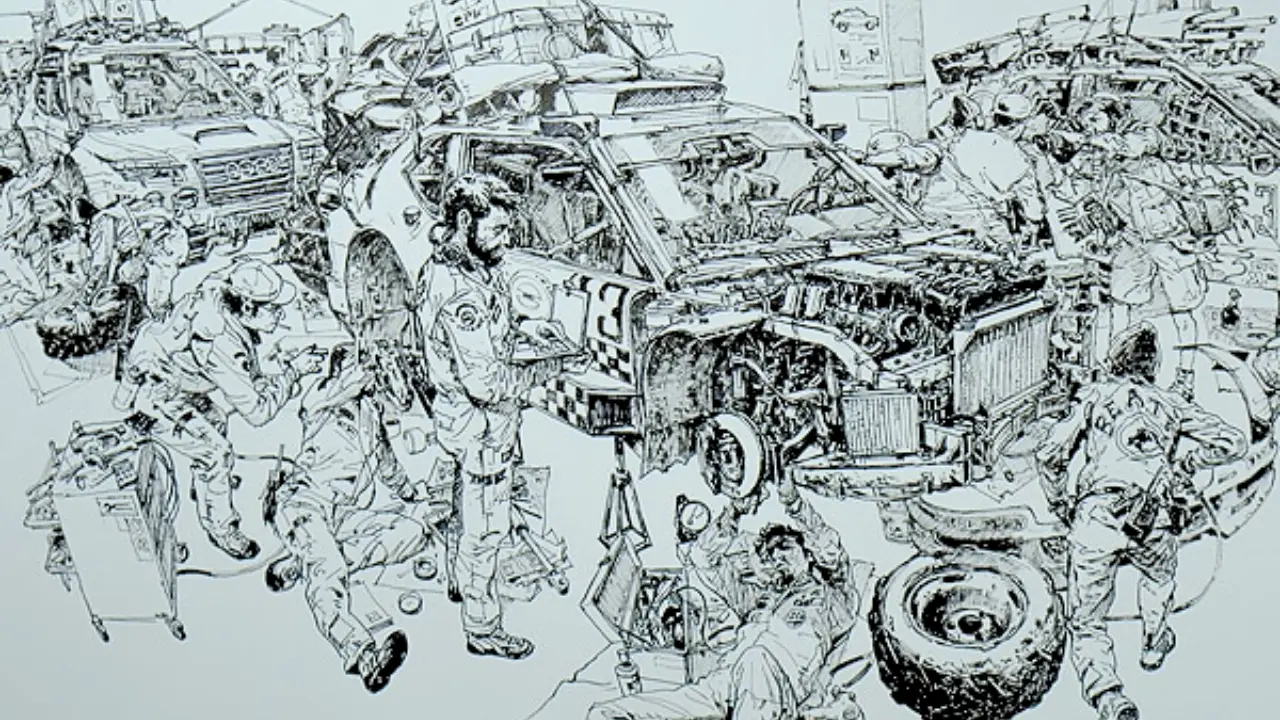
The fastest way to kill your sketchbook is to expect every page to be good. The sketchbooks of professional artists are full of bad drawings. Half-finished thumbnails, weird studies that didn't go anywhere, random hands floating in the corner. Nobody's posting those. So you only ever see the polished pages other artists choose to show, and you end up thinking your messy book is the problem.
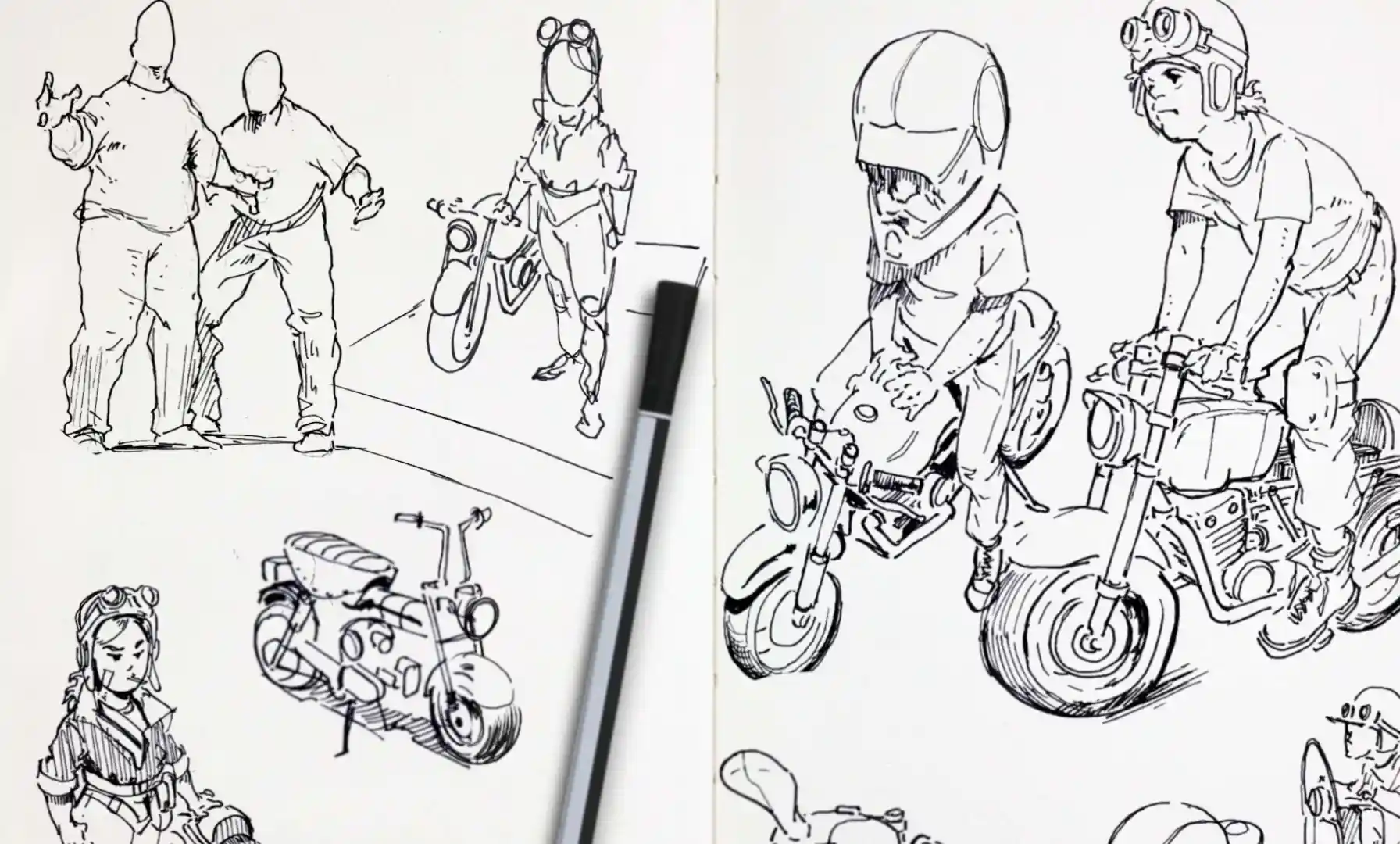
It isn't. The mess is the work. A clean sketchbook means you're being too careful, which means you're not actually thinking on the page. The mistakes, the dead ends, the weird experiments - those are how you learn what works and what doesn't. Without them, you're just performing, not exploring.
So let pages be ugly. Let drawings go nowhere. Don't tear them out. Don't cover them up. Leave the mess as proof that you actually used the book.
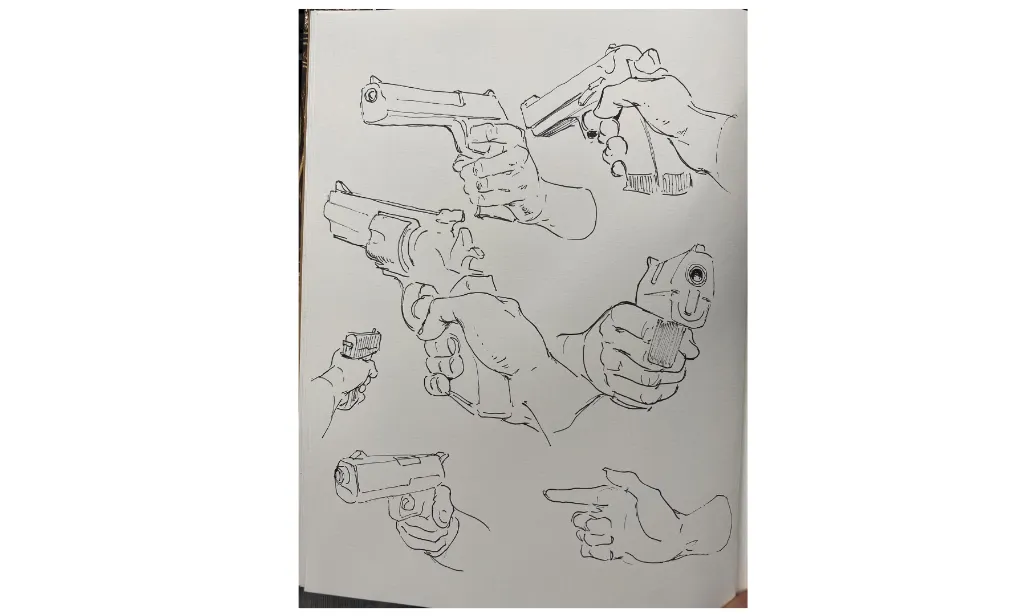
Sketchbook page fulled with hands holding guns, traditional artwork with black pen, by Antonio Stappaerts
Sketching is not performing
This is the biggest one. Sketching is for you. It's not content. It's not a flex. It's not something to show off on Instagram. The moment you start sketching with an audience in mind, you stop sketching and start performing - and performance kills experimentation every single time.
When you're performing, you stick to what you know works. You draw the things you can already draw well. You avoid the awkward subjects and the unfamiliar techniques because those would risk looking bad. But those are exactly the things that would make you grow. Your sketchbook should be the safest place in your practice - the place where you take the risks you can't afford to take in finished work.
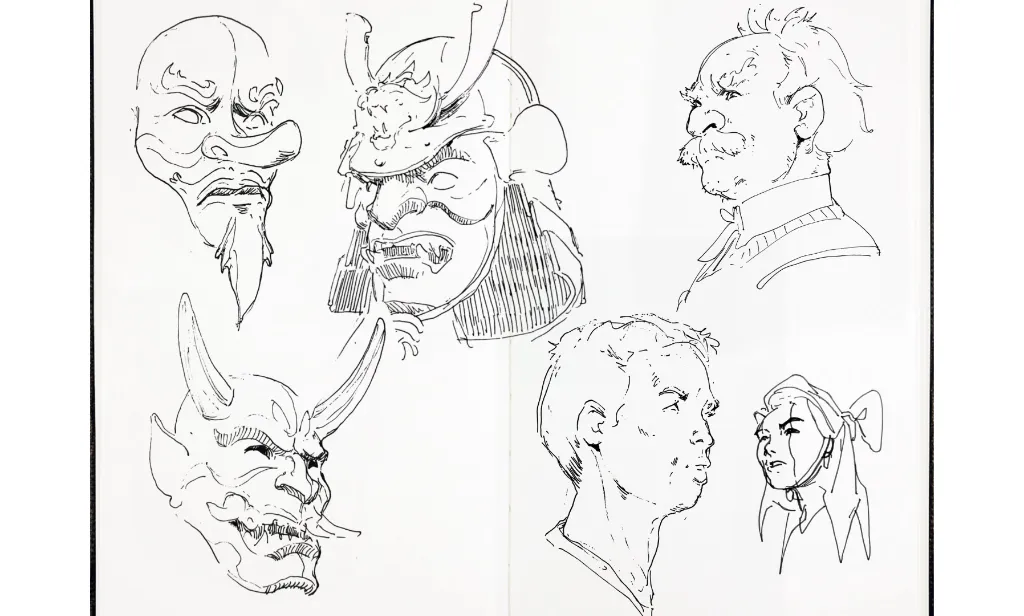
Sketchbook page filled with portraits and masks, made with black pen, traditional art by Antonio Stappaerts
If you struggle with this because you've gotten used to drawing for an audience, it might help to use a private sketchbook. One that nobody sees. Not your followers, not your friends, not anyone. Just you and the page. The freedom comes back fast when there's no audience to impress.
When you do want feedback on a sketch - say you're working out a composition or a character idea and want input before you commit - the Artwod Feedback Tool is a great place to get real critique without the public pressure of social media. Useful when you actually want feedback, not exposure.
Related Posts