How to Deal with Perfectionism as an Artist: 9 Real Methods That Work
Drawing, Drawing
How to Deal with Perfectionism as an Artist
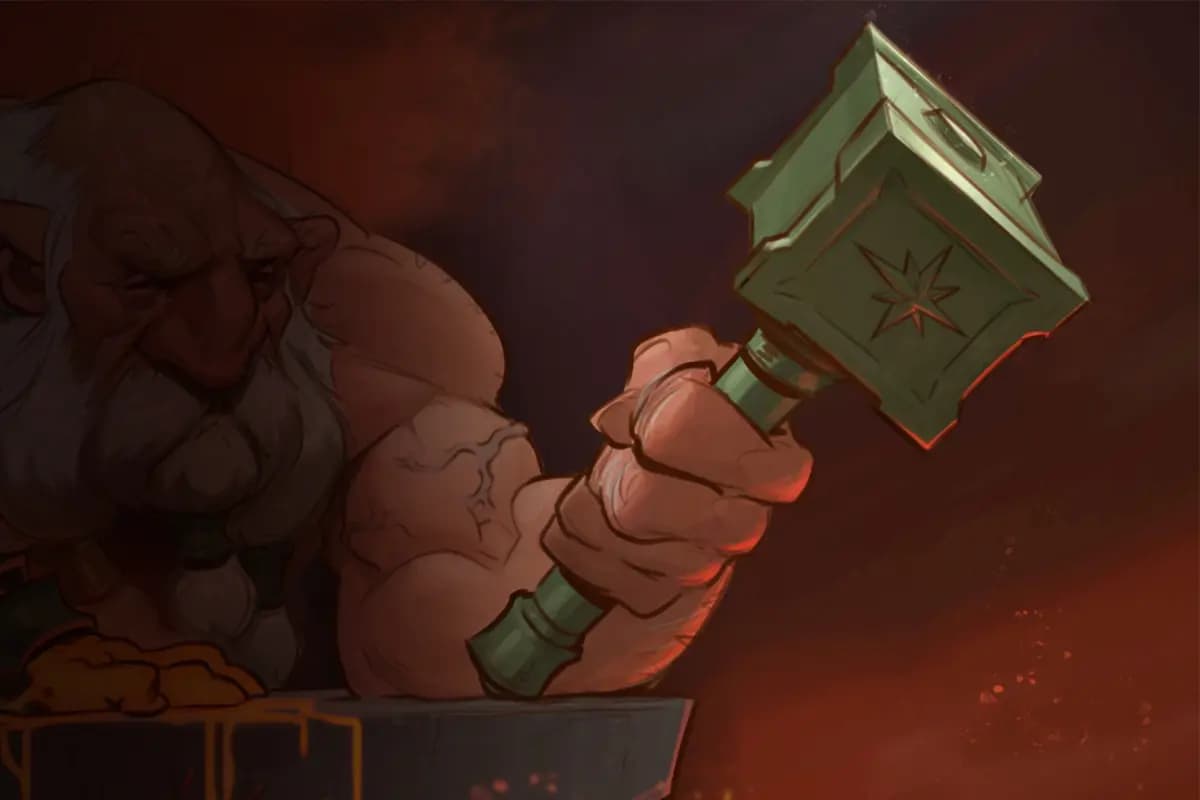
"There is no prize to perfection... only an end to pursuit."
-
Viktor, Arcane
Viktor was right. And if you've ever spent six hours on a single eyebrow, redrawn the same hand fifteen times, or refused to post a piece because "it's not ready yet" - you already know it.
Perfectionism feels like dedication. It feels like having high standards. It feels like the thing that's going to make your art great. But it isn't. Perfectionism is one of the most counterproductive habits an artist can develop, and it does measurable damage to your skill, your output, and your enjoyment of the entire process.
Here's why perfectionism is genuinely bad for you - and 9 methods that actually work to fight it.
1. Post unfinished work
The most direct attack on perfectionism. Take a piece that isn't "ready yet" and share it anyway. The world doesn't end. People might even like it more than you expected. The fear of imperfect work being seen is what fuels the whole cycle, and the only way to dismantle it is to prove to yourself that imperfect is fine.
2. Set time limits
Give yourself 30 minutes to finish a piece. Or an hour. Whatever's tight enough to feel uncomfortable. Perfectionism dies under a clock because there's no time to obsess over the eyebrow for the seventh time. Constraints force decisions, and decisions are what perfectionists struggle to make.
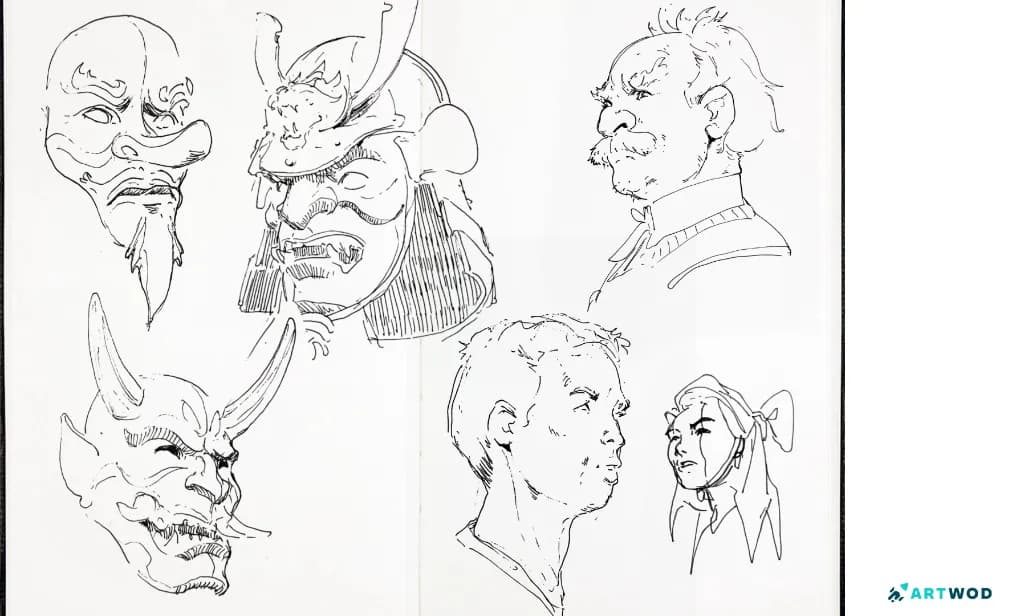
Portrait and mask sketches by Antionio Stapparts. Traditional artwork made with black pen.
3. Have ugly drawing days
Dedicate a session specifically to making something bad on purpose. Sounds silly, but once you've intentionally drawn something ugly, the fear of accidentally making something ugly loses its grip. You've already done the worst thing you were afraid of doing - and survived.
4. Do quantity challenges
Inktober. 100 heads. Daily sketches. Anything that forces volume. When you have to produce a piece every day, you literally cannot afford to perfect each one. Quantity becomes the goal, and perfectionism quietly steps aside because there's no room for it.
5. Separate studies from personal work
Studies are allowed to be bad by definition - that's the whole point. So when you sit down to practice, frame the session as a study, not a piece. This reframe disarms perfectionism instantly because the goal shifts from "make something good" to "learn something."
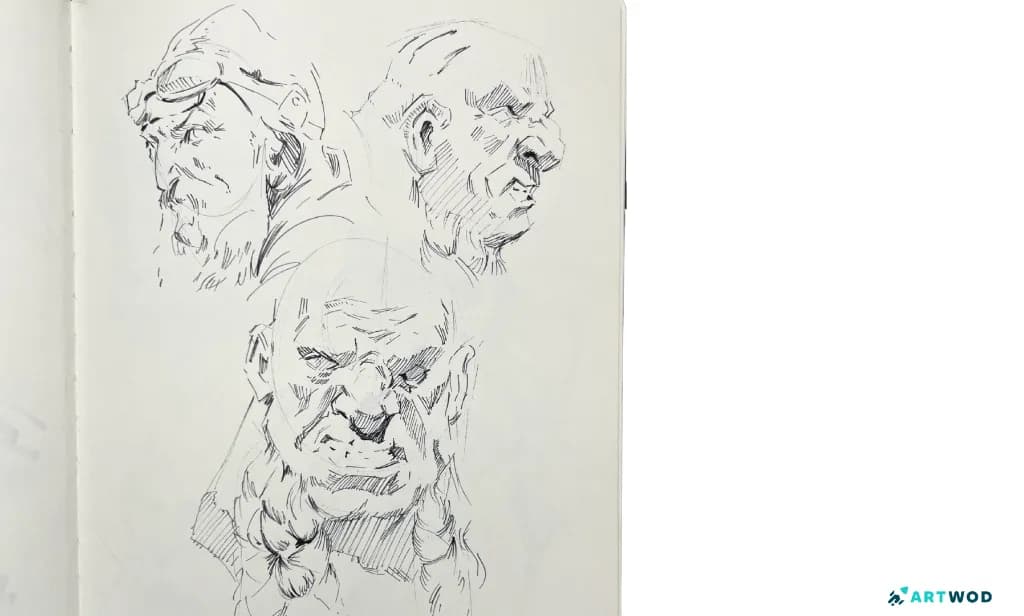
Portrait sketches by Antionio Stapparts. Traditional artwork made with black pen.
6. Stop staring
Set a rule: once a piece is "done enough," close the file. Don't reopen it for 24 hours. Most over-rendering happens in the spiral of staring at the same piece for hours, where you keep "fixing" things that didn't need fixing. The break breaks the loop.
7. Use the 80% rule
Decide consciously to leave the piece at 80% finished. The last 20% is usually where perfectionism lives, where you ruin things, and where the diminishing returns turn into negative returns. 80% is almost always enough.
Final work is born from ideas, and ideas need to be sketched quickly.
8. Use external deadlines
Submit to challenges. Take commissions. Post on a schedule. External deadlines bypass internal perfectionism entirely because someone else is now setting the rules. You can't endlessly polish a piece that has to be in by Friday.
Artwod's Monthly Challenges are supported by edicational material with accomplished artists, so that you're guided through them and always inspired.
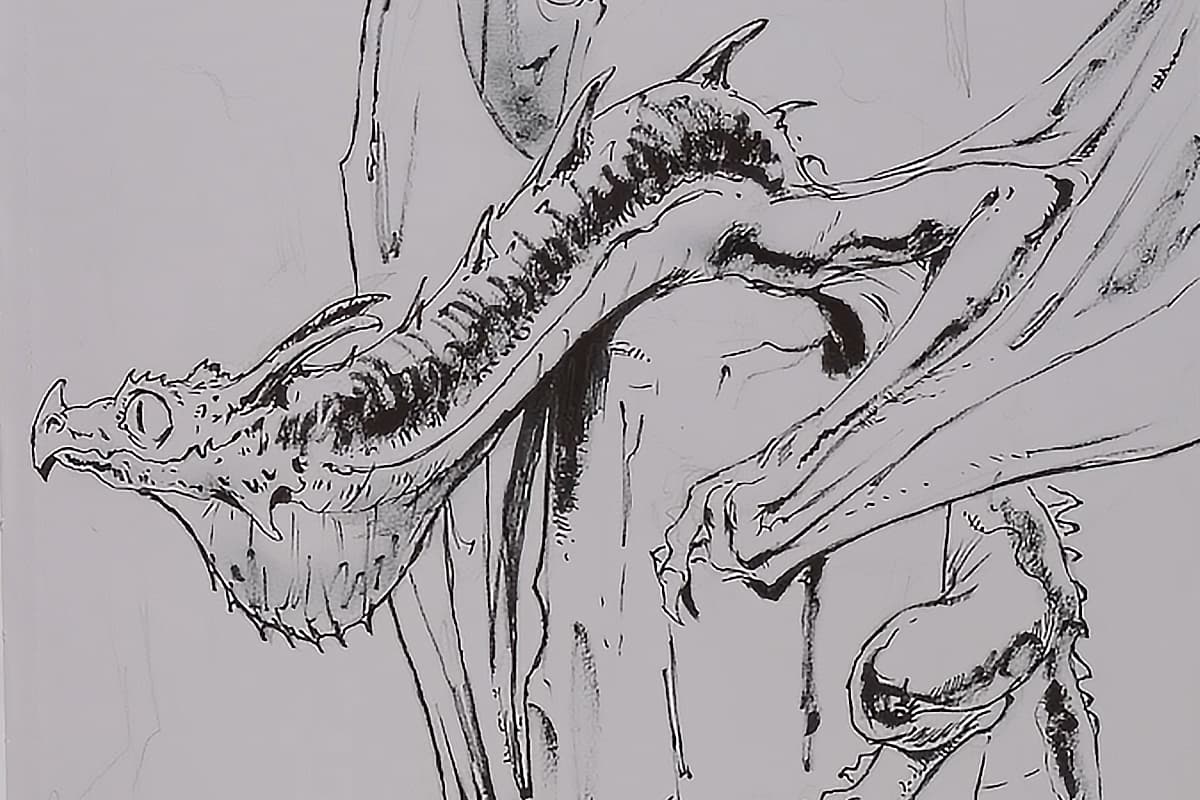
Artwod Monthly Challege - 2D art poster with a compillation of Characters by Antonio Stappaerts: warrior, dragon, gnome mage, demon girl.
9. Get feedback while in progress
Outside eyes break the obsessive loop because someone else is now telling you what to focus on, instead of you spiraling alone in your own head. Halfway through a piece, drop it on the Artwod Feedback Tool and let real artists tell you what's working and what isn't. Their input gives you something concrete to act on, which replaces the vague anxiety of "is this good enough" with actual decisions to make.
Perfectionism feels like the path to becoming a great artist. It's actually the path to burning out and quitting. The artists who improve fastest are the ones who finish work, post it, and move on - not the ones polishing single pieces into oblivion.
Author: Artwod team
Published: May 29, 2026