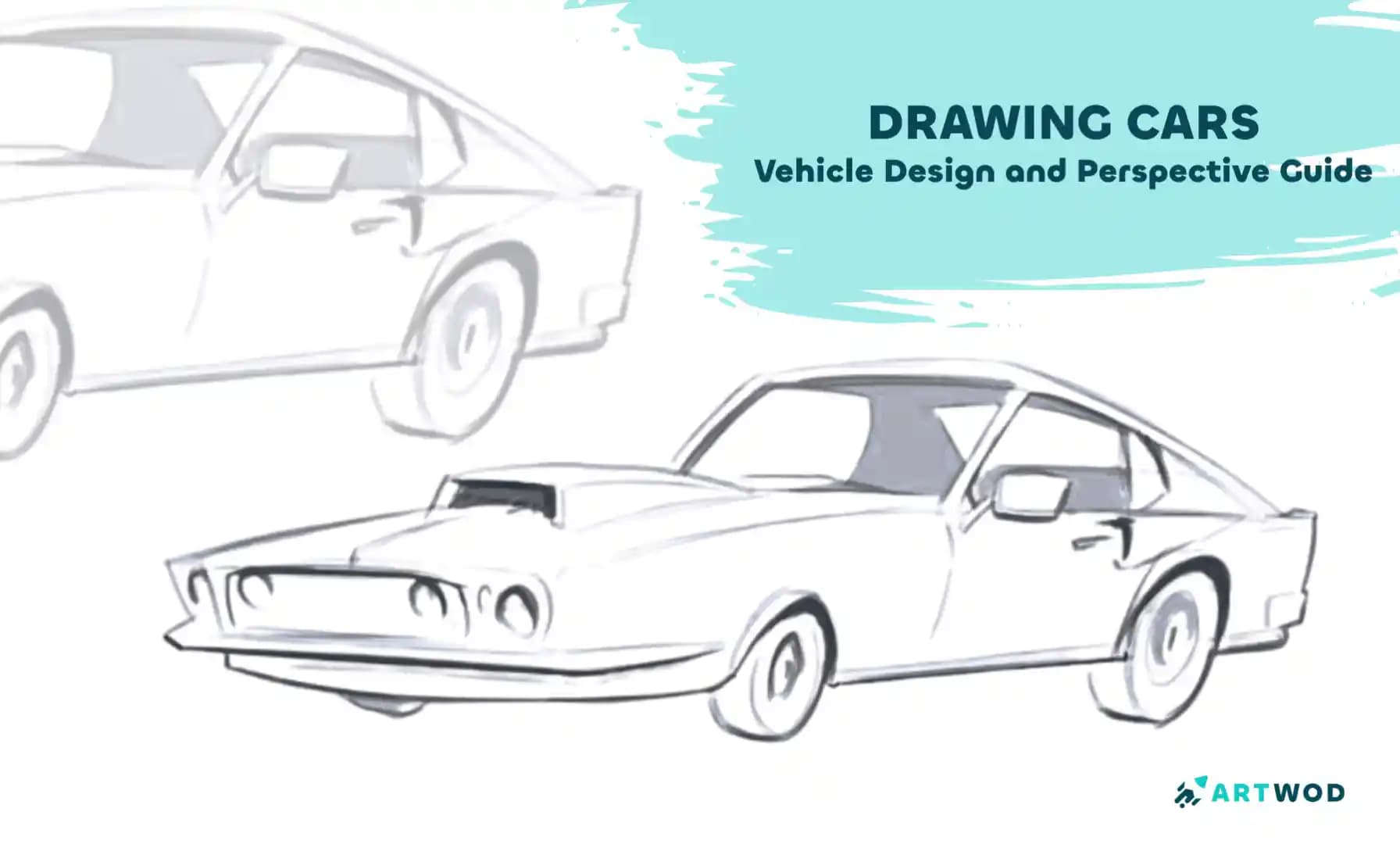
Drawing Cars: Step-by-Step Guide to Vehicle Design and Perspective
Drawing, Design
How to Draw Cars: Vehicle Design and Perspective Guide
Car design might look intimidating at first - shiny surfaces, complex curves, and lots of tiny details. But underneath every great vehicle design is a simple foundation of boxes, cylinders, and clear forms. Learning to break cars down into basic shapes not only makes them easier to draw, it also gives you the freedom to invent your own designs instead of copying references.
This exercise will help you understand car construction, improve your perspective skills, and start designing vehicles with confidence.
Step 1: Build simple car forms
Start by drawing three boxes, and attach two cylinders to each box. Think of the box as the main body of the car and the cylinders as wheels or major mechanical elements. Don’t worry about accuracy yet - this step is all about getting comfortable with basic forms in perspective.
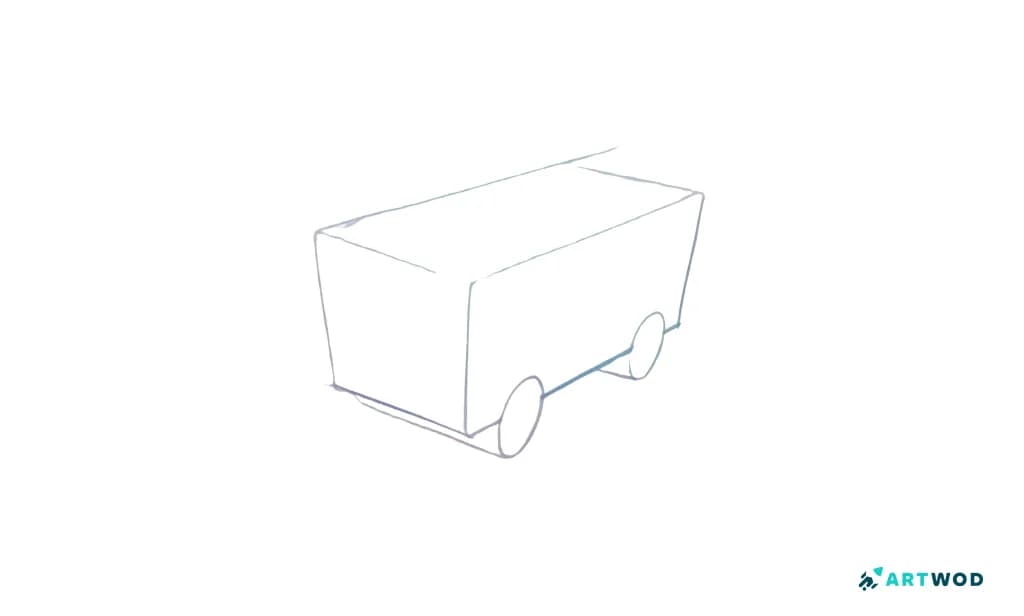
Step 1: How to Draw Cars: Vehicle Design and Perspective Guide
Step 2: Round the corners
Next, manipulate the sharp corners of each box to make them feel more rounded. Cars are rarely made of perfect cubes, so this step helps transition your forms from rigid geometry into something more organic and vehicle-like.
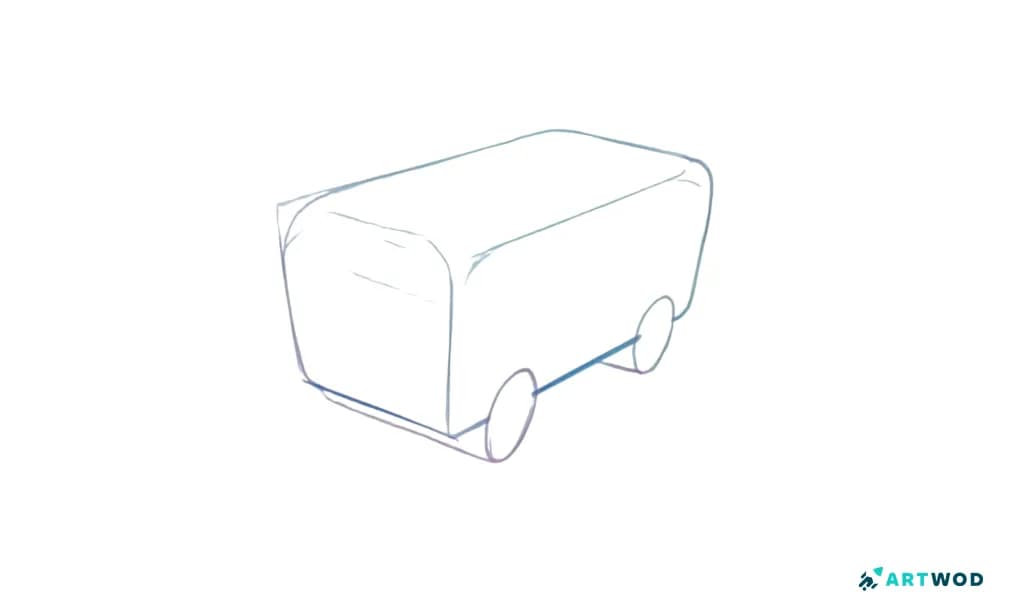
Step 2: How to Draw Cars: Vehicle Design and Perspective Guide
Step 3: Analyze a car reference
Pick a car reference you like and study it by redrawing it using only simple forms in the same perspective. Focus on proportion, orientation, and how the main volumes relate to each other. This step trains your eye to see structure instead of surface detail.
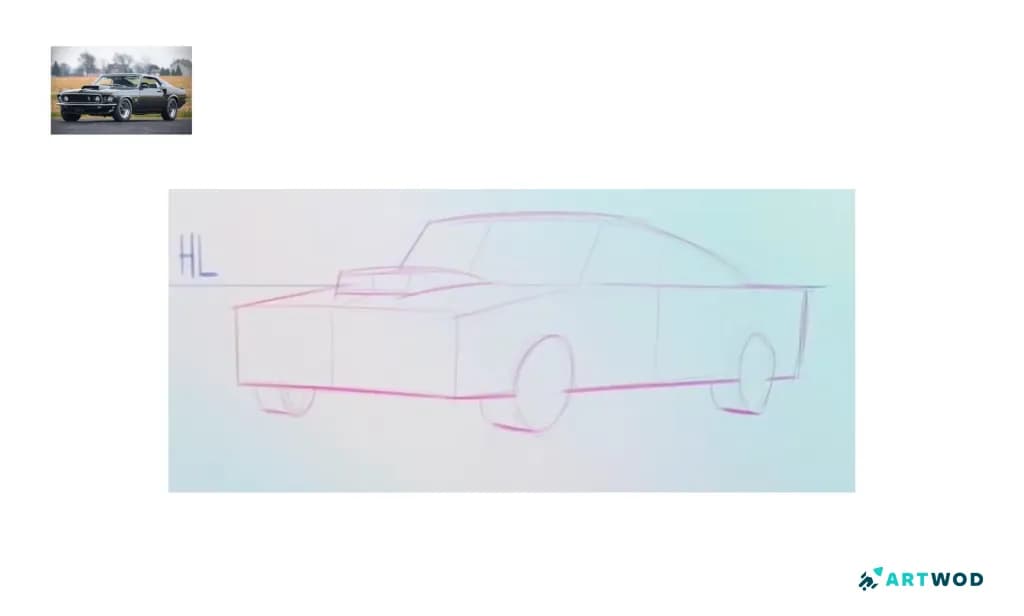
Step 3:How to Draw Cars: Vehicle Design and Perspective Guide
Step 4: Refine the forms
Refine your simple forms so they better match the reference. Adjust proportions, angles, and curves until the structure feels closer to the real car. This is where observation and construction come together.
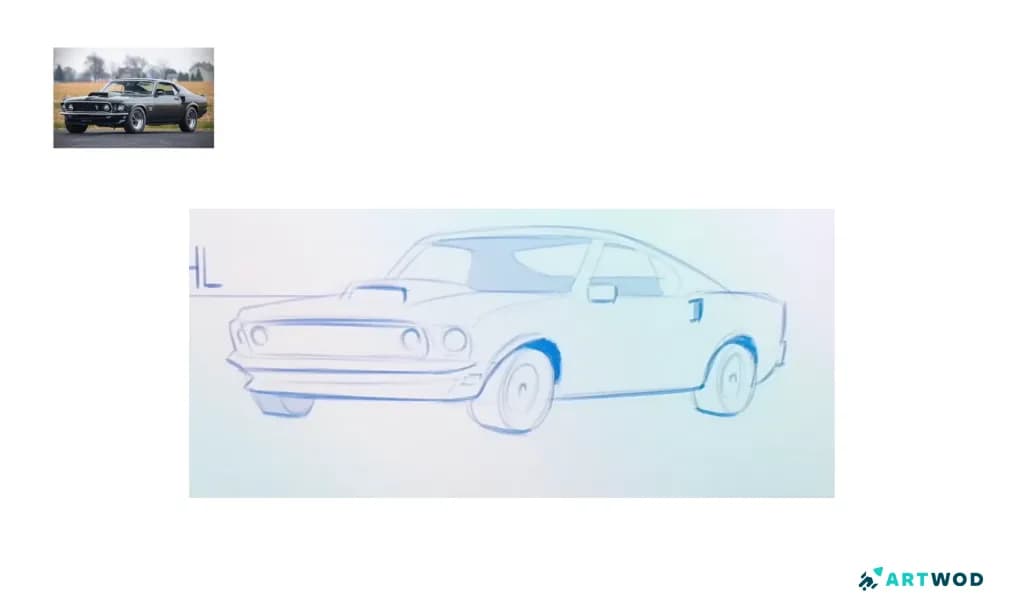
Step 4: How to Draw Cars: Vehicle Design and Perspective Guide
Our new feature - the Feedback tool, is designed to help artists collect feedback in ONE place. No more need to waste time looking for responses in threads. Both draw-overs and written feedback.
And, if you want to make your brains burn, try giving feedback just once. Promise, this will be a very helpful exercise for your improvement.
Step 5: Play with proportions
Now for the fun part. Take the forms from step 3 and push the proportions - stretch, squash, or exaggerate them to create a brand-new car design. Don’t worry about realism here. Focus on interesting silhouettes and bold ideas.
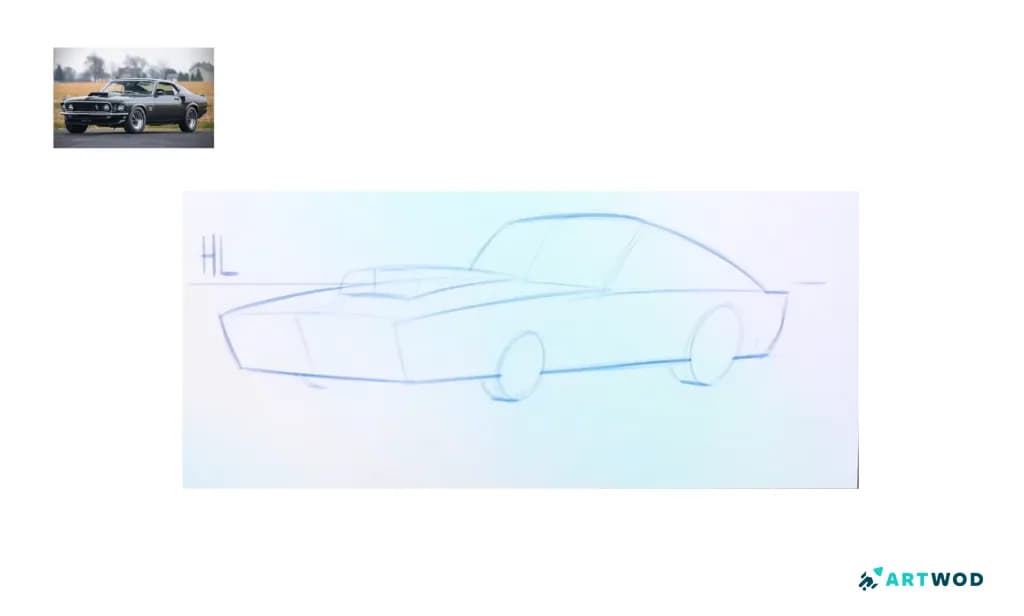
Step 5:How to Draw Cars: Vehicle Design and Perspective Guide
Step 6: Design your unique car
Using your reference as a guide, refine those exaggerated forms into a cohesive, unique car design. Balance creativity with believability by keeping your forms clear and well-constructed.
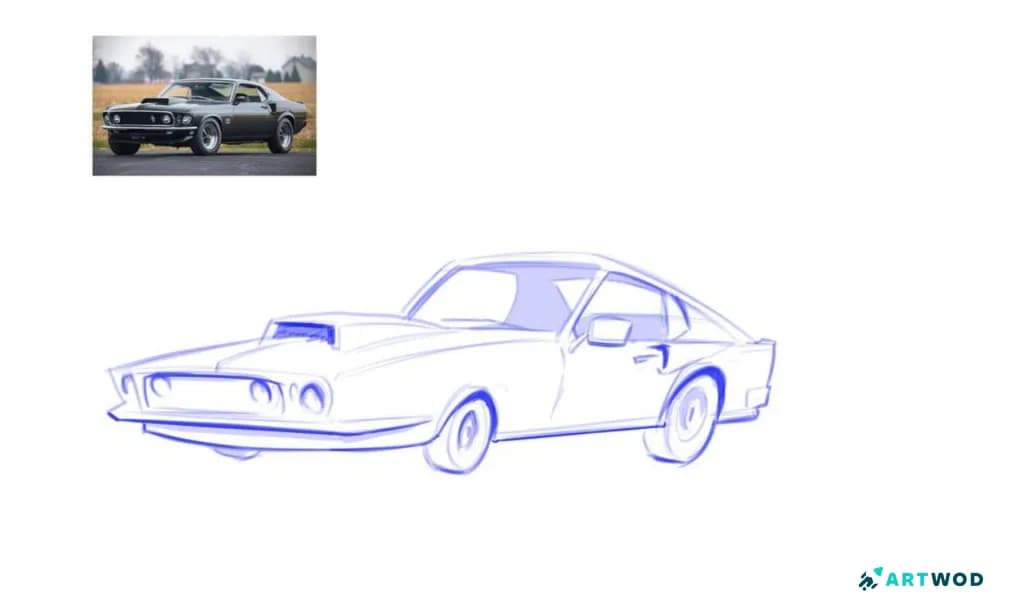
Step 6:How to Draw Cars: Vehicle Design and Perspective Guide
Bonus Step: Add color
Add color to the cars from step 4 and step 6. Focus on clean color separation and simple values to reinforce the form and design rather than over-rendering.
By learning to build cars from boxes and cylinders, you gain control over both realism and imagination. This process helps you understand how real vehicles are constructed while giving you the tools to design your own. Repeat this exercise with different references and styles, and you’ll quickly build confidence in both drawing and vehicle design.
Share your progress with us on Instagram and Discord - we love seeing how artists turn simple forms into unique designs.Author: Artwod team
Published: Feb 16, 2026
Related Posts
Drawing, Figure, Organic, Environment, Design
The Subtle Secrets of Kim Jung Gi: How to Draw Anything from Imagination in 5 Steps

Drawing, Environment, Still-Life, Design
Beginner’s Guide to Drawing Buildings from Imagination: Step-by-Step Tips

Drawing, Design
How to Draw a Fantasy Hammer: 3 Easy Steps for Beginners