Developing Your Environment Style: Tips for Landscape and Scene Design
How to Develop Your Environment Style in Art
Step 1: Block in the environment composition
Start by sketching rough block-ins of your environment using only simple shapes. Think in big masses instead of details. Rectangles, cylinders, and basic silhouettes are enough at this stage.
Make a few different composition options. Try changing camera angles, horizon lines, and the placement of major shapes. This step is about exploration - don’t commit too early.
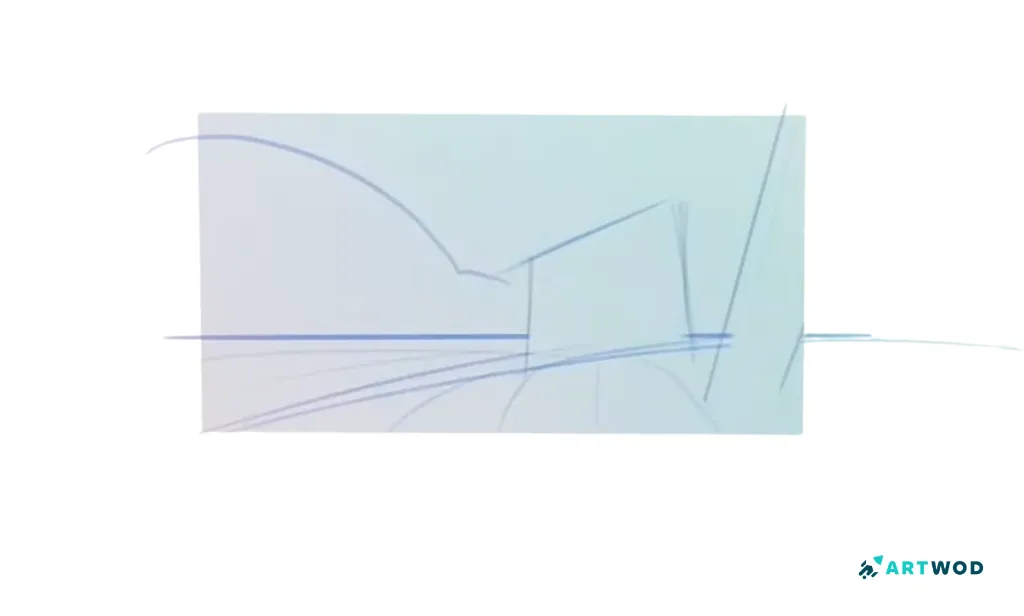
Step 1: Developing Your Environment Style: Tips for Landscape and Scene Design
Step 2: Refine your block-in and add a house
Choose your favorite block-in and refine it slightly. Keep the drawing loose and avoid adding small details.
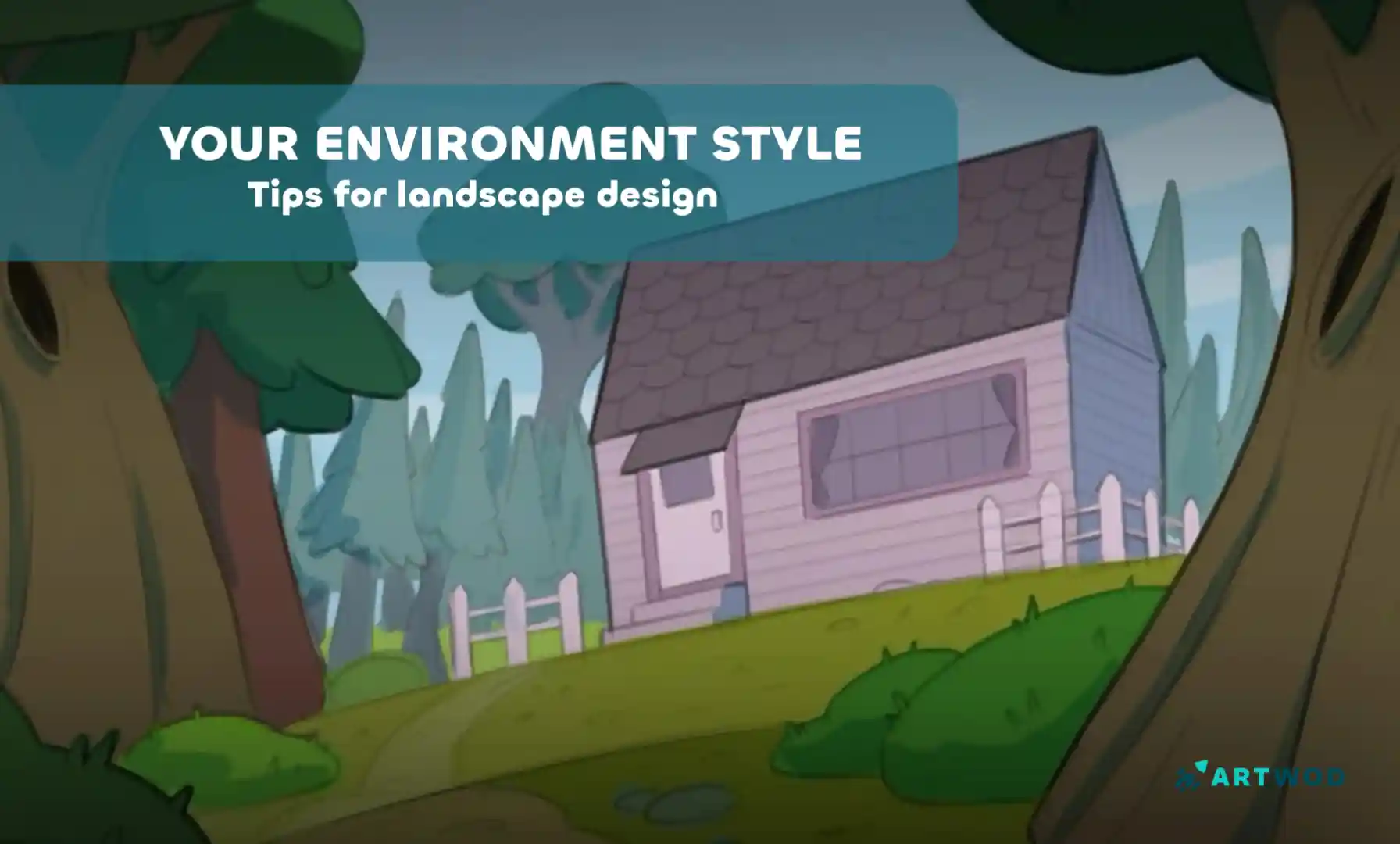
Add a house to the composition using simple shapes. Focus on how it sits in the environment and how it contributes to the overall balance of the scene.
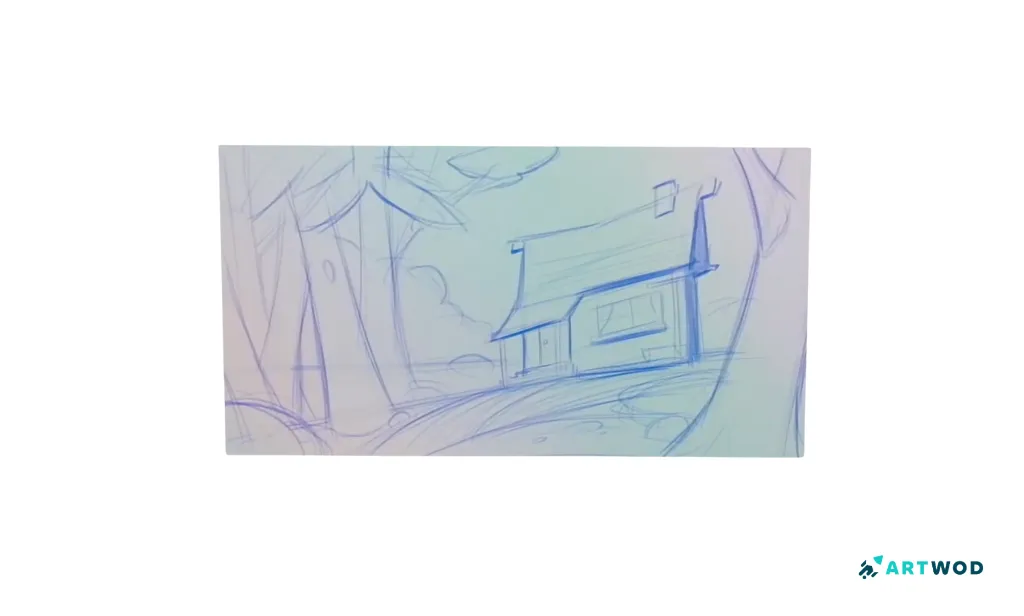
Step 2: Developing Your Environment Style: Tips for Landscape and Scene Design
Step 3: Study a style from an animated series
Pick an animated series you enjoy and study its environment style. Look closely at proportions, shape language, and how much detail is used.
Take notes. Ask yourself questions like:
- How simplified are the shapes?
- Where do they exaggerate proportions?
- What details are emphasized or omitted?
This analysis will guide your design decisions in the next step.
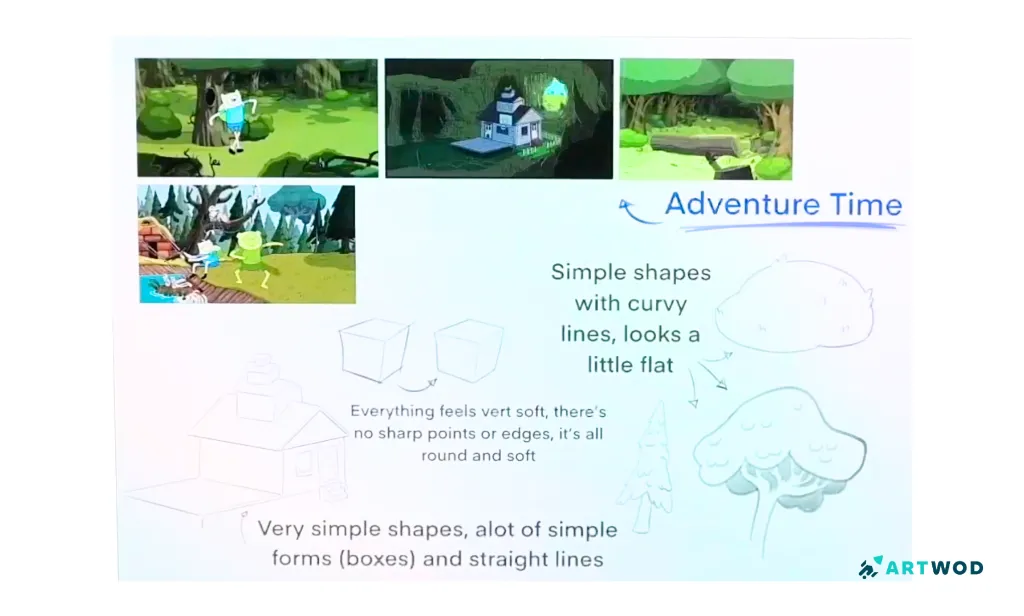
Step 3: Developing Your Environment Style: Tips for Landscape and Scene Design
Step 4: Design the house using the chosen style
Using what you learned from your style study, improve your house design and composition. Adjust proportions, shapes, and details to match the style you analyzed.
Once the design feels solid, refine it into a finished line drawing. Keep your lines confident and intentional, but don’t overwork them.
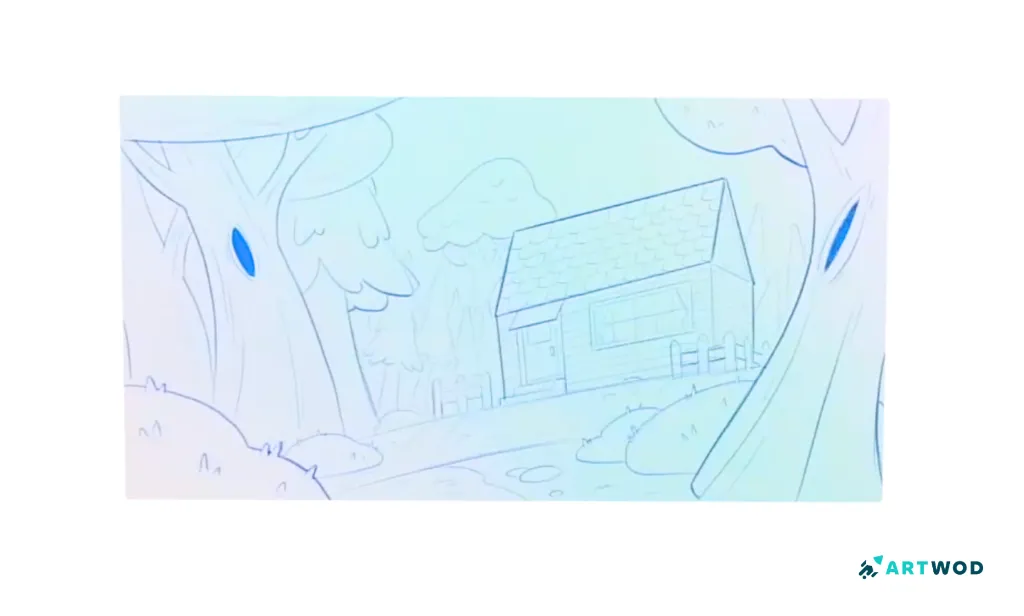
Step 4: Developing Your Environment Style: Tips for Landscape and Scene Design
Step 5: Add color beneath the line drawing
Add color underneath your finished line drawing. Focus on simple color choices that support the design and mood of the environment.
Avoid over-rendering. The goal is to reinforce the composition and style, not to turn it into a fully painted illustration
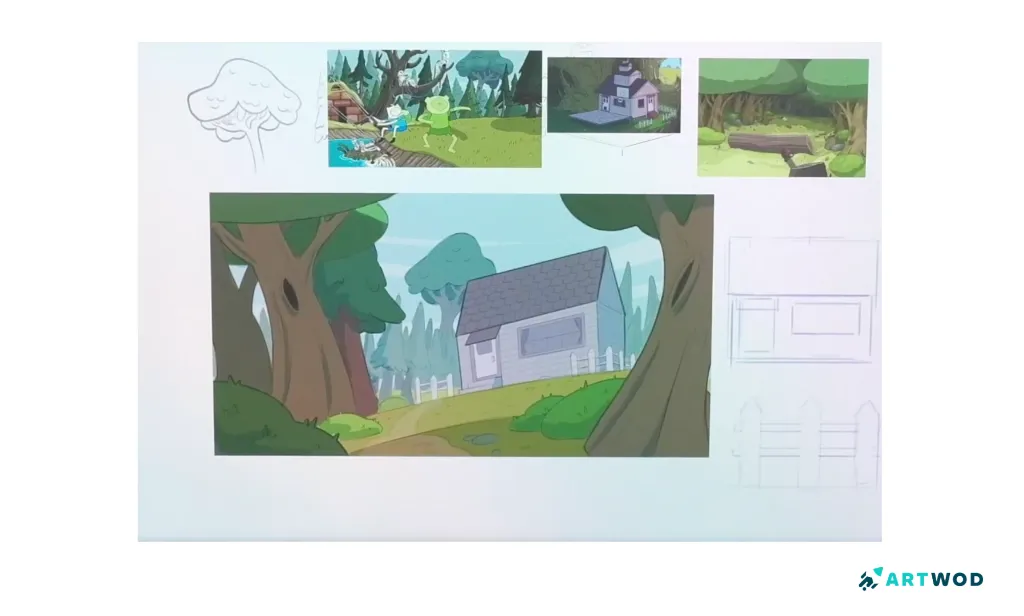
Step 5: Developing Your Environment Style: Tips for Landscape and Scene Design
This workflow mirrors how many professional environment artists approach design: simple shapes first, style decisions second, and color last. By separating each stage, you give yourself more control and avoid getting lost in details too early.
Repeat this exercise with different styles and compositions to build confidence and versatility. If you try it out, share your results with us on Instagram and Discord - we love seeing how artists explore environments and develop their own visual voice.