How to Use References Without Copying: A Step-by-Step Guide for Artists
How to Use References Without Copying
Every artist has been there... You find the perfect reference, start drawing, and somewhere along the way it stops feeling like practice and starts feeling like copying. Or you use another artist's work for inspiration and end up with something that looks a little too familiar. Both situations feel horrible, you just feel not creative enough and want to quit.
There's a right way and a wrong way to do use reference. The difference between artists who grow fast and artists who stay stuck is almost always in how they use reference - not whether they use it. Here's a step-by-step breakdown of how to use references without copying, and how to make them work for your long-term growth.
Reference as a study tool, not a crutch
The most common mistake beginner artists make with reference is using it to copy the surface instead of understand the structure underneath. You end up with a drawing that looks like the reference - until you try to draw the same thing from a different angle, and suddenly you're lost.
The goal of studying from reference isn't to reproduce what you see. It's to understand why it looks that way. When you draw from a reference photo of a hand, you're not drawing that hand - you're learning how hands work. The bones, the joints, the way the skin folds. You're building knowledge, not just a drawing.
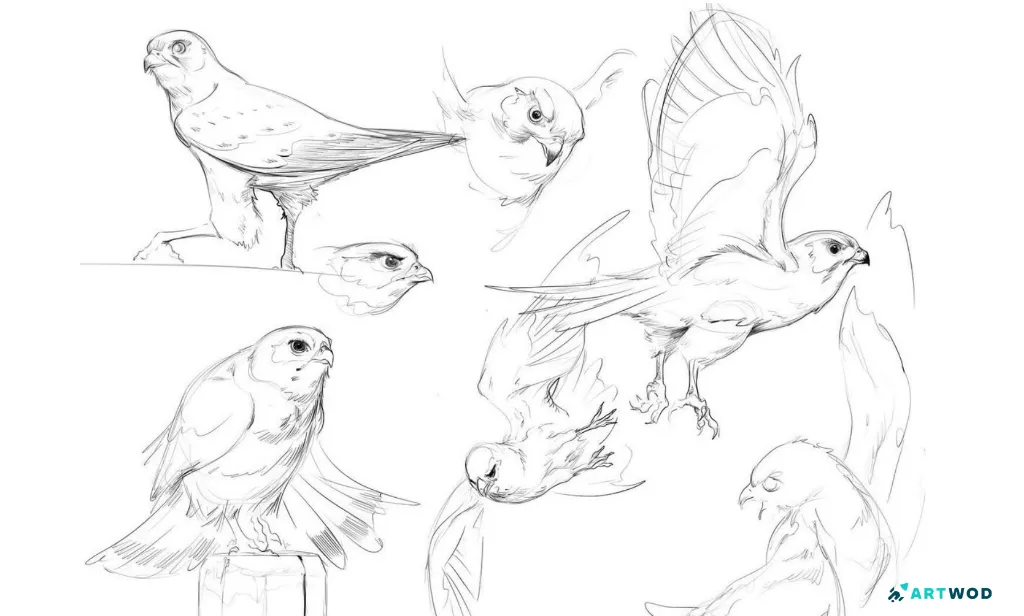
Digital studies of birds by Antonio Stappaerts, page filled with bird digital 2d, drawn in black digital pen/pencil
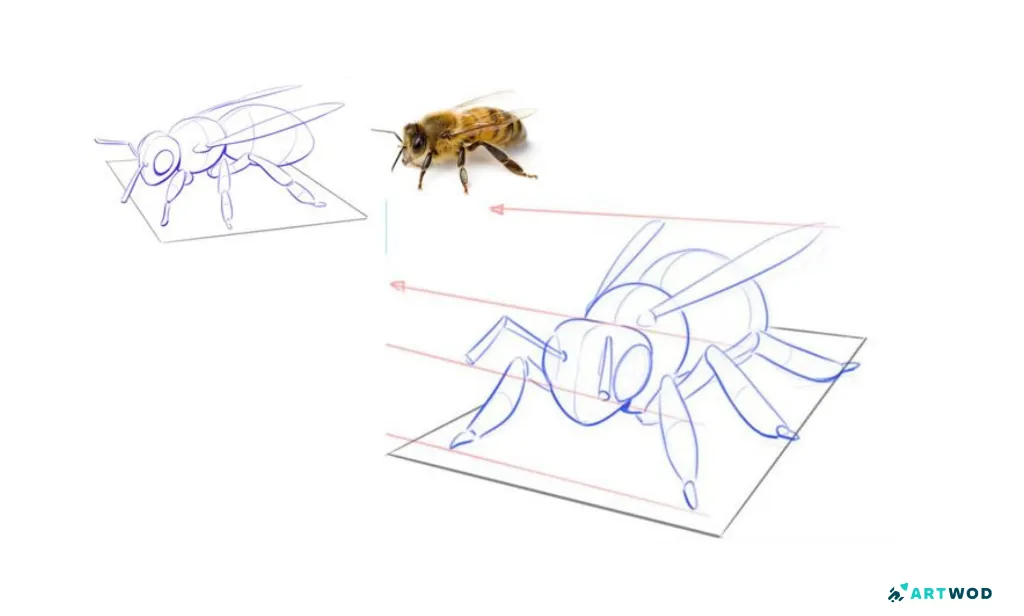
Digital drawing from reference: study of a bee made digitally 2d with blue pen. Next to the study there's an image of the same bee from different angle with clear perspective lines
Build your visual library
Here's the long game. Every time you study from reference - a figure, a landscape, a piece of armour, a face in different lighting conditions - you're adding something to your visual library. A mental database of how things look, how they're constructed, how light behaves on different surfaces.
The more you study, the richer that library gets. And the richer your visual library, the less you need to rely on reference for every single drawing. This is how artists learn to draw from imagination - not through some magical creative gift, but through years of deliberate reference study that eventually becomes internalized knowledge.
So when you sit down with a reference, think of it as an investment. You're not just making one drawing. You're training your eye and your hand for every drawing after it.
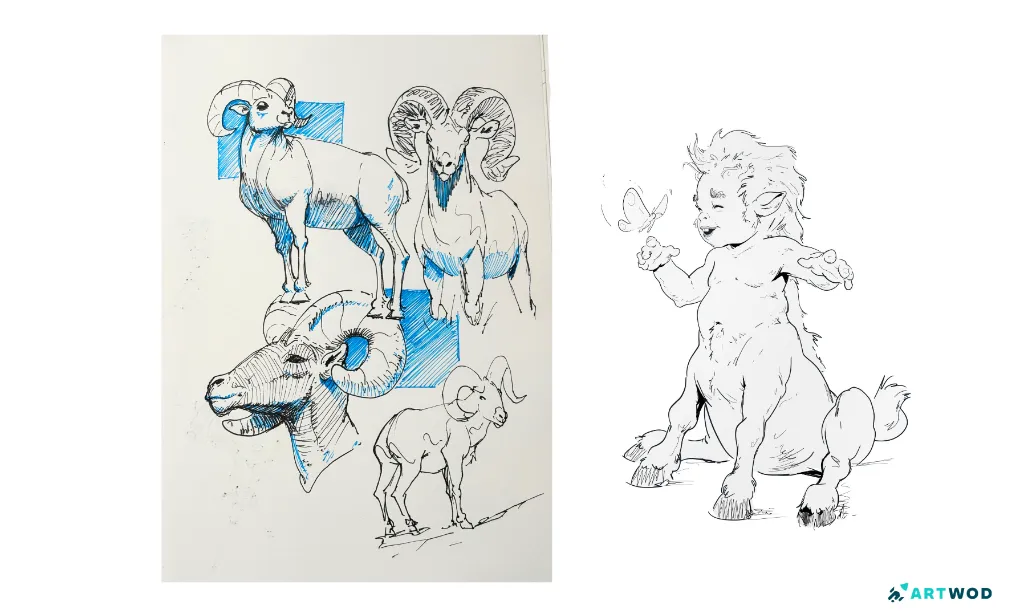
2 Drawings by Antonio Stappaerts: on the right traditional studies of a mountain goat made with black and blue nem, on the left - a muthical creature (satyre) with goat lower body and human child upper body, butterfly next to it. The satyre look happy and content
Inspirational reference: fuel without copying
Not all reference is about studying technique. Sometimes you're looking at another artist's work, a mood board, a film still, or a color palette - not to copy it, but to feel something. To get inspired. To understand what kind of artist you want to be.
This is completely valid. In fact, it's essential. The problem only happens when inspiration becomes imitation - when you're so close to the source that your work stops being yours.
The trick is distance and combination. Instead of drawing directly from one inspirational reference, gather several. Different artists, different styles, different moods. Let them sit with you. Then put them away and draw from memory and feeling. What comes out will be influenced by everything you looked at, but filtered through your own hand and instincts - which is exactly how personal style develops.
Reference is one of the most powerful tools an artist has. The key is knowing what you're using it for. Study it to understand construction and form. Build your visual library one drawing at a time. And use inspirational reference as creative fuel, not a blueprint.
Do that consistently, and you'll reach a point where the blank canvas stops being scary - because you've already built everything you need to fill it.
Related Posts