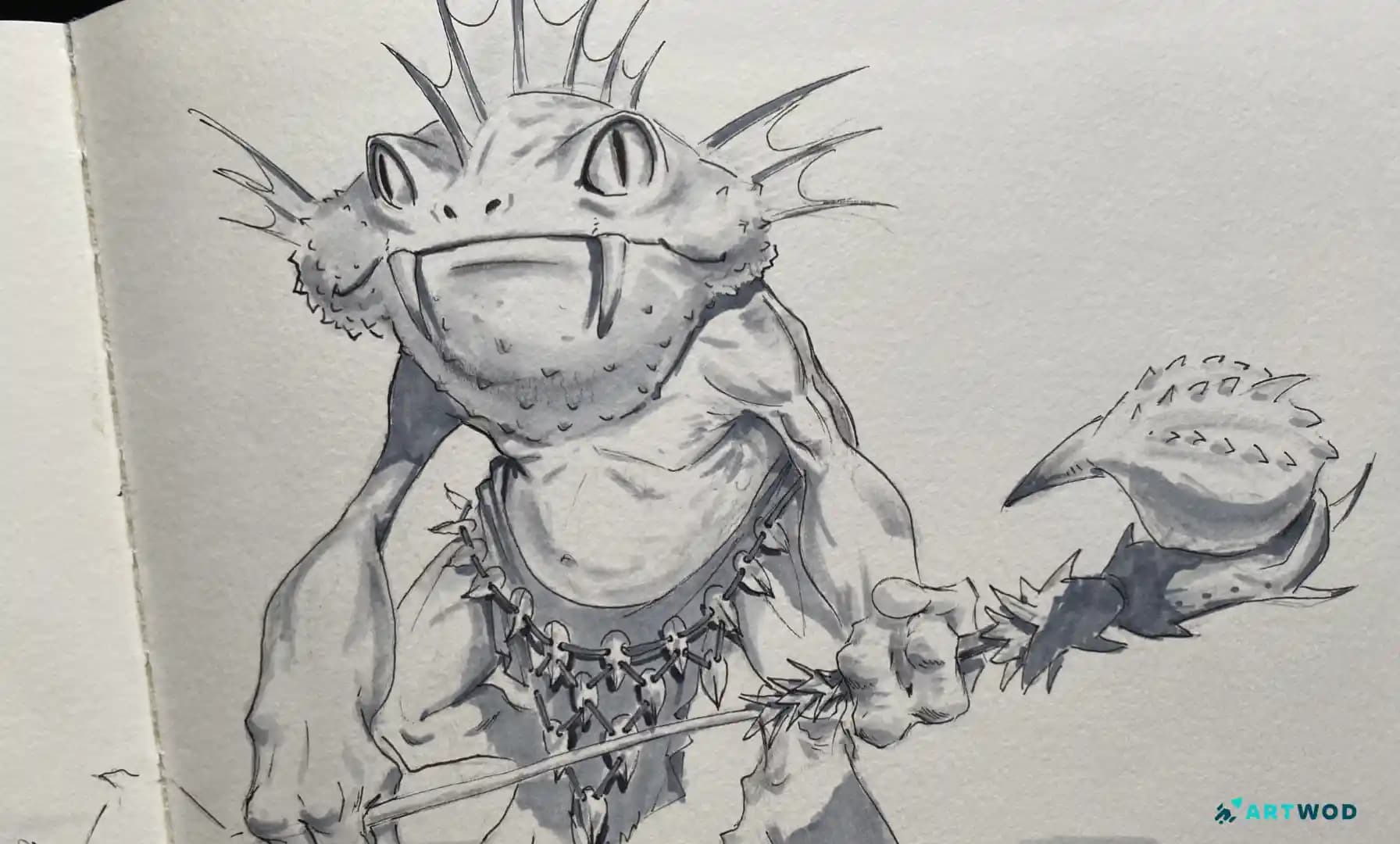
How to Get Into a Flow State as an Artist: A Step-by-Step Guide
How to Get Into a Flow State as an Artist
Every artist knows the feeling, even if they've only had it a handful of times. The hours disappear and your hand just moves and the work happens almost on its own. That's the flow state, and once you've experienced it, every session that doesn't have it feels like a slog.
The problem is that most artists treat flow like luck. Something that happens to you on a good day. But flow is not random. It has specific psychological conditions, and once you understand them, you can set them up on purpose. Here's a step-by-step guide to how to get into a flow state more consistently.
Remove friction, not just distractions
Everyone says "turn off your phone" and yes, that matters. But distraction isn't the only thing keeping you out of flow. The bigger issue is friction - how hard it is to start.
If sitting down to draw means finding your tablet pen, opening your software, hunting for reference, and setting up your file, you've created five small barriers between you and the work. And every barrier is a chance to give up before you begin.
Lower the friction. Set up your workspace the night before. Have your reference saved and open. Have the file ready to go. The goal is to make starting almost effortless, because flow can't begin if beginning is hard.
Warm up to lower the stakes
Warming up isn't just about loosening your hand. It's psychological. A warmup tells your brain "this doesn't count," and that small permission removes the pressure that blocks flow.
When you sit down and immediately try to make something good, the stakes are high and your inner critic is fully awake. But when you scribble, do gesture drawings, or sketch something low-stakes for ten minutes, you slip past the critic. By the time you move to real work, you're already moving and already engaged.
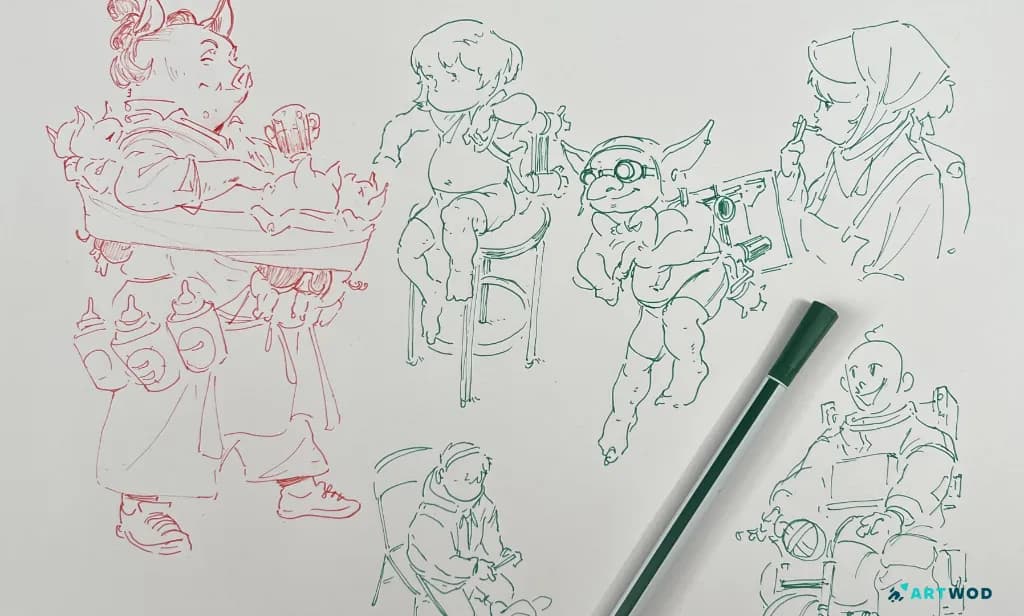
sketchbook page from Antonio Stappaerts, 6 sketches made with red and green pens, traditional drawings. Humanoid pig with little piggies, little girl sitting on a chair, pig in glasses
Match the challenge to your skill level
This is the actual psychology of flow. Flow happens in a very specific zone - when the task is hard enough to fully engage you, but not so hard that you panic.
Too easy, and you get bored. Your mind wanders because the work doesn't demand your full attention. Too hard, and you get anxious. You freeze because the gap between what you want and what you can do feels impossible.
So be honest about where your skill is, and pick work that sits just slightly above it. Challenging enough to absorb you, achievable enough that you don't spiral. That narrow band is where flow lives.
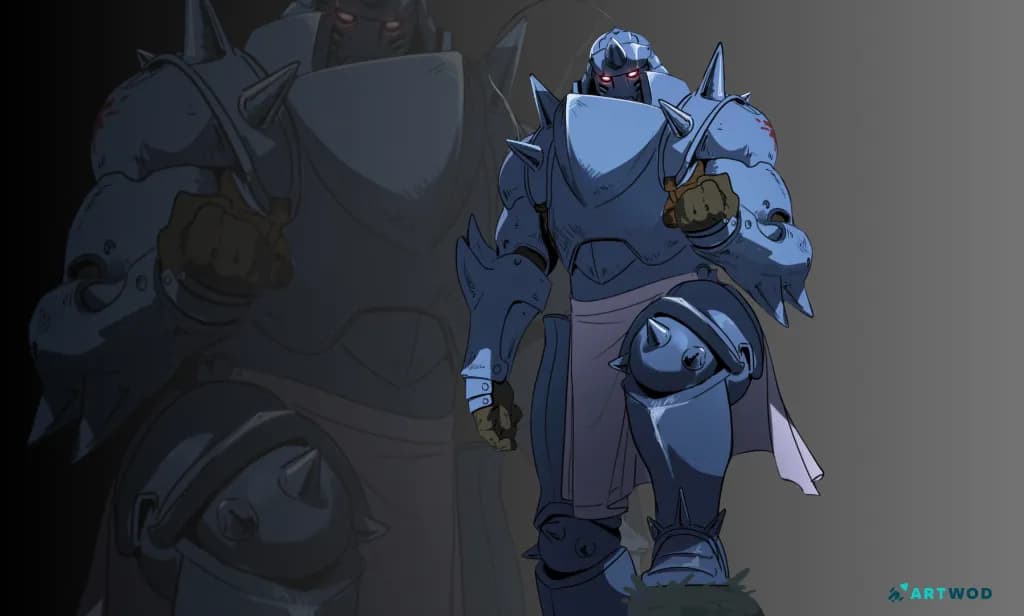
Fullmetal Alchemist Fan Art by Antonio Stappaerts, digital 2d drawing of Alphonse Elrich
Pick a clear, finishable goal
Vague intentions kill flow. "Work on my piece" is not a goal your brain can lock onto. "Render the face" is.
Flow needs a target. When you sit down, define exactly what you're trying to accomplish in this session. Make it specific and make it finishable. A clear goal gives your attention something to grip, and that grip is what pulls you into the work and keeps you there.
Let go of the outcome
Here's the hard one. Flow is completely incompatible with judging yourself mid-process. The moment you stop and think "is this actually good," you've stepped outside the work to evaluate it - and that evaluation drops you straight out of flow.
Artists who flow easily are focused on the process, not the result. The next mark, the next shape, the next decision. Not the final image, not whether it's portfolio-worthy, not what people will think. Just the doing. The irony is that letting go of the outcome is usually what produces the best outcomes.
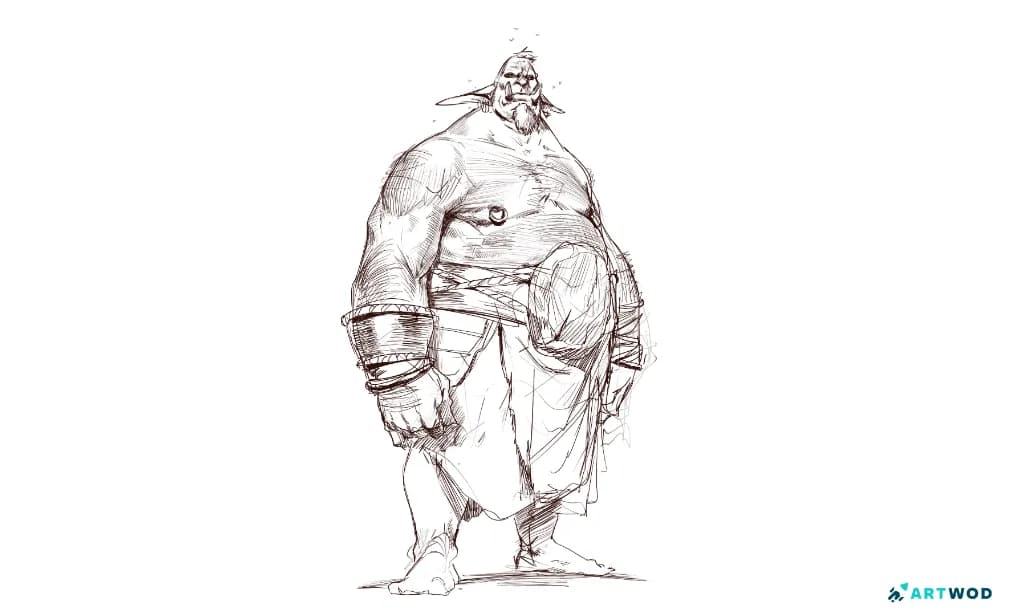
Digital 2d drawing by Antonio Stappaerts, fat goblin made with digital brown pen
Protect the entry period
Flow doesn't happen instantly. It takes most people ten to fifteen minutes of uninterrupted work to enter that state. And here's the trap - that entry period is uncomfortable. It's the part where the work feels slow and clunky and you're tempted to check your phone or get up.
That's exactly the moment you have to push through. Most artists quit or break their focus right before flow would have kicked in. Protect those first fifteen minutes like they matter, because they're the price of admission for the next two hours.
Getting feedback without breaking flow
One thing worth noting - feedback and flow don't mix in the same session. Asking "is this good" while you're working pulls you out, like we covered. But feedback between sessions is one of the most valuable things for your growth.
So separate them. While you're drawing, stay in process mode and don't evaluate. Then, once the session is done, drop your work on the Artwod Feedback Tool and let real artists tell you what's working and what to push further. You get the honest critique you need, without sabotaging the flow state while you're in it.
The flow state isn't a gift some artists are born with. It's a set of conditions you can build on purpose. Remove the friction. Warm up to drop the stakes. Match the challenge to your skill. Set a clear goal. Let go of the outcome. And protect the uncomfortable entry period that comes before the magic.
Do that consistently and flow stops being a lucky accident. It becomes something you can return to almost any time you sit down to draw - which is when art stops feeling like work and starts feeling like the reason you started in the first place.
Related Posts