How to Finish Your Artwork: A Step-by-Step Guide for Beginners
How to Finish Your Artwork
Most artists have a graveyard. A folder full of half-finished pieces that started strong and then quietly died somewhere around the rendering stage.
Finishing artwork is genuinely hard. The piece looks great in your head, slightly worse on the canvas, and by the time you've been staring at it for six (or forty) hours straight, all you can see are the parts that aren't working. So you close the file, tell yourself you'll come back to it tomorrow, and never do.
Here's how to actually get to the end.
Spend time on planning stage
The number one reason artists don't finish is they never decided what finished was supposed to look like in the first place. You sat down with a vague vision, started drawing, and now you're three hours in with no idea when to stop because there was never a clear destination.
Before you start, decide what the piece needs to be. Is it a finished illustration with full rendering, or is it a stylised character with flat colours? What's the focal point? What can stay loose, and what needs to be tight? You don't have to write a manifesto. Just answer those questions before you touch the canvas, so future-you has something to aim at.
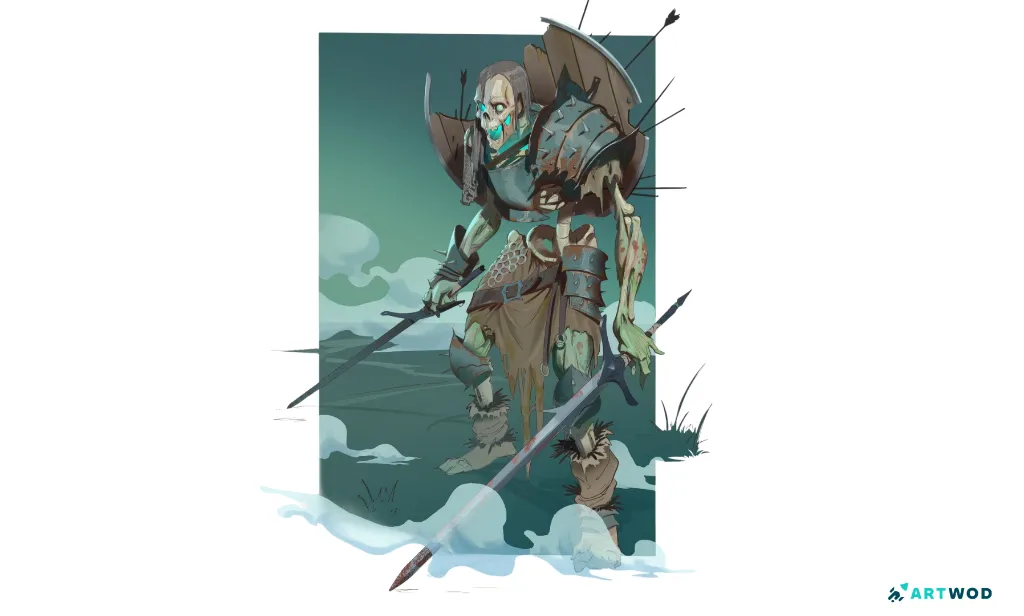
Digital 2d Drawing by Antonio Stappaerts - undead skeleton with 2 swords, warrior skeleton in a deserted place surrounded by fog. green, cyan and brown colors, metal and bloody details
Lower the stakes
Most unfinished art dies because the artist accidentally promoted it to "masterpiece" halfway through. Suddenly the stakes are too high. Every brushstroke has to be perfect because this is The Big One. And then you freeze.
Demote the piece. Tell yourself it's a study. A sketch with intention. A warmup that got out of hand. Whatever framing keeps the pressure off long enough for you to actually close it out. The funny part is that the pieces you treat as low-stakes practice almost always turn out better than the ones you put on a pedestal, because you let yourself make decisions instead of agonising over them.
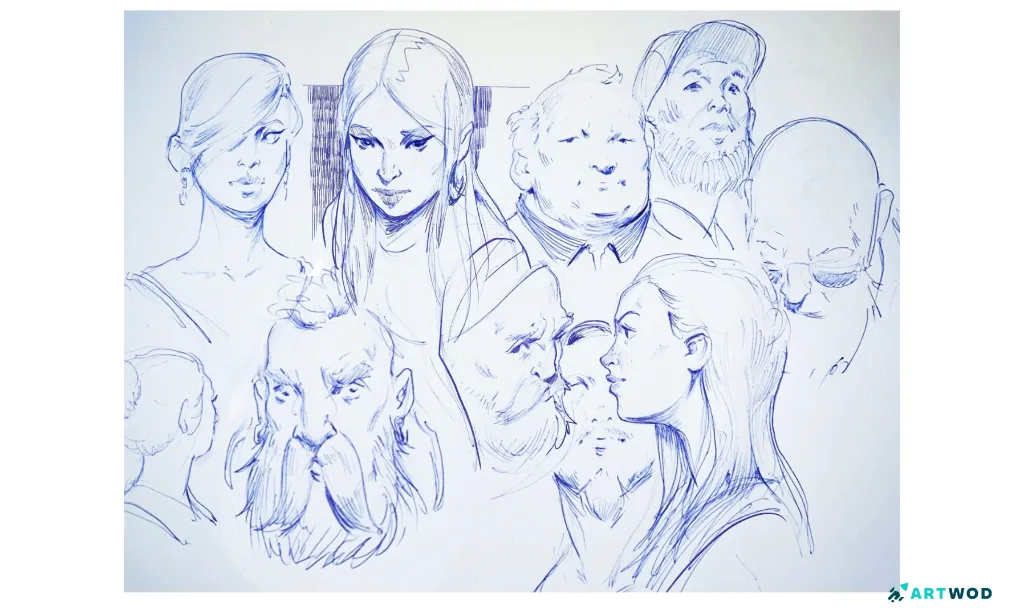
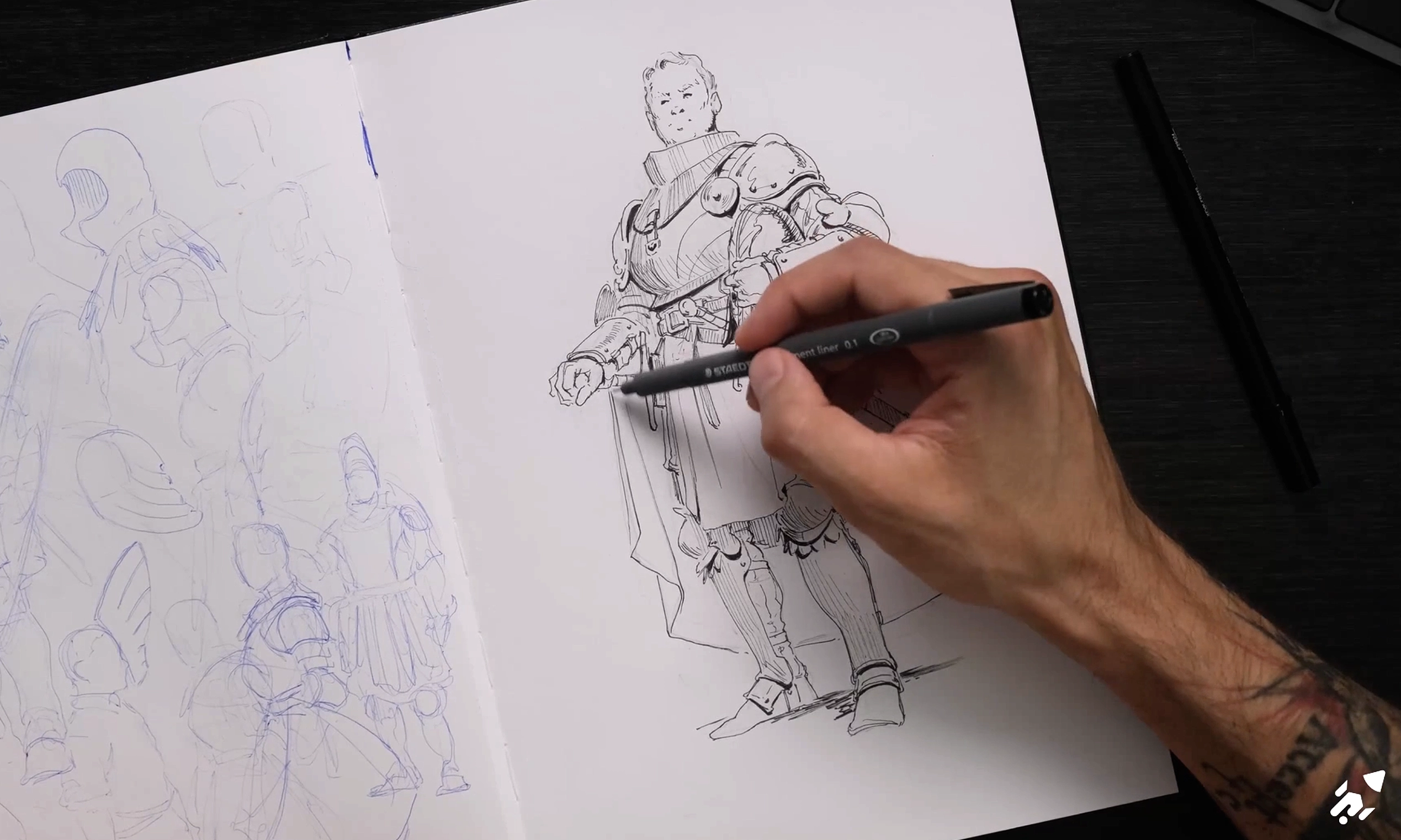
Sketchbook page by Antonio Stappaerts, portraits in ballpoint pen, traditional sketchbook page
Work in passes
If you finish one corner of your painting to 100% while the rest of the canvas is still a rough sketch, you're going to abandon this piece. That's not a guess, that's just what happens. Because now you've spent all your energy on a tiny area and the rest looks like garbage by comparison.
Work the whole piece up together. Rough pass first - everything blocked in. Then a second pass where you push everything a little further. Then a third. Each pass brings the entire image up a level instead of finishing one bit while abandoning the rest. Like this when you're rendering details, the foundation is already solid everywhere, and the finish line seems easy and natural to do.
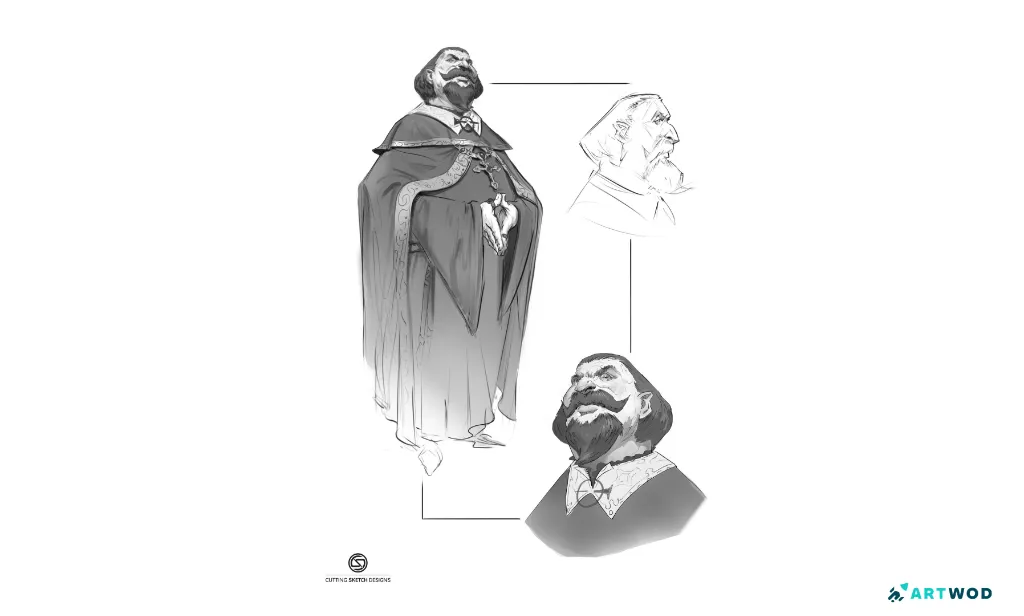
Digital 2d work by Antonio Stappaerts, evil priest, 2d greyscale work, full body character and profile and frond view of the face
Give yourself a deadline
Open timelines are where art goes to die. "I'll finish it when it's ready" actually means "I'll finish it never," because there's no version of the piece that will ever feel ready if you have unlimited time to second-guess it.
Pick a deadline. Tonight, this weekend, end of the month - whatever fits the scope. Make it slightly uncomfortable. The constraint is the point. When you have to be done by Friday, you stop fussing over the eyebrow for the sixth time and start making real decisions about what matters and what doesn't. That pressure is your friend, even if it doesn't feel like it.
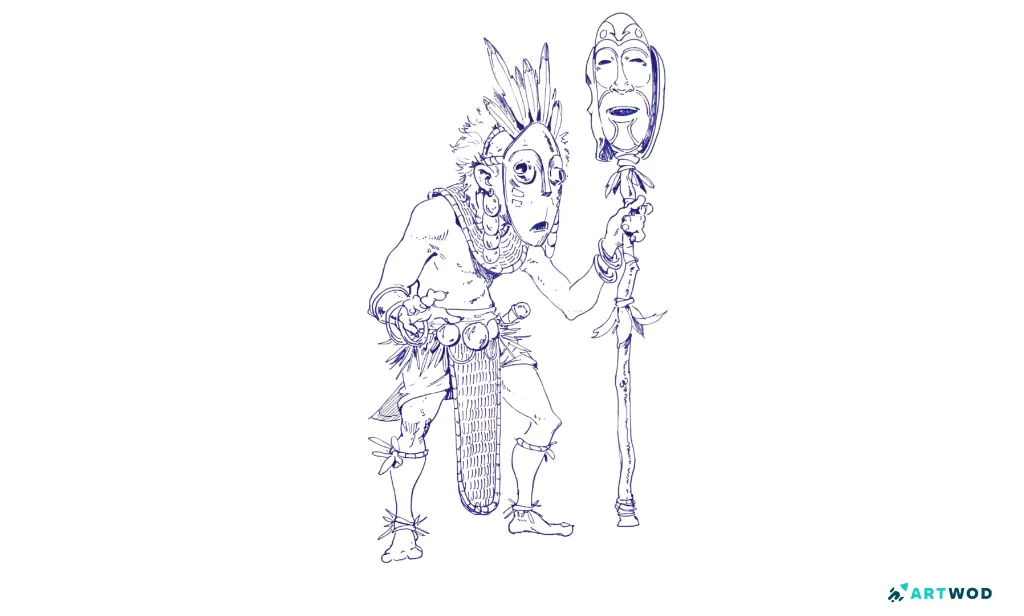
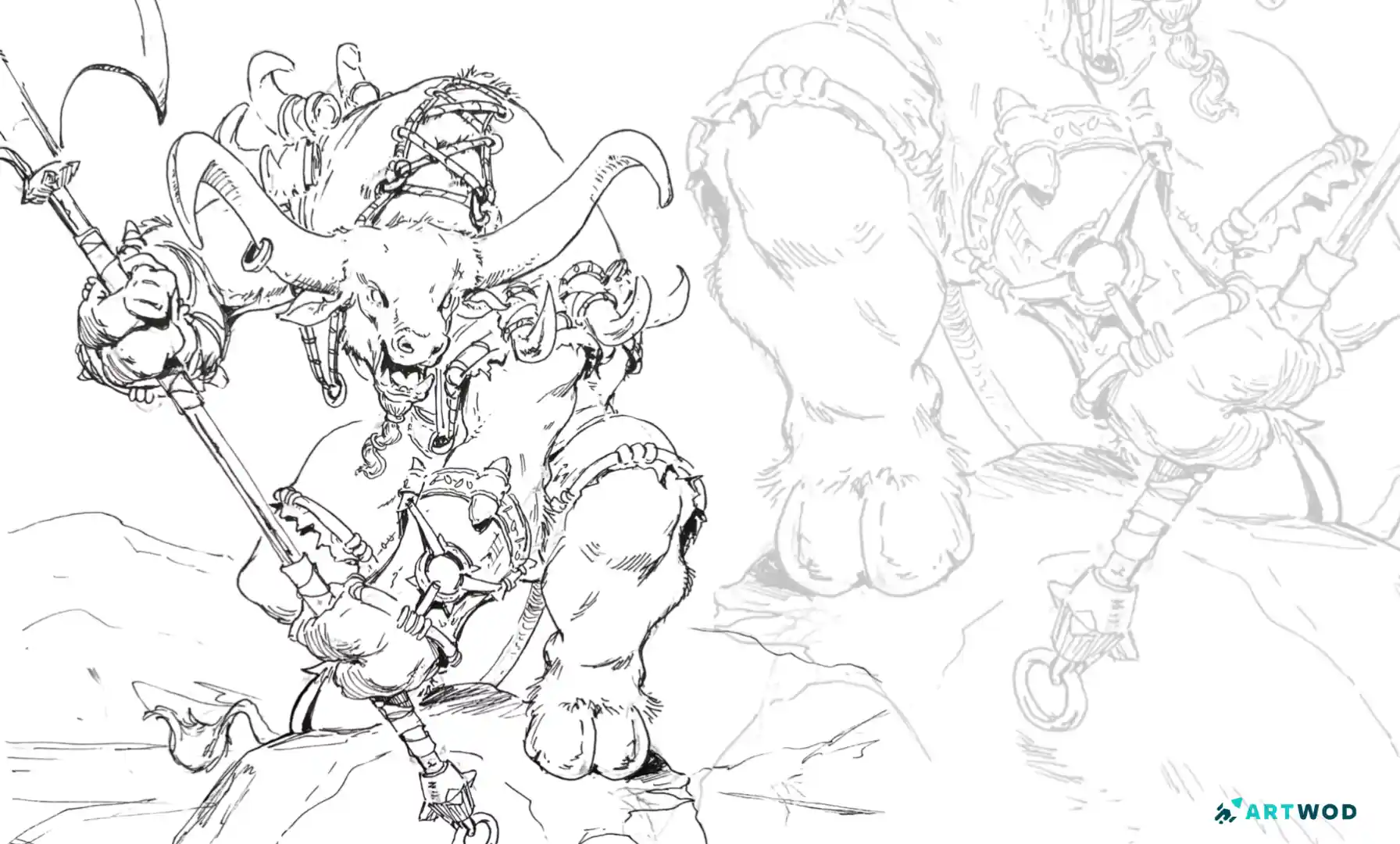
Traditional work by Antonio Stappaerts, tribal man with a mask abd a staff with other masks. Ballpoint pen traditional drawing
Get feedback before the end
Showing someone your work-in-progress feels horrible. The piece isn't ready. They're going to see all the stuff you haven't fixed yet. You'd rather wait until it's done.
Show them anyway. Halfway through, when you still have time to actually act on what they say. An outside perspective will catch the things you stopped seeing twelve hours ago, and tell you which parts are working better than you realised. Sometimes the only thing standing between you and a finished piece is one specific note from someone who isn't emotionally exhausted by the painting yet.
The Artwod Feedback Tool exists for exactly this. Drop your work-in-progress and get real critique from real artists - the kind that helps you finish, not the kind that makes you start over.
If you keep abandoning paintings, the problem isn't your talent or your skills. It's that nobody ever taught you how finishing actually works. Plan before you paint. Drop the stakes. Build the whole image up in passes. Give yourself a deadline. Get feedback while there's still time to use it.
Do that on a few pieces in a row and the graveyard folder starts shrinking. Which is the only goal that actually matters.