How to Draw Metal: A Step-by-Step Guide for Beginners
How to Draw Metal
Metal is one of those subjects that looks impossible until someone explains the logic behind it, and then it suddenly clicks. Beginner artists tend to either avoid metal entirely or render it the same way they render everything else, which is why their swords, armor, and robots end up looking like grey plastic.
The good news is that drawing metal isn't about talent or some secret brush (NOTHING is about a secret brush!). Here's a step-by-step guide to how to draw metal that actually looks like metal.
Form first
Before you think about shine, reflections, or any of the flashy stuff, you have to get the form right. Metal wraps around a three-dimensional object just like any other surface, and if you don't understand the underlying form, no amount of fancy rendering will save the drawing.
So start simple. Block in the basic shape of your object, whether it's a sword blade, a helmet, or a pipe, and treat it like a plain matte FORM first.
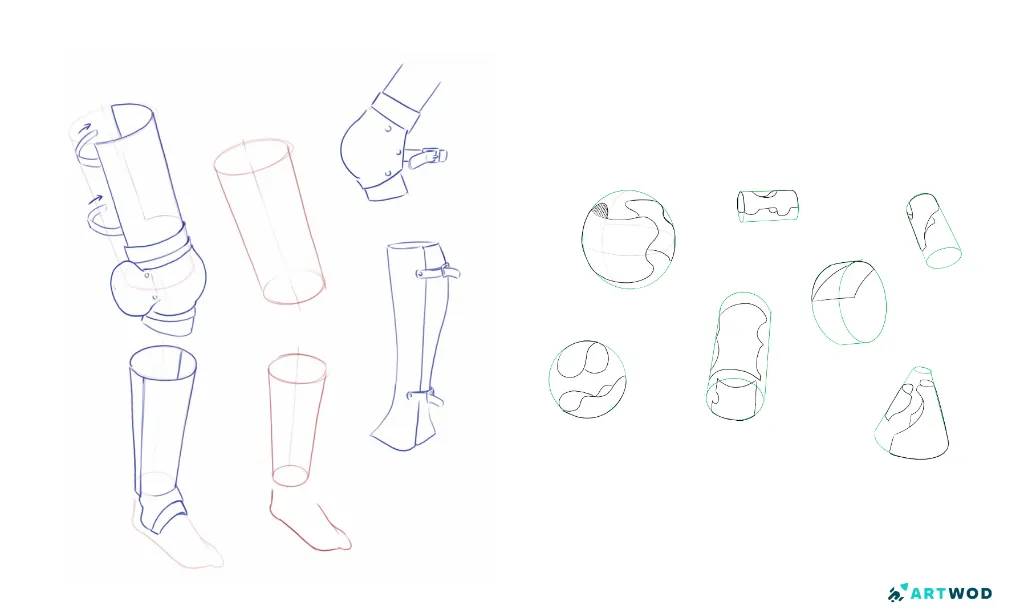
Sketches of armor wrapping around the form - leg armor, knee armor, different plates.
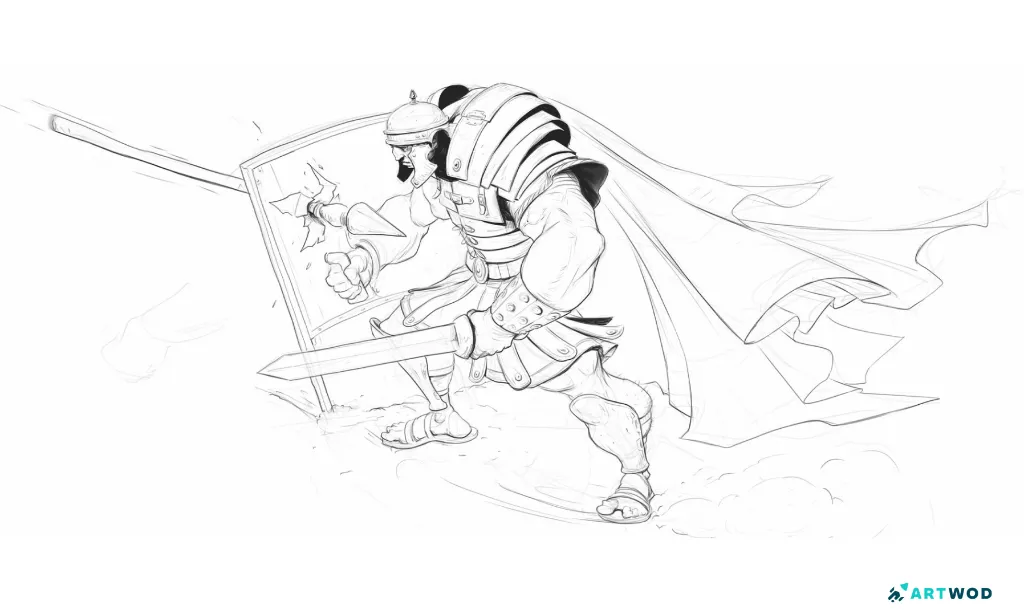
2D drawing of a Roman Warrior by Axel Van NederKkassel. Warrior holding a sword and a shield pierced by a spear. Black pen digital 2d drawing.
How to draw new, shiny metal
Once your form is solid, here's what makes metal look like metal: extreme contrast.
Shiny new metal has almost no mid-tones. Where most materials transition smoothly from light to shadow, polished metal jumps. You get very dark darks sitting directly next to very bright highlights, with very little in between. That sharp, sudden jump in value is the single most important thing that tells the viewer's brain "this is metal."
Metal also reflects its environment. A polished surface isn't just showing light and shadow, it's showing a distorted reflection of everything around it. You don't need to render this in photographic detail, but suggesting it makes a huge difference. A dark band where the metal reflects the ground, a lighter band where it reflects the sky, and a sharp hot highlight where it catches the direct light source.
Keep your highlights sharp and small. Soft, fuzzy highlights read as plastic or skin. Tight, bright, hard-edged highlights read as metal. The edge quality of your highlight is doing a lot of the work.
How to draw rusty, old metal
Rusty metal follows different rules, and understanding the contrast between the two is what really levels up your material rendering.
Rust kills the shine. As metal corrodes, the surface becomes rough and matte, which means it scatters light instead of reflecting it cleanly. So rusty metal has much softer transitions, lower contrast, and far less dramatic highlights. If shiny metal is all about extreme value jumps, rusty metal is about muted, gradual ones.
Color-wise, rust pushes warm. Oranges, browns, deep reddish tones, often sitting in patches and streaks rather than evenly across the surface. The key to believable rust is variation. Real corrosion is uneven, so mix rough rusty patches with areas where some of the original metal still shows through. That contrast between the dead matte rust and the few remaining spots of shine is what sells it.
Texture matters here too. Where new metal is smooth, rusty metal is pitted and irregular. A rough textured brush, used sparingly, helps suggest that decayed surface without you having to render every pit by hand.
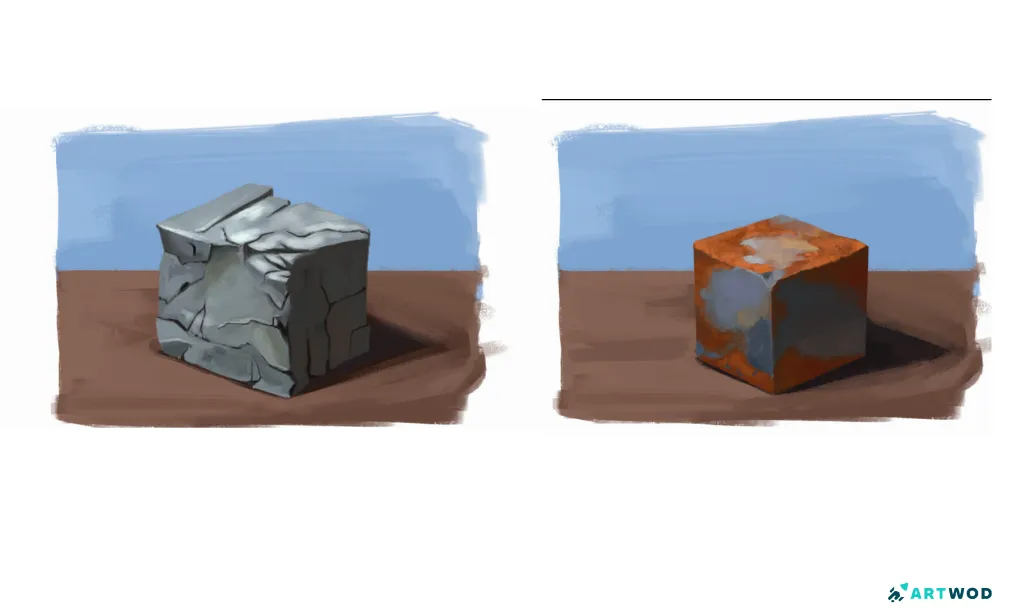
2 digital 2d Metal studies by Jesus Mesa. On the left new metal, on the right rusty metal
Rendering metal comes down to a few clear ideas. Build the form first, because shine on top of a weak form looks like nothing. For new metal, push extreme contrast, sharp highlights, and suggested reflections. For rusty metal, soften everything, warm up the color, and lean into uneven texture. Once you understand that every material is just a different answer to "what does light do here," metal stops being intimidating.
If you've drawn some metal and you're not sure whether it's reading right, get a second opinion before you move on. Drop your work on the Artwod Feedback Tool and let real artists tell you exactly what's working and what isn't. Sometimes the fix is one small contrast adjustment you couldn't see on your own.
Related Posts