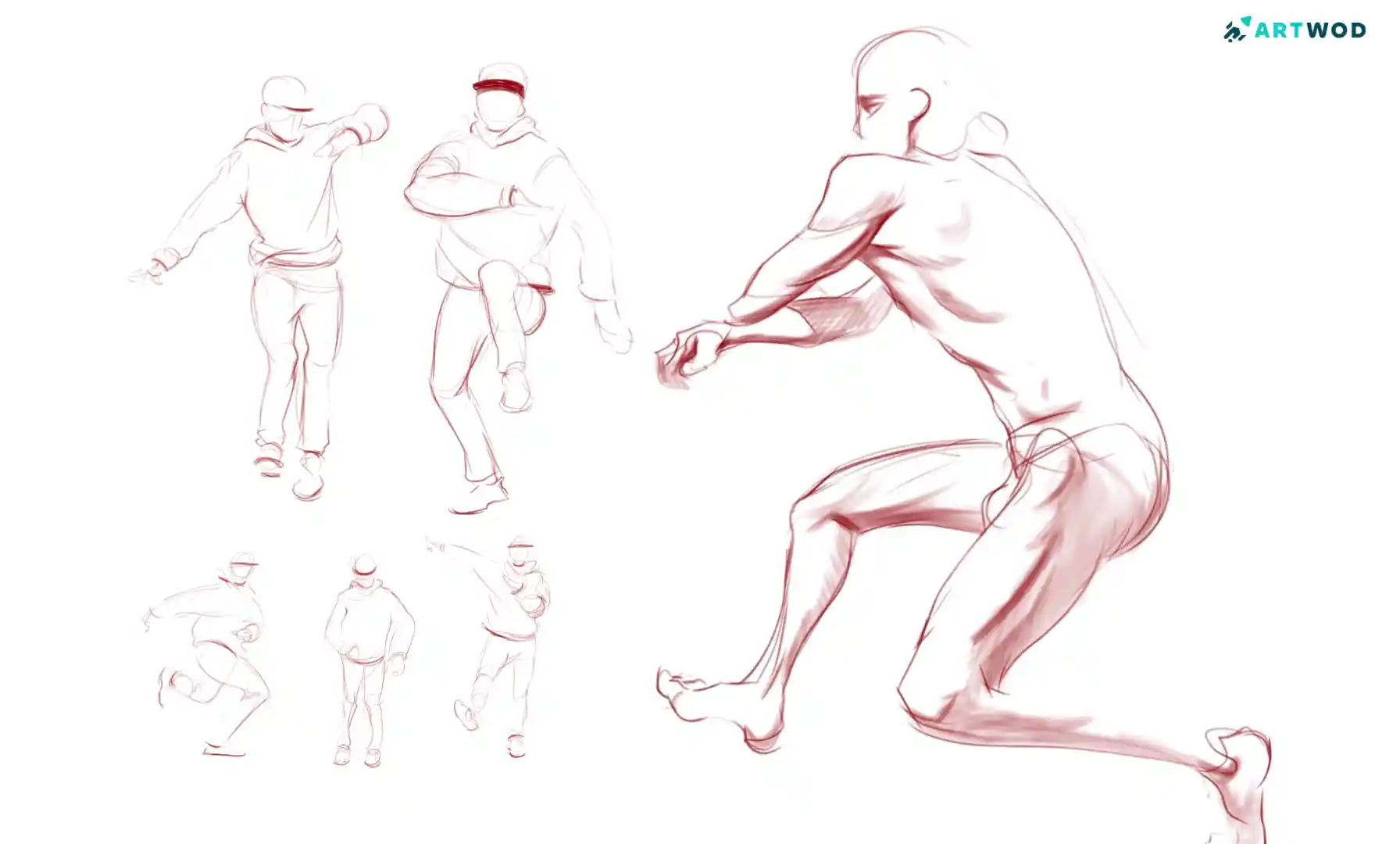
Gesture Drawing: Quick Sketch Techniques to Capture Movement and Energy
Gesture Drawing: Techniques to Capture Dynamic Movement
Gesture drawing is the foundation of every convincing figure. It's not about getting proportions right or nailing anatomy - it's about capturing the energy, weight, and movement of a pose in the shortest time possible. Master this art workout and everything else in figure drawing gets easier.
This art workout takes you from loosening up to working from real, unpredictable movement - the closest thing to drawing from life you can do at home.
Step 1: Draw Some Loose Lines
Before anything else, warm up your hand and your brain.
Fill a page with loose, flowing lines - curves, sweeping strokes, spirals. No subject, no goal. This isn't drawing, it's calibration. You're getting the stiffness out of your wrist and shifting your mindset from careful to instinctive.
Gesture drawing requires a loose hand. If you skip this step your early sketches will be tight and overworked before you've even started.
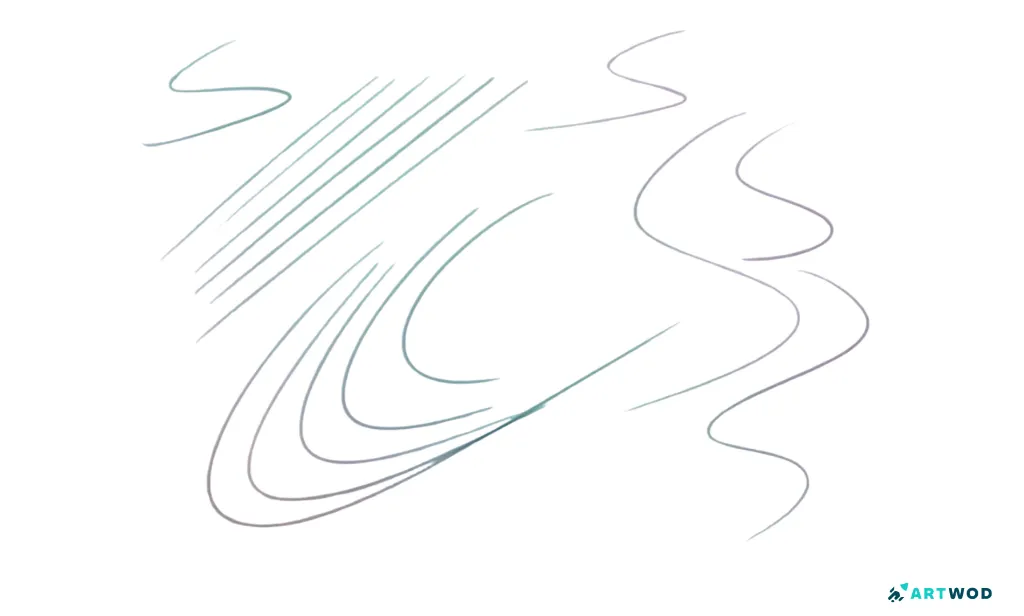
Different lines, 2d digital, warmup with lines
Step 2: Trace Gestures From 3 References
Now apply that looseness to real figures.
Find 3 reference images of figures in dynamic poses - athletes, dancers, anything with clear movement. Trace over them loosely, not carefully. You're not copying the outline, you're following the flow of the pose with a single, continuous line. Feel where the weight is, where the spine curves, where the energy travels.
Tracing is underrated as a learning tool. It builds muscle memory for how dynamic poses actually feel on paper.
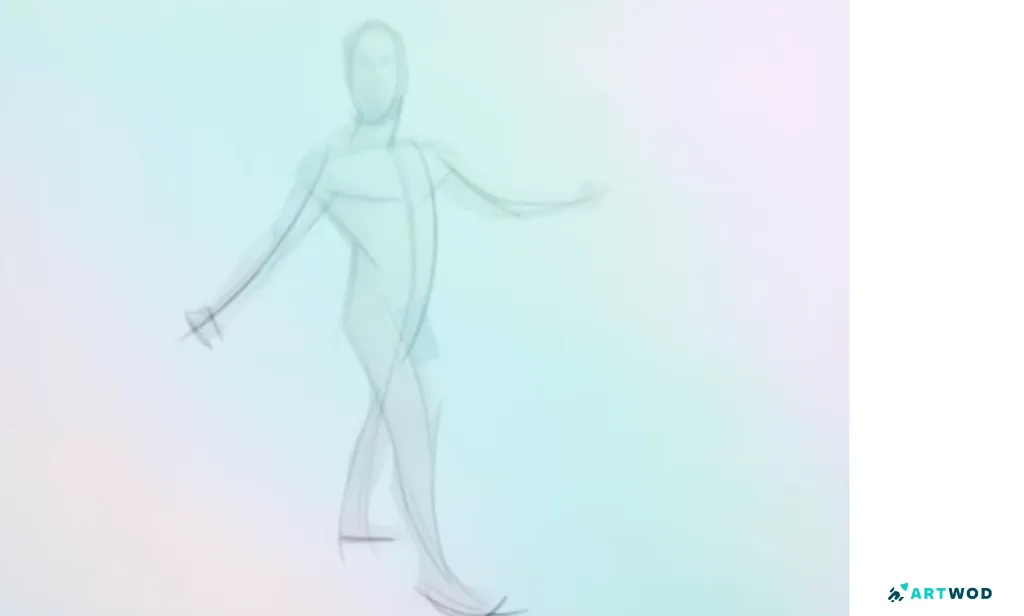
Gesture drawing on top of a photo, line drawing digital 2d on top of a man, figuring out the gesture of the body and limbs
Step 3: Find a Video and Do 5 One-Minute Gesture Drawings
Now remove the safety net of a static reference.
Find a video online of someone dancing, playing sport, or moving dynamically. Pause it at random moments and draw what you see in one minute. Five pauses, five drawings.
One minute forces you to prioritize - you can't draw everything so you draw what matters most. That instinct is the whole point of gesture drawing.
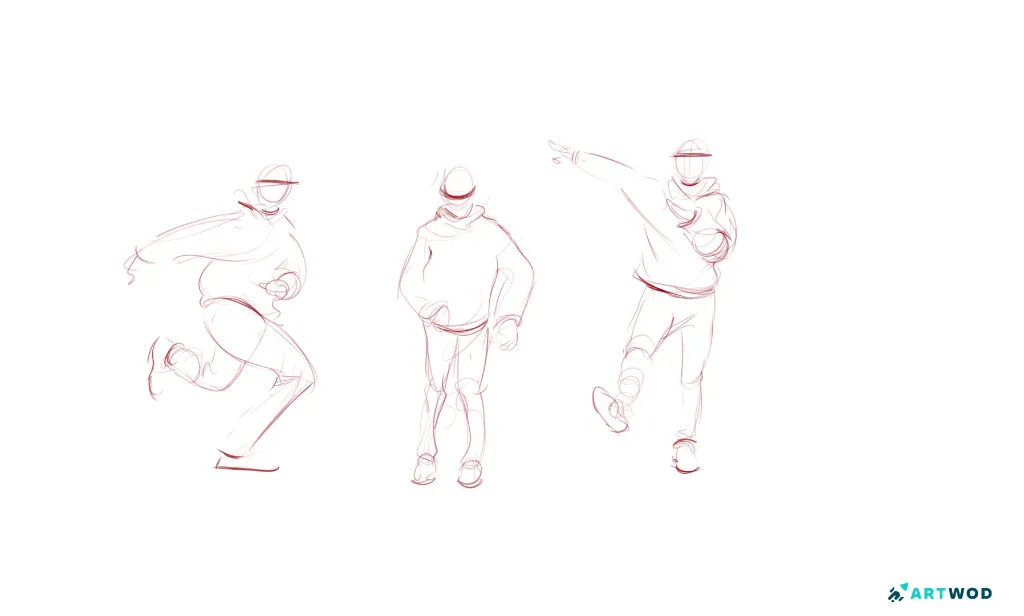
3 one minute drawing of a man dancing a man is wearing a hoodie a cap and skinny jeans
Step 4: Do the Same With 3-Minute Drawings
Same exercise, more time.
Go back to your video and repeat - but now you have 3 minutes per pose. Use the extra time to develop what you established in the first minute. Add weight, refine the line of action, suggest anatomy without overcommitting to detail.
Notice how your approach changes with more time. Are you using it well or filling it with unnecessary marks?
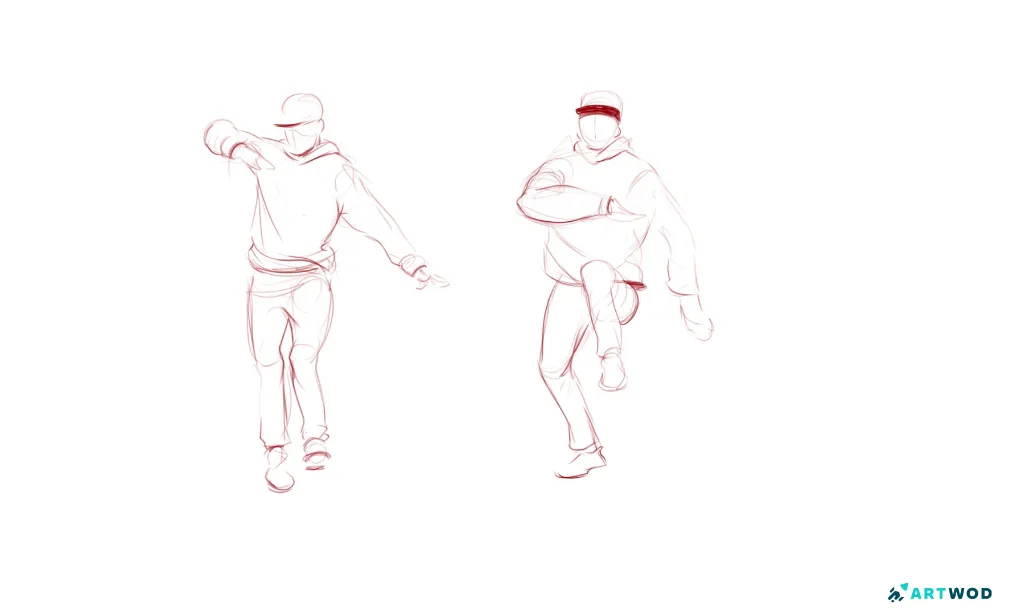
2 three minute drawing of a man dancing a man is wearing a hoodie a cap and skinny jeans
Step 5: Do the Same With 6-Minute Drawings
Final round - 6 minutes per pose.
By now you should have a clear sense of your gesture instinct and where you tend to lose confidence. Use 6 minutes to push one drawing as far as you can while keeping the energy of the original gesture alive. This is where gesture and construction start to meet.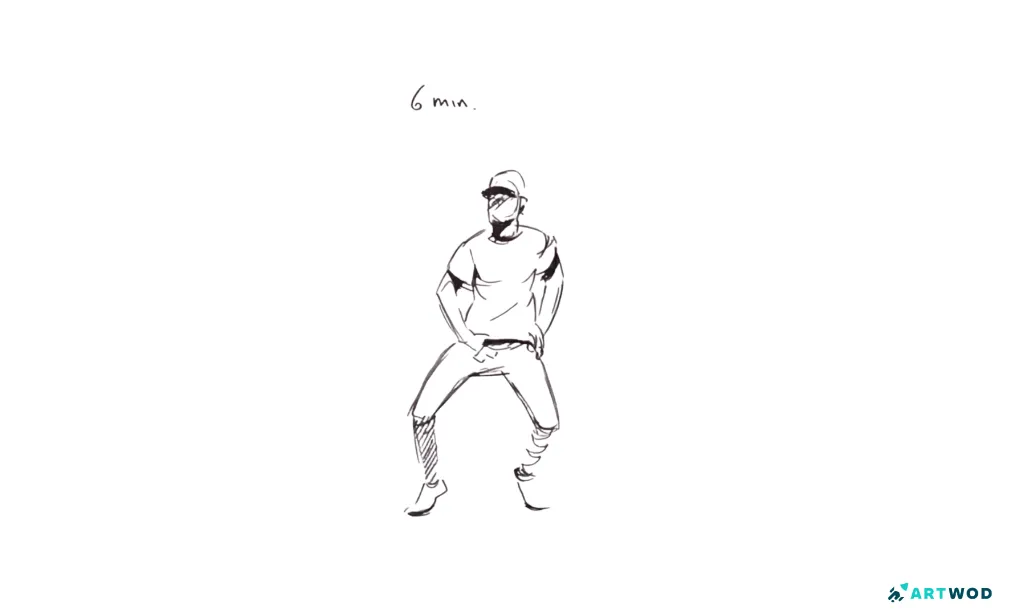
1 six minute drawing of a man dancing a man is wearing a hoodie a cap and skinny jeans
Gesture drawing is a daily practice, not a one-time lesson. The more consistently you do it, the faster your instinct develops - and that instinct is what separates stiff, labored figures from ones that feel alive.
Done a session you're proud of? Upload your gesture drawings to the Artwod Feedback Tool and get structured written and visual feedback from real artists. Find out what's working and what to focus on next.