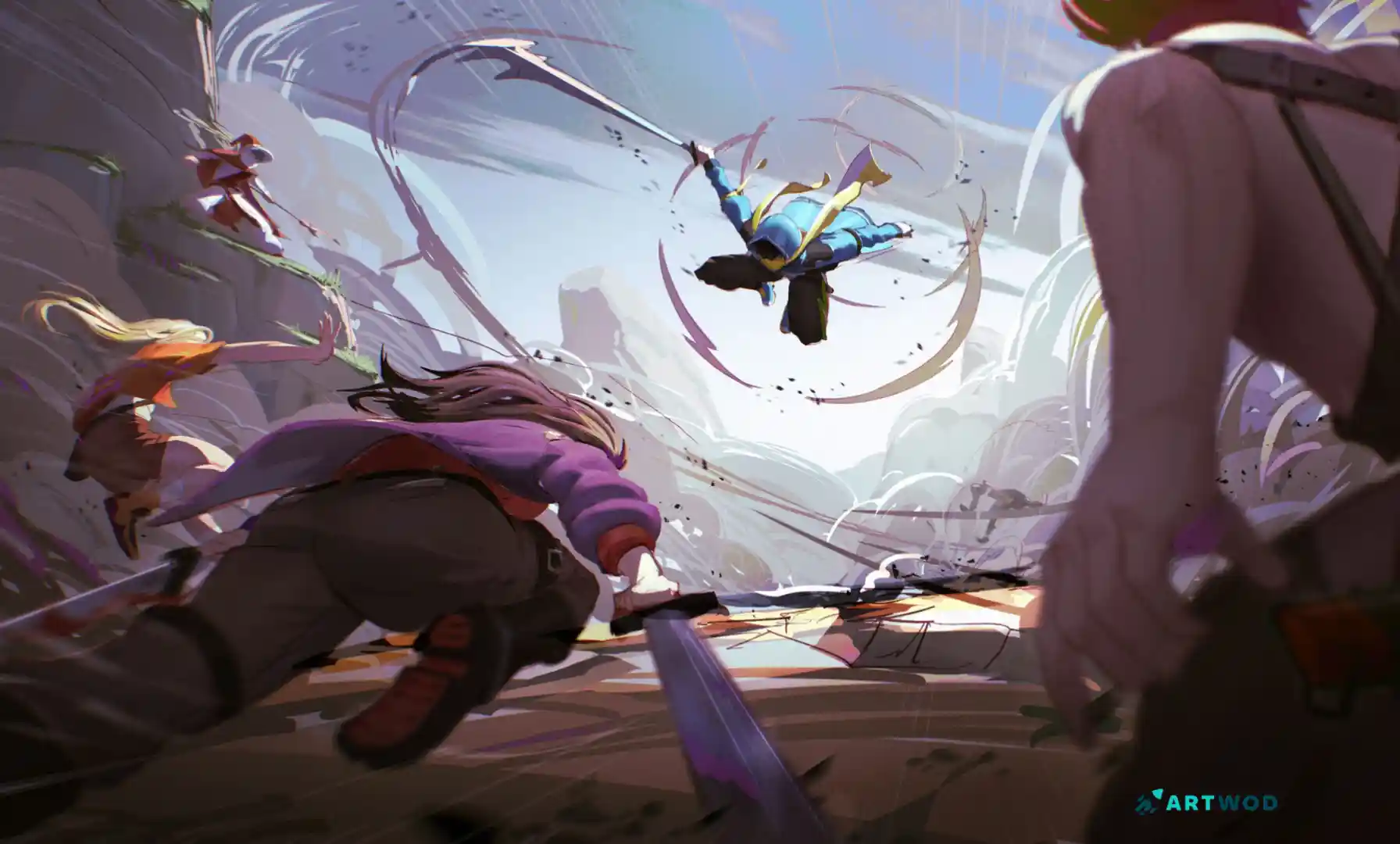
Drawing Fight Scenes: Dynamic Composition and Action Poses Guide
Drawing Fight Scenes: Tips for Dynamic Action and Composition
Why Fight Scenes Are Hard (and How to Fix That)
Most artists struggle with fight scenes because they try to draw the finished figure too early. Without a solid foundation in perspective and gesture, the result looks stiff, flat, or anatomically incorrect. The solution is to build from simple forms first — and that's exactly what this tutorial covers.
Step 1: Draw 3 boxes in perspective overlapping with each other
This is a warm-up exercise - it won't appear in your final piece, but it's one of the most important steps in the process.
Draw three rectangular boxes in perspective on a spare page. Make them overlap - this is the whole point. Overlapping forms train your eye to see objects as 3D volumes in space rather than flat shapes on a surface, which is exactly the thinking you need when placing two or more figures in the same composition.
Vary the sizes, try different angles, and don't worry about accuracy. This is pure calibration - you're warming up your spatial reasoning before the real work starts.
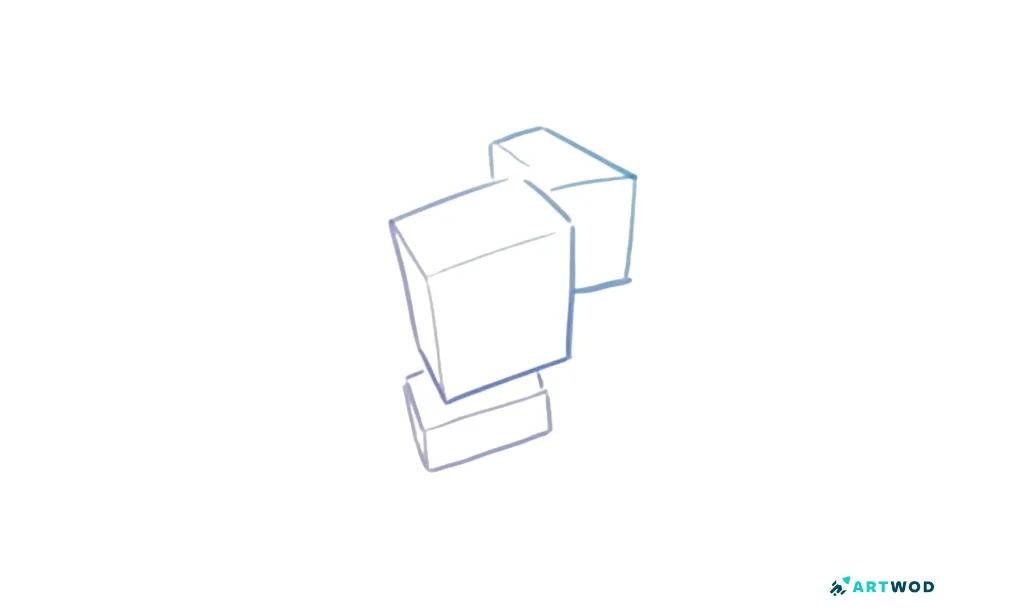
Step 1: Drawing Fight Scenes: Tips for Dynamic Action and Composition
Step 2: Attach cylinders to the boxes
Another warm-up - this one builds your intuition for foreshortening and form.
Now add cylinders to those boxes. Cylinders represent limbs - arms, legs, the neck, the torso. By attaching them to your perspective boxes, you start to feel how forms extend outward in space and how they foreshorten when pointing toward or away from the viewer.
Foreshortening is one of the hardest things to get right in fight scenes - punches coming at the viewer, kicks toward the foreground, figures falling backward. A few minutes of cylinder practice before you start will make these moments significantly easier to draw convincingly.
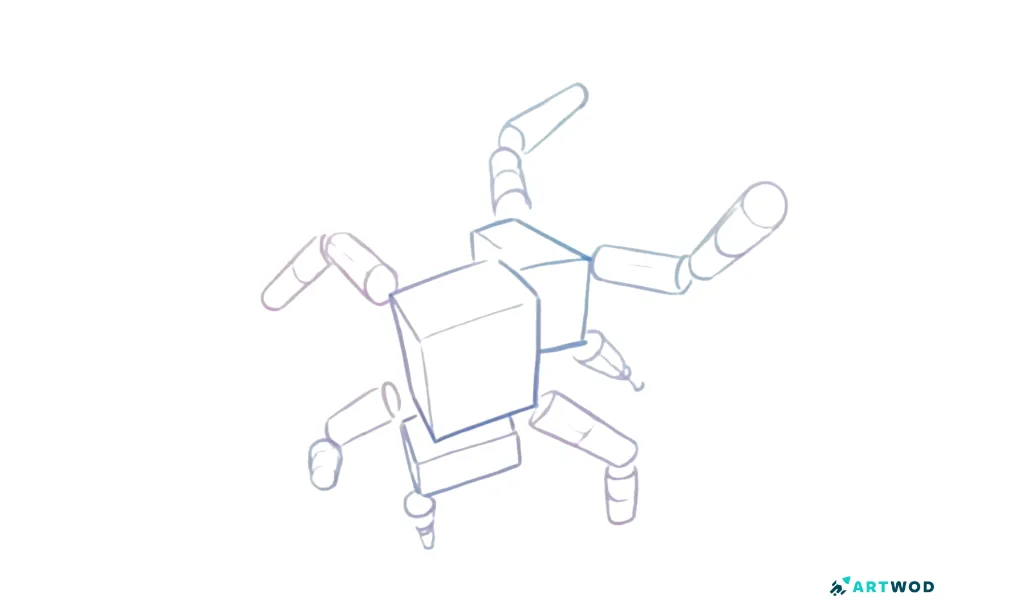
Step 2: Drawing Fight Scenes: Tips for Dynamic Action and Composition
Step 3: Study the gesture of a fight scene you like
Before drawing your own fight scene, gather reference.
Pick a fight scene you find compelling - from a comic, a film still, a manga panel, or even a photo of martial artists. Study it carefully. Ask yourself: What makes this feel dynamic? How are the figures positioned relative to each other? Where is the tension in the bodies? What direction is the energy moving?
Gesture is the soul of any action drawing. It communicates momentum, weight, and emotion before any anatomy or detail is added. A figure with great gesture reads as powerful even as a rough sketch. A figure without gesture looks dead no matter how detailed it gets.
Spend time sketching loose gesture studies - fast, expressive lines that capture the movement, not the anatomy.
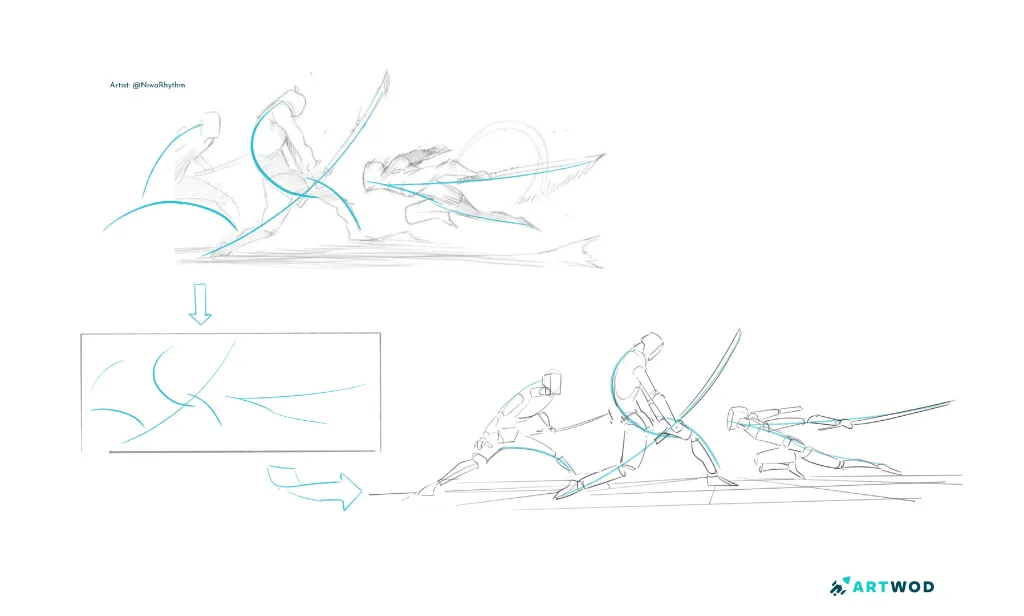
Step 3: Drawing Fight Scenes: Tips for Dynamic Action and Composition
Step 4: Draw mannequins fighting in perspective
Now combine everything. Using the box-and-cylinder foundation knowledge from Steps 1 and 2, and the gesture understanding from Step 3, draw two or more mannequin figures fighting in perspective.
A mannequin at this stage means simplified human forms using boxes, cylinders, and spheres for joints, placed into a perspective space, with clear gesture and weight. No facial features, no clothing detail, no muscles - just the essential action.
This is where your composition comes together. Think about force and reaction - one figure strikes, the other receives the impact, and the bodies should tell that story. Use overlap and depth to push figures in front of and behind each other. Ground your figures in perspective so they feel like they exist in the same space.
Don't move on to detail until the mannequin stage looks convincing. If the action reads clearly at this stage, it will survive all the rendering you add later.
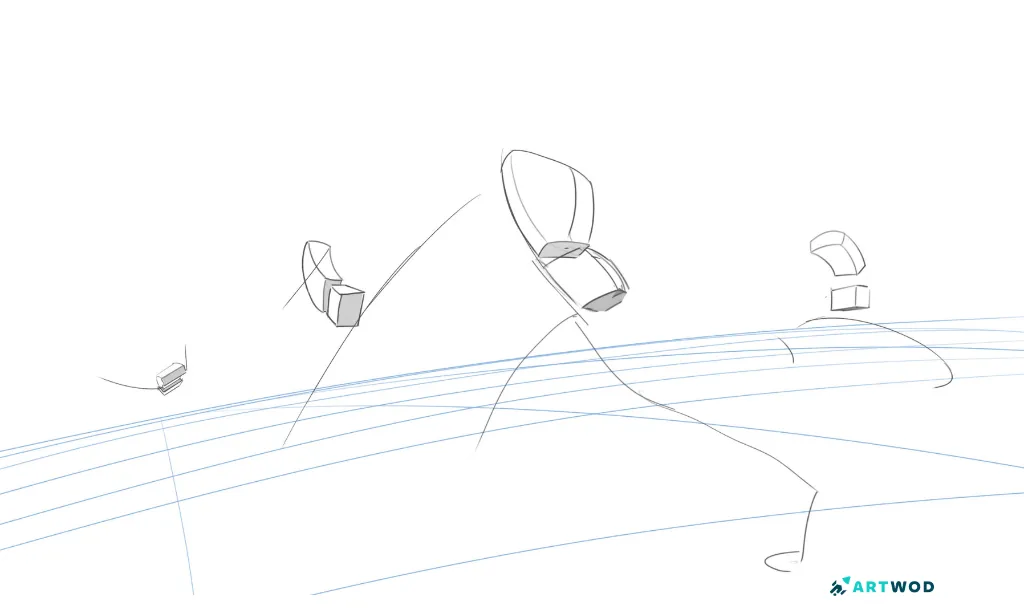
Step 4: Drawing Fight Scenes: Tips for Dynamic Action and Composition
Step 5: Finalize the figures
Remember - the key to an excellent drawing is structuring your workflow, refining every step until it looks interesting and believable.