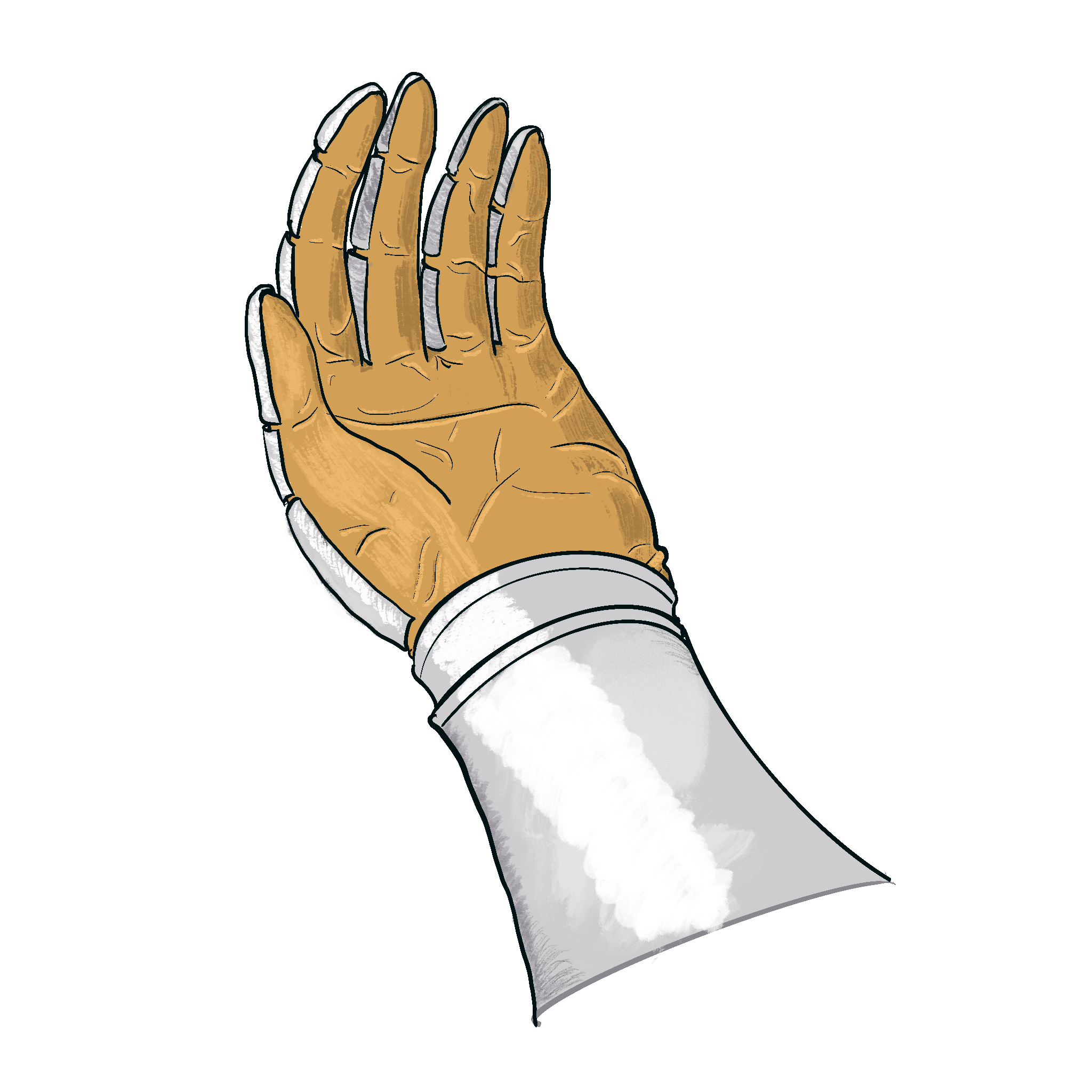
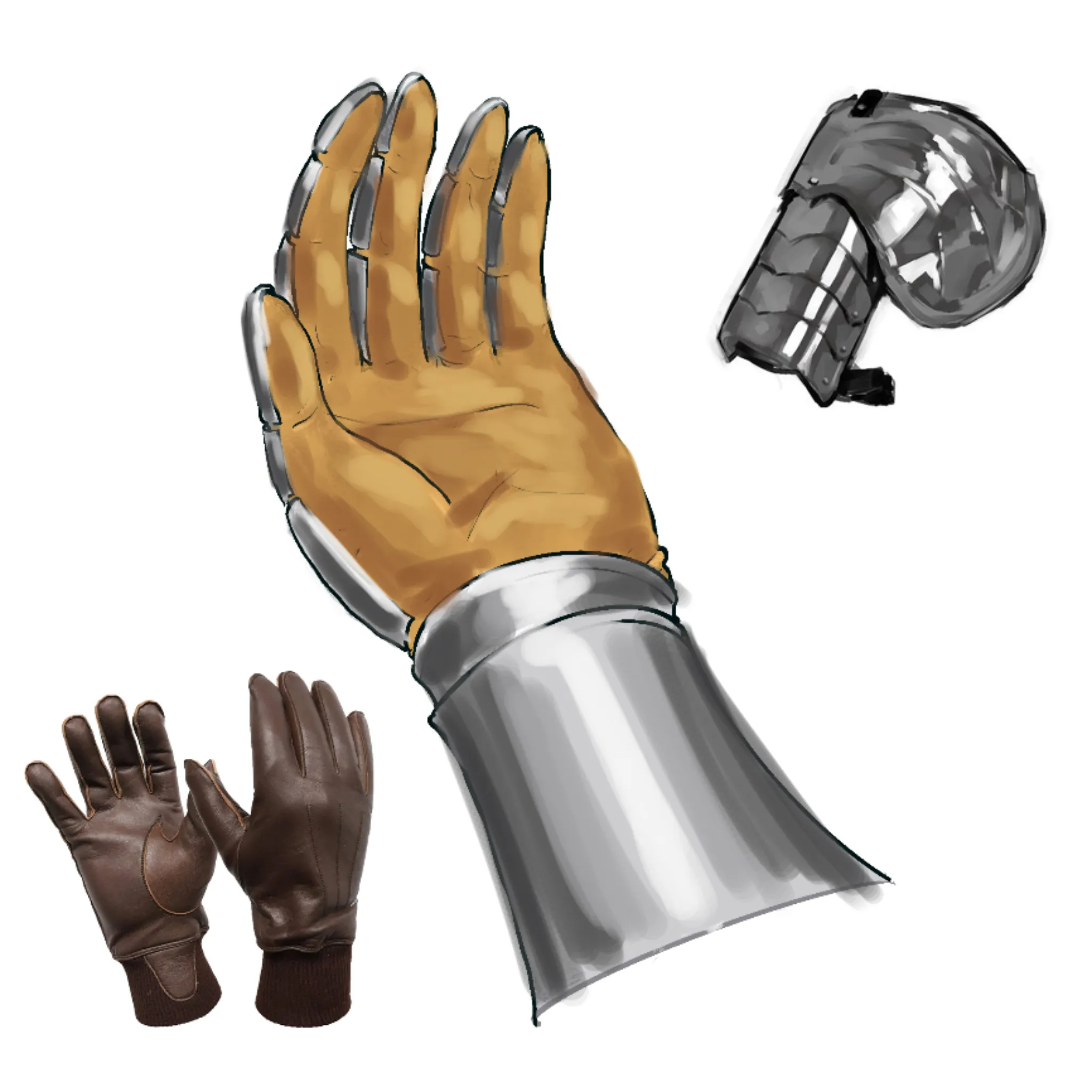

Hi hi! Great choice of practice! You have good base! We must first examine the materials more closely. We handle leather and polished metal differently because leather has more on luster side while metal is shiner. I advise you to gather as many references as you can before you begin painting in order to get the desired outcome. From materials to styles you are trying to imitate. The painterly approach that underpins DnD style stems from the fundamental arrangement of cell shading and texturing. Make a new one that will be clipped with a Clipping mask for every flat layer of materials, then use different brushes to add textures. Avoid over-detailing and try to replicate your reference image as much as you can; otherwise, the image will appear noisy. Apply shadow on top of it by adhering to the shapes and, most crucially, the type of material. Highlights would be threatened differently by luster materials since they are less reflective than glossy ones. Because metal reflects its surroundings, you can envision a situation where typical studio light is used or reflected, as I have shown above. Once everything is set, you can blend your shadows to suit your preferred style. Overpainting may cause some textures to disappear, therefore you will need to return them throughout the rendering process. Hope it helps! Happy learning!
Participez à la discussion
Inscrivez-vous pour donner votre avis sur cette œuvre.