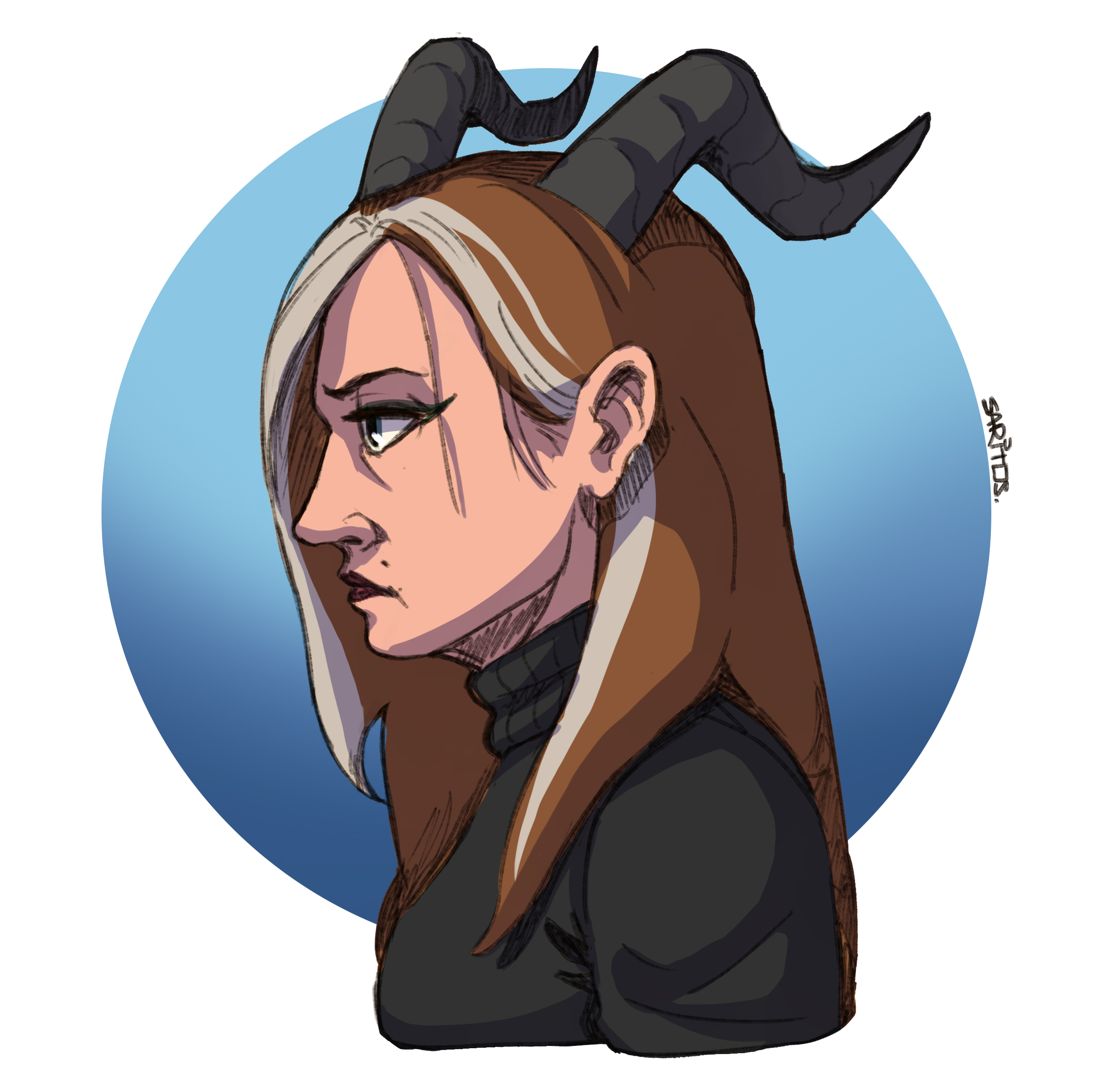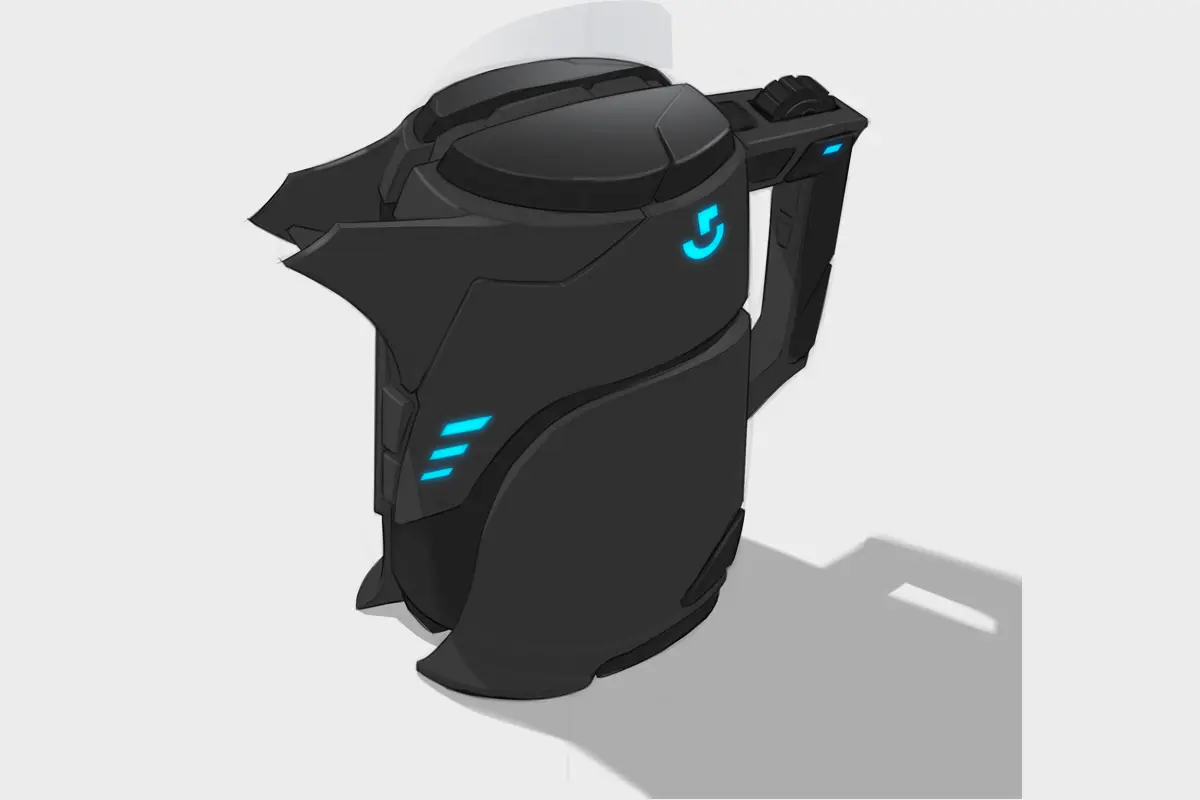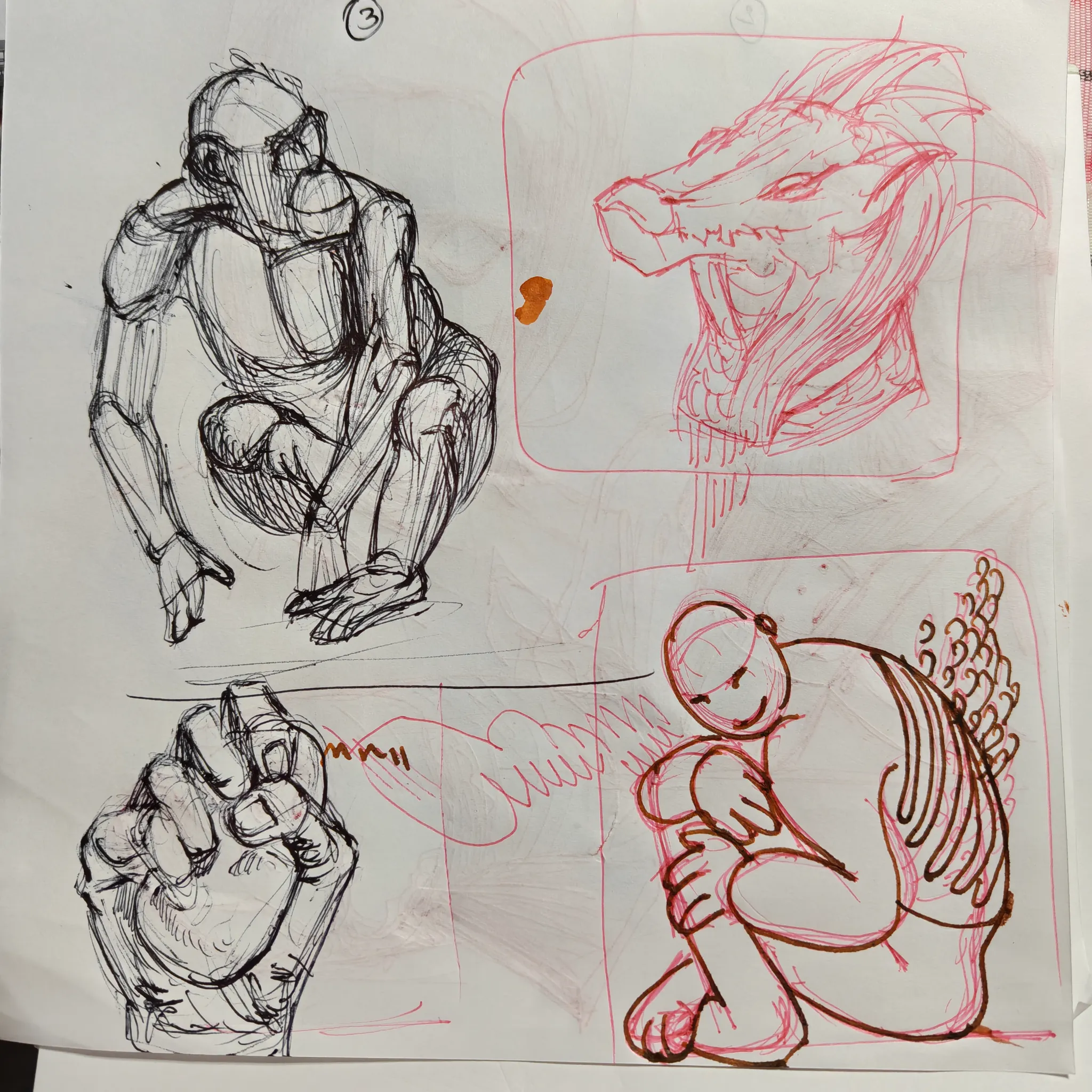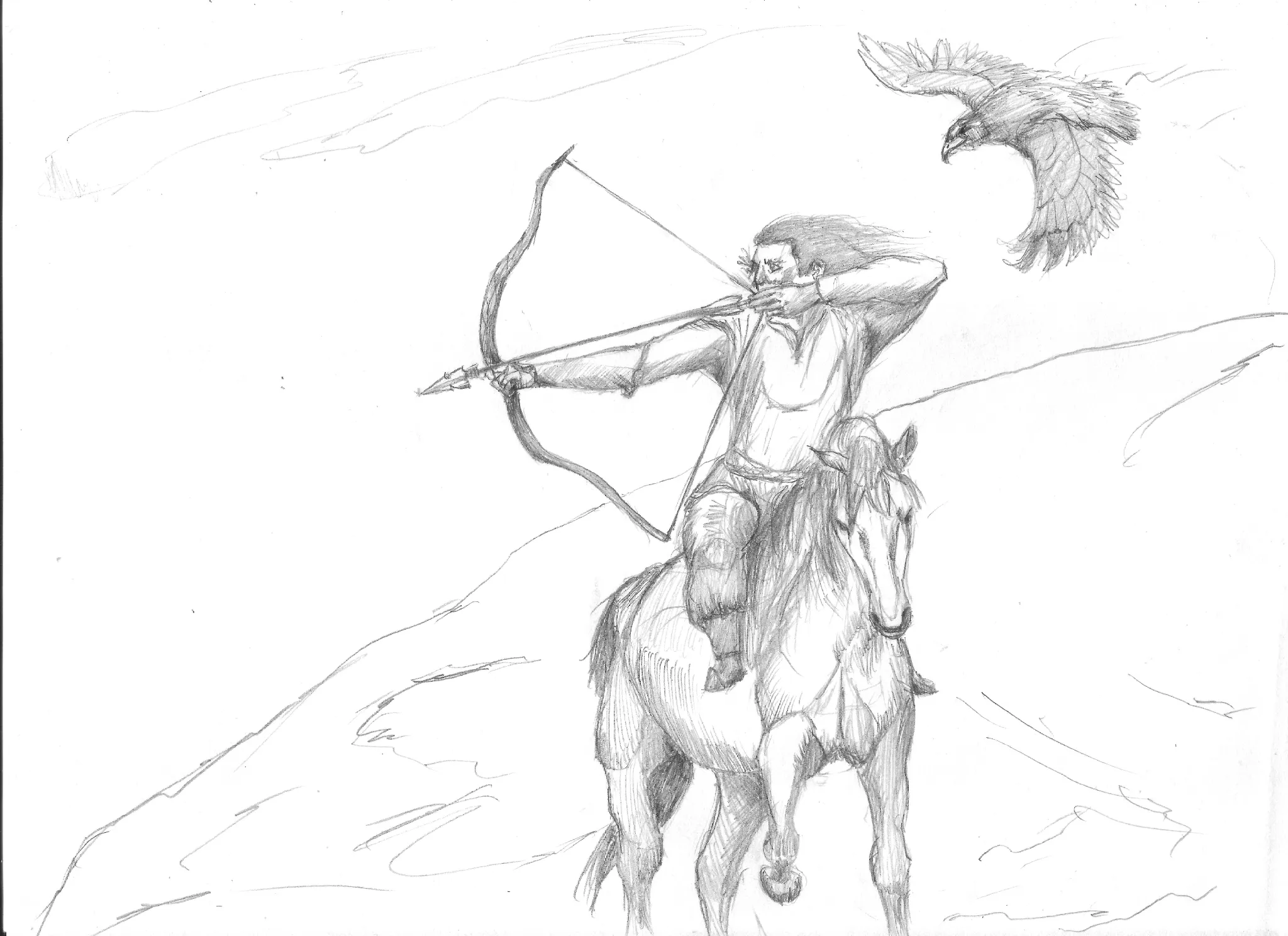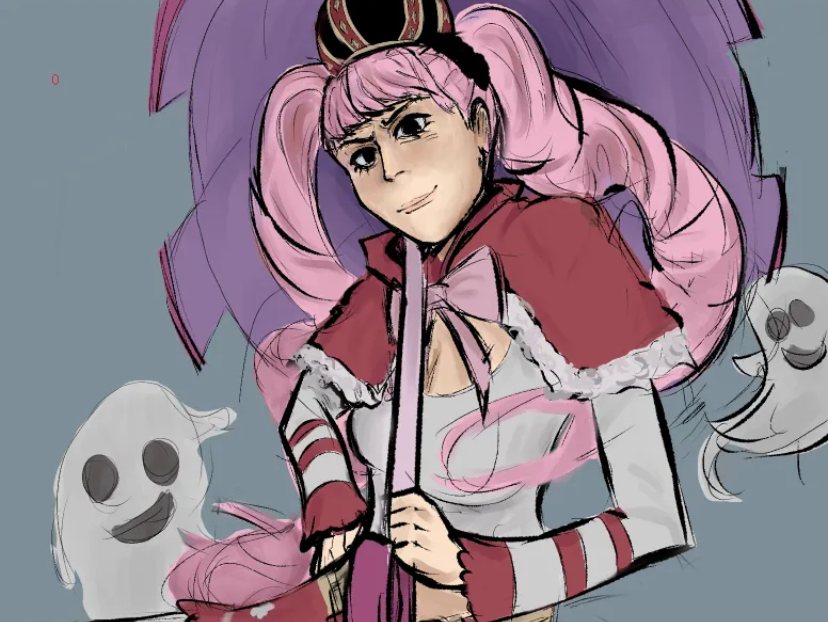
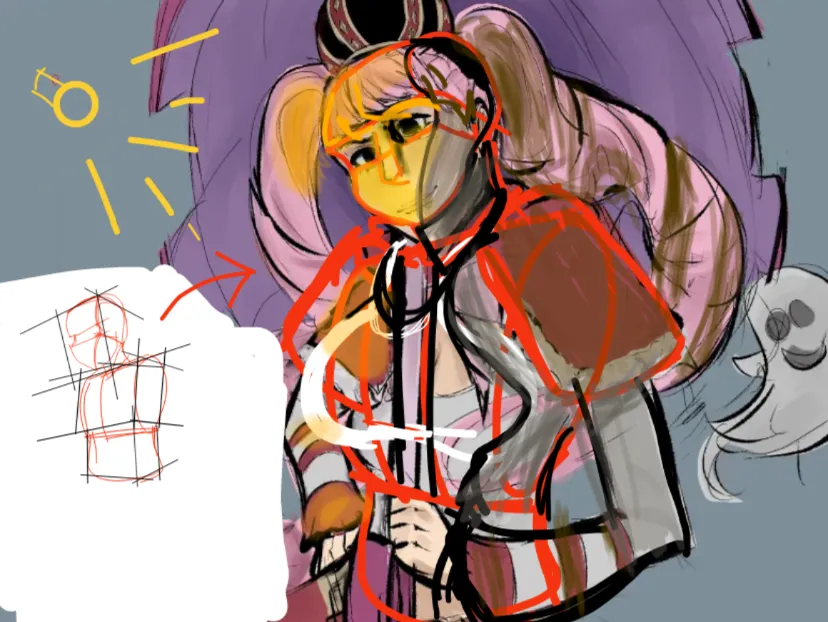
Great idea ! Really likes the composition of the artwork, specially with the ghost around her 👻 . Though it is true that you needs to work on some more things. Regarding your concerns with the shadow shapes , i feel like that there is actually something even more important then to just shadows and light , that you should be focussing on, and that's perspective. You might have already noticed that her chest area is looking kind of off, as if either she has a very long chest, or it is tilting at some impossible angles. Also the face shape itself needs some improvement. Well the good thing is that we could fix both, your concern over shading, also the shapes and perspective, with a single tool. And that is Guidelines. Specifically two types of guidelines, 1, Shadow mapping . 2. Form guidelines. Lets first start with shadow mapping. The shapes that the shadow forms can be predefined by us by using a simple, thin cross contour line over the shapes. This is our "Shadow shape" , and every shadow must be only inside this shape. You may further want to subdivide this into " Transition point " all the way to " Cast shadows" as you progress, but it is always best to start with the simple 5 tones ( White , Highlight, mid tones, dark tones, black ). This should already help you solve your initial concern . Now the concern may shift towards " Well, how exactly do we understand where to put the shadow ? " and the one i am more concerned over " How do we fix the proportions, positioning and shapes of our subject ? " And the solution to that concern is form guidelines. The core idea of form guidelines is that before we puts in any details ( Refining phase ), right after the ideation phases, we established the simple core shapes of our subject. You may use boxes for this st the beginner. We represents our subject's position, proportions, and three dimensionality by using these simple forms, after which , we can easily see and correct any issue straight away. This saves us a massive trouble of finishing the artwork just to find out that the simple forms we used were incorrect. For this process through, you do needs some practice with perspective. But it's still worth it. And after the major forms have been established, we may also use the plane changes of our form as a key indicator of 'where to place the shadows " , solving another issue for us And remember that although i am using intermediate forms for illustrating this, you may wish to use simple boxes for this purpose , after some practice with forms and form manipulation, you may do this phase with more complexer , organic forms which resembles your subject better. Although i have called these "Guidelines" , these are by no means beginner stuff, or to be treated as helping wheels to be removed later. Even kim jung gi used these same fundamentals to help his position his stuff, the only difference is that as we practices, our forms becomes more complexer, and for some peoples like KJG , they can imagine these Guidelines instead of putting them down on paper. But that's a stage that would take a lot of time and practice. (Due to the lack of white colour in the artwod software, i cannot illustrate the complete painted piece, but still you can do it through the info i have given)
Participez à la discussion
Inscrivez-vous pour donner votre avis sur cette œuvre.