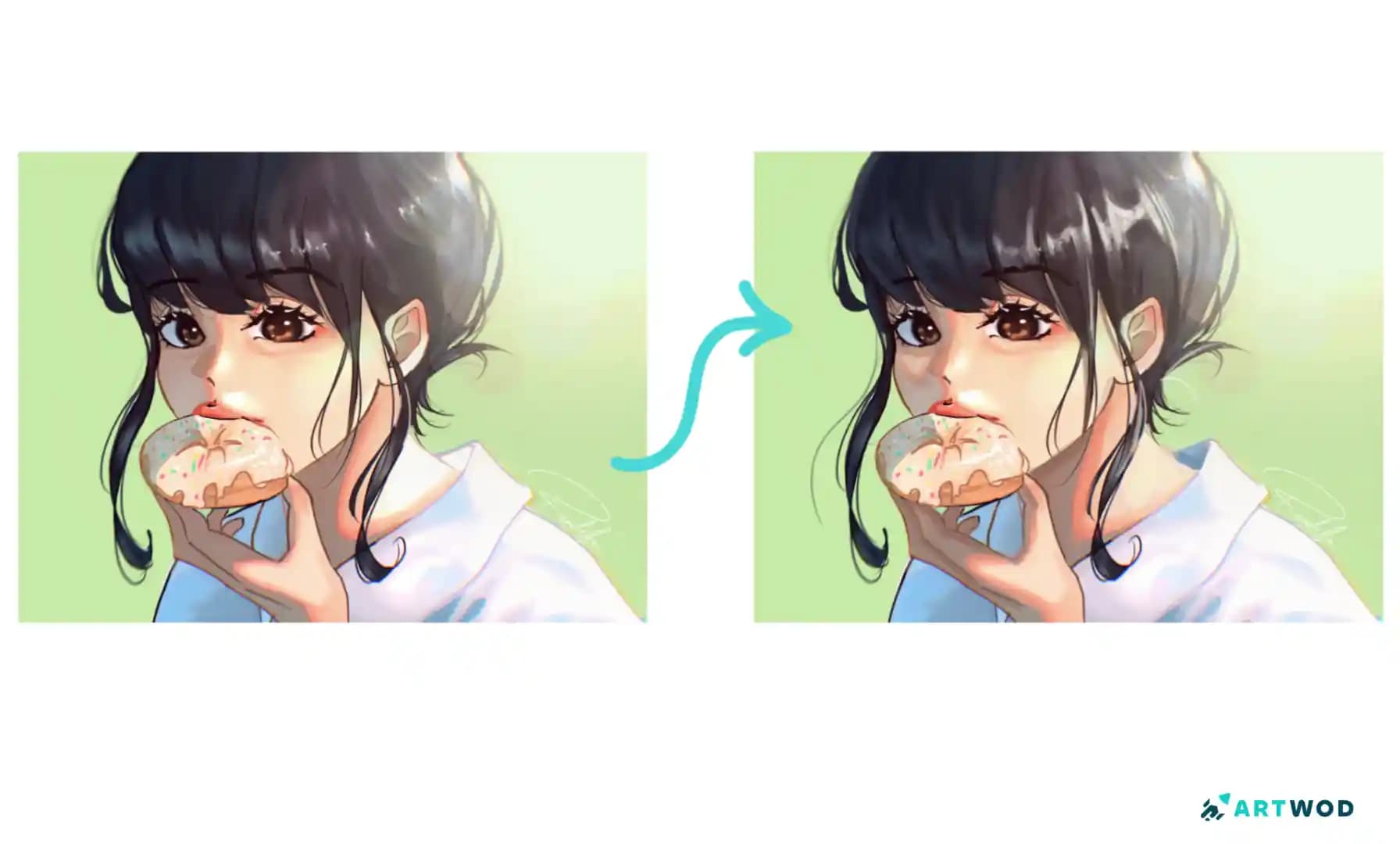
Anime Hair Shading Drawing: Fix Random Dark Patches
Anime Hair Shading Drawing: Refine Values and Form
Anime hair can look flat or messy when shadows are added as isolated dark patches instead of following the structure of the hair. In this marker-based sketch, the artist wanted more depth but felt the values and form were off.The feedback points toward a more structured approach to anime hair shading.
Insights shared in this blog post are by: @gabrielle34427. You can also request feedback on your artwork in Artwod’s Art Community.
The Main Problem: Shading Without Form
The Artwod submission from @Radifa088 can someone explain anime hair shading focuses on an anime portrait with large eyes and short flowy black hair. The artist's question is straightforward: how can anime hair shading create more depth instead of looking like random dark patches?
The important distinction is between adding darker areas and shading the form. A darker mark only communicates depth when its placement supports the direction, grouping, and volume of the hair.
This is especially important when working with markers. Because marker strokes can build value quickly, adding more dark marks does not necessarily make the hair look more three-dimensional.
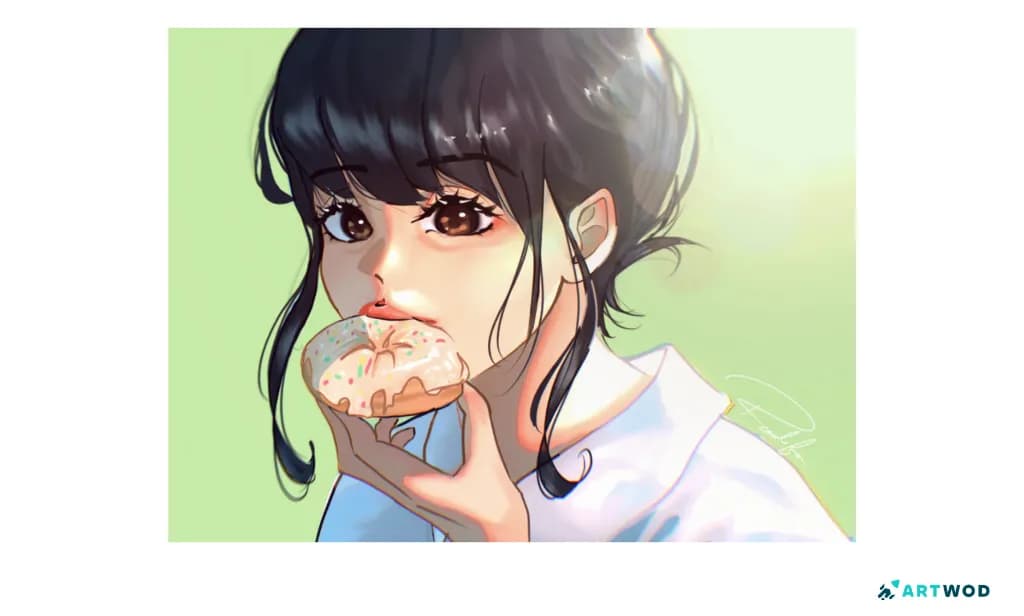
Anime hair sketch submitted for feedback on marker shading, values, and form
Start With Hair Form Before Adding Detail
A useful way to approach anime hair drawing is to think about the hair as larger masses first.
Instead of treating every strand independently, identify the major sections of hair and determine how each mass bends, overlaps, and turns away from the light.
A practical sequence is:
Block in the major hair masses. Think about the overall shape before individual strands.
Choose the light direction. Decide which side or planes receive more light.
Group the shadows. Place darker values where the larger hair forms turn away from the light.
Follow the flow of the hair. Shading should reinforce the direction of each major section.
Add smaller accents last. Individual strands and highlights should support the larger value structure rather than compete with it.
This prevents the common problem of drawing many convincing-looking marks that do not collectively describe the form. The same principle can be applied to this piece, another anime piece where the user felt they were struggling with the forms and values. Correcting the forms would help with fixing the values and depth.
Use Values as Large Groups
The artist specifically identified values as an area that needed work. That makes value grouping more important than simply increasing the amount of shading. You can see this within the paintover done by @eewee emphasizes the contrast more and follows the form more.
Try reducing the hair to a few clear value levels:
A primary mid-value for the overall hair mass
A darker value for deeper or less illuminated areas
A lighter value for planes facing the light
Small highlights reserved for selected areas
The goal is not to make every section of hair equally detailed. Clear separation between larger value groups usually creates more depth than numerous small patches.
It’s also critical to remember hair is highly reflective under a direct source of light compared to something like your skin. I find this results in a high contrast band where the light hits, especially with darker hair colors (such as in this submission). This is where you want to place your lighter values and highlights. For me, I find using an M shape or straight hatching works for the shape of the highlight.
Otherwise, your artwork may not have the depth you want, similar to what @kayleigh44158 described in their artwork “My Artwork” submission where they were struggling with a lack of depth. A lack of strong contrast can make your hair look washed out and flat.
With markers, this can also make the drawing easier to control. Rather than repeatedly darkening random areas, decide which masses should remain lighter and which should carry the strongest shadows.
Let Shading Follow Hair Direction
Anime hair is often stylized into large, directional shapes. The shading should respect those shapes.
If a lock curves downward, its value transition should help describe that curve. If several locks overlap, the darker area between them can reinforce the separation.
This is why random shadow placement can make hair feel disconnected from its underlying structure. The viewer needs the values to support the same directional information established by the hair silhouette and major locks.
When it comes to identifying where values you go, I personally suggest finding a reference that reflects the lighting environment you’re trying to draw. For this submission, for example, I would search for something like “women backlighting outdoors” or “women portrait outdoors” to get an image that would reflect the environment I am trying to replicate. It's good to keep in mind the lighting environment, as that can change the colors or value range as well.
You can see a very good example of this in the paintover for this piece by @eewee on @Kyaw71178 “Did a quick anime bangs sketch and color it” which shows how to consider the light source and to follow the flow of the hair.
The paintover provides a useful visual direction here: the hair is organized into clearer masses with controlled dark areas, brighter highlights, and value transitions that help describe the volume.
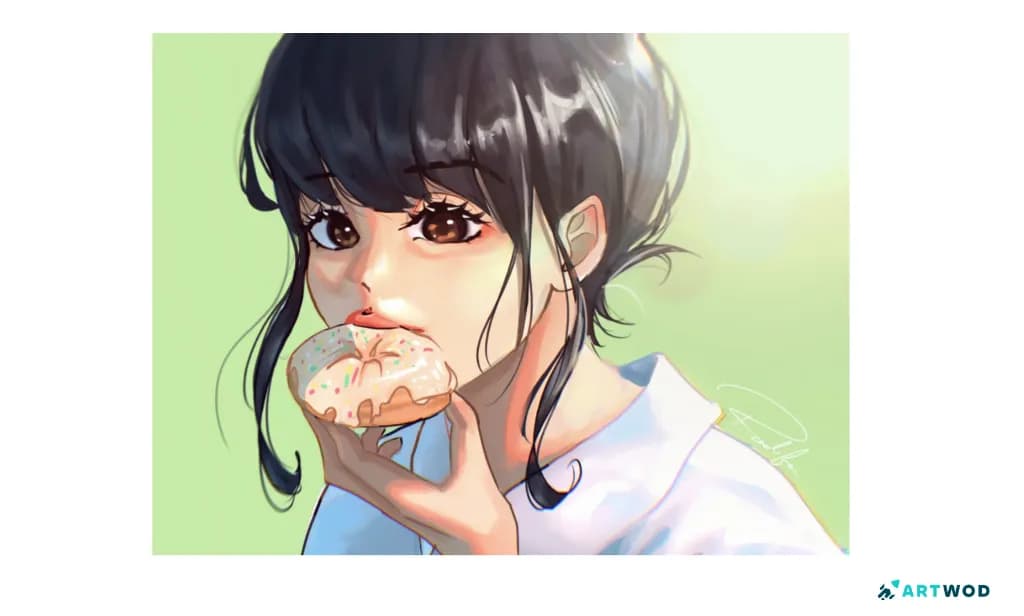
Anime hair shading paintover demonstrating clearer value grouping, highlights, and hair form
Practice Anime Hair Shading With One Simple Exercise
A useful practice exercise is to take a simple anime hair shape and remove the temptation to draw individual strands.
Start with one large hair mass. Give it a light direction and shade it using only a small number of marker values.
Then divide that mass into several larger locks and repeat the exercise.
Finally, add a limited number of strand-level accents.
This progression trains the eye to solve form and value first, detail second. It also makes it easier to recognize when a dark patch is actually helping describe the hair and when it is simply adding visual noise.
Common Mistakes in Anime Hair Shading
A few habits can make marker-based hair shading harder to control:
Adding dark patches wherever they look visually interesting
Treating every strand as a separate form
Using too many similar values without a clear hierarchy
Adding highlights before establishing the main shadows
Ignoring the direction of the larger hair masses
Continuing to darken an area instead of reconsidering its form
The solution is generally not more detail. It is a clearer organization.
What This Anime Hair Drawing Teaches
This feedback request contains several transferable lessons for artists working on anime rendering:
Form comes before surface detail. Shading should describe the structure underneath.
Large value groups matter. Clear light and dark organization creates stronger depth.
Hair should be treated as masses. Individual strands are secondary details.
Marker control depends on planning. Dark values are difficult to undo, so placement matters.
Highlights work best when they have a reason. They should reinforce the light direction rather than simply decorate the hair.
These principles also apply beyond anime hair. The same form-first approach can be used when shading clothing, faces, objects, and other stylized subjects.
How Community Feedback Can Help With Hair Shading
When an artist cannot tell whether a shadow is describing form or simply creating a dark patch, outside feedback can reveal the problem quickly.
Sharing the sketch and asking specifically about values, form, and shadow placement gives fellow artists something concrete to evaluate. It also makes feedback more actionable than simply asking whether the drawing looks good.
For artists practicing anime rendering, this kind of peer feedback can help identify recurring problems in value grouping and form before they become habitual. You can use the Artwod’s Art community to explain what you’re struggling with and get feedback from fellow artists.
FAQs
Start by establishing the major hair masses, light direction, and larger value groups. Add strand-level shading only after the overall form reads clearly.
Why does my anime hair shading look like random dark patches?The shadows may be placed independently of the hair's structure. Try grouping the hair into larger forms and placing darker values where those forms turn away from the light.
How many values should I use for anime hair shading?There is no fixed number, but starting with a small value range can make the structure easier to control. You can introduce additional variation once the major light and shadow groups work.
How can I practice hair shading with markers?Practice simple hair masses using only a few marker values. Focus on light direction and form before adding individual strands or small highlights.
Should I draw individual hair strands before shading?Usually, it is more effective to establish the larger hair masses first. Individual strands can then be added as secondary details.
How do highlights improve anime hair?Highlights can reinforce the direction of the light and help communicate the curvature of the hair. They are most effective when the underlying shadow structure is already clear.
Better anime hair shading is less about adding more dark marks and more about making every value support the form. Establish the hair masses, decide where the light comes from, group the shadows, and add details only after the larger structure works.
A great way of figuring out a good value scale is looking at a reference that matches the lighting you’re going for. Using a website like angleref.com can help identify references that match the same lighting environment.
For marker-based drawing in particular, practicing this value-first approach can make anime hair cleaner, more dimensional, and easier to control.
If you're working through the same problem, share your artwork and ask for feedback from the Artwod’s Art community specifically on the areas you find difficult—such as values, form, or shading direction. You can also put your art under the Anime category for feedback pertaining to that style. Seeing how other artists approach the same problem can make the next drawing much easier to understand.