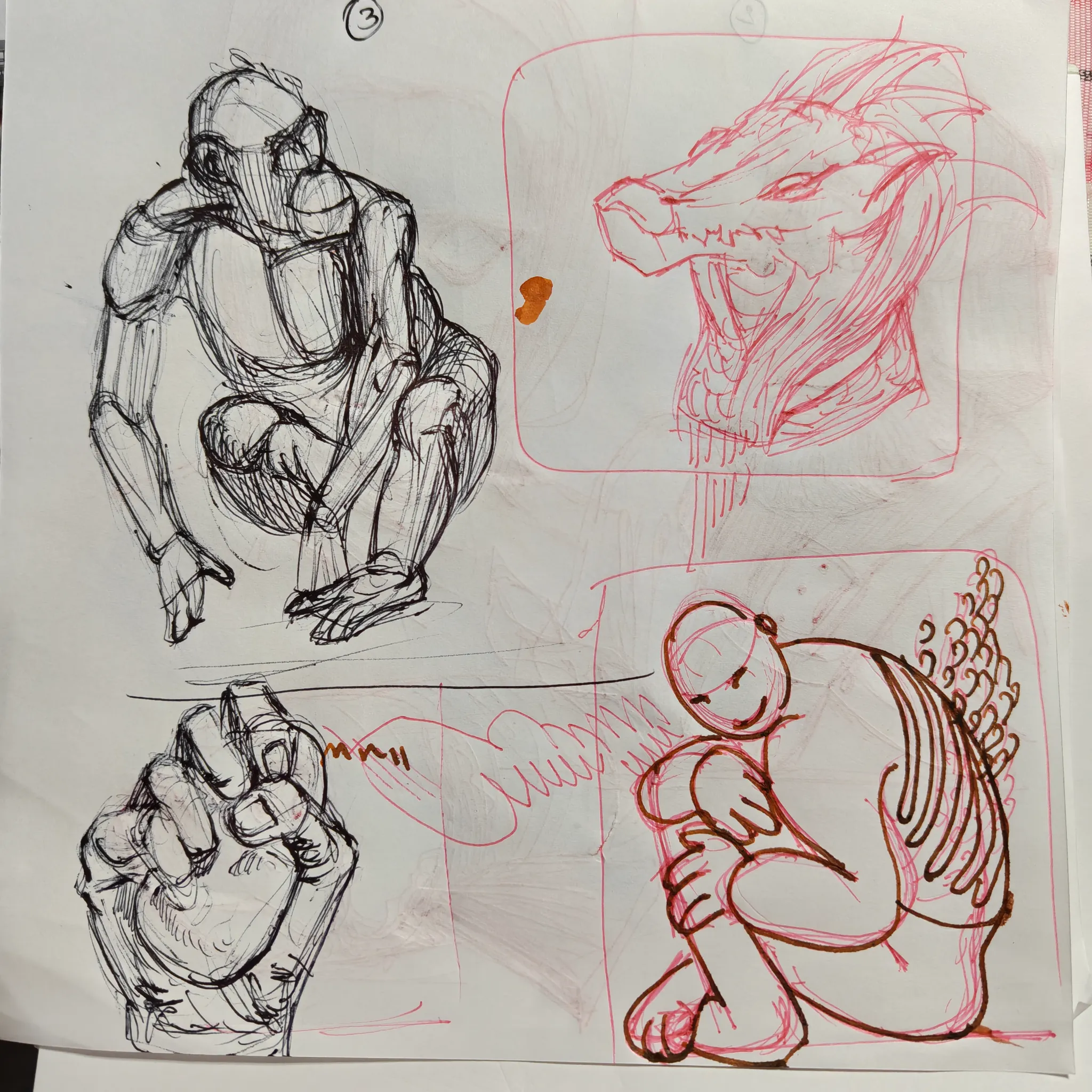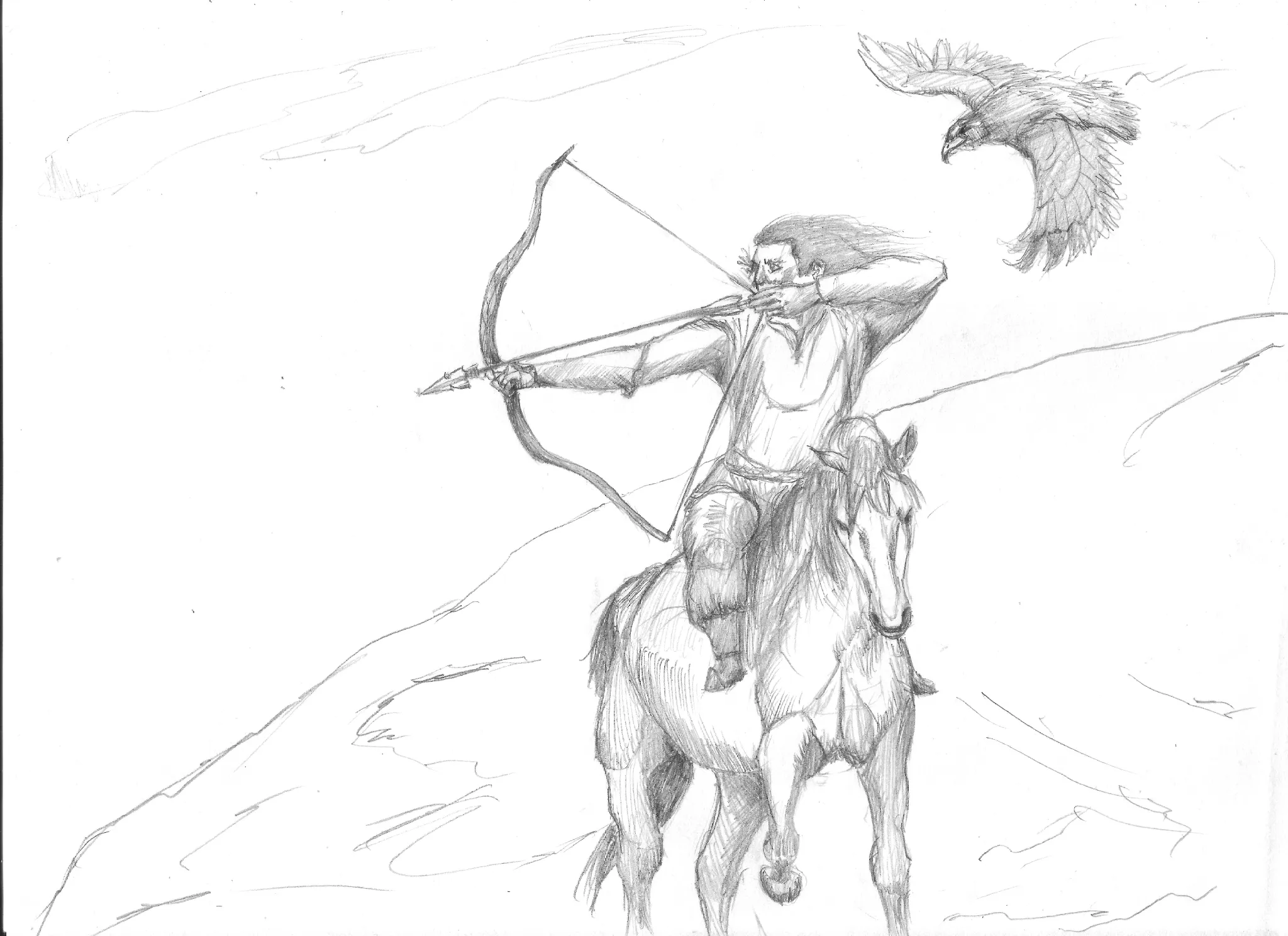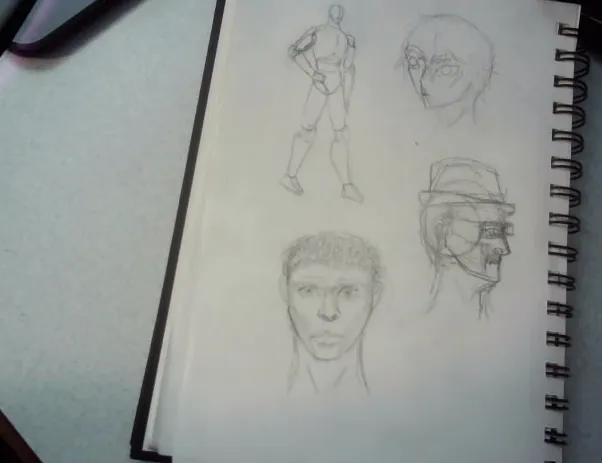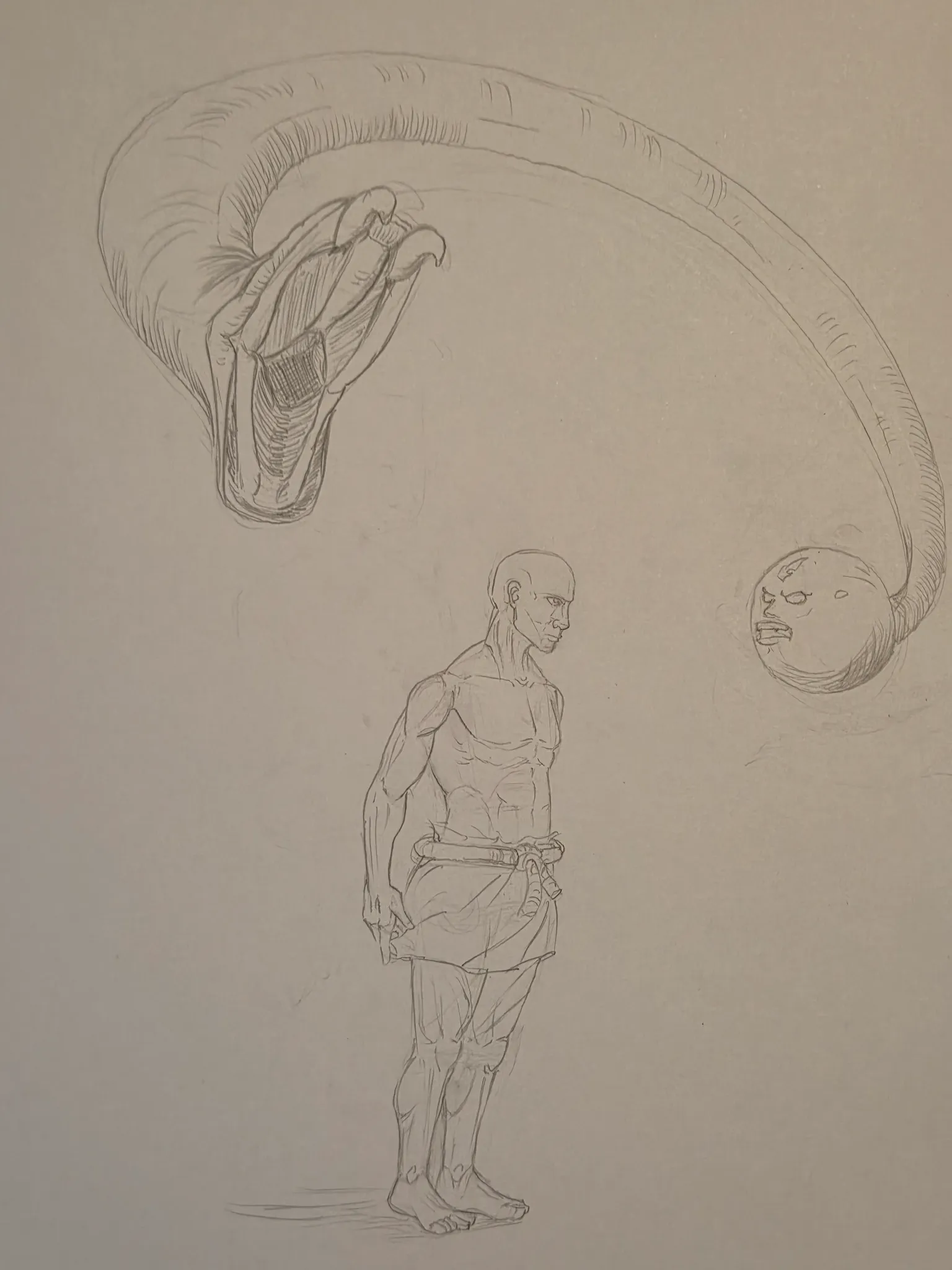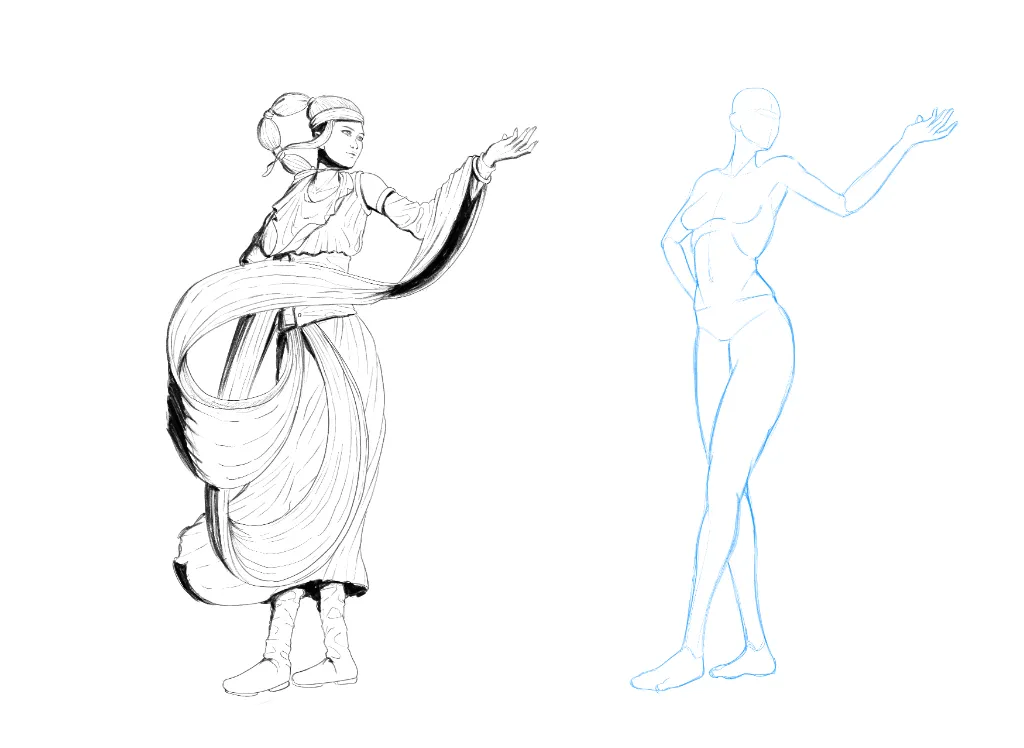
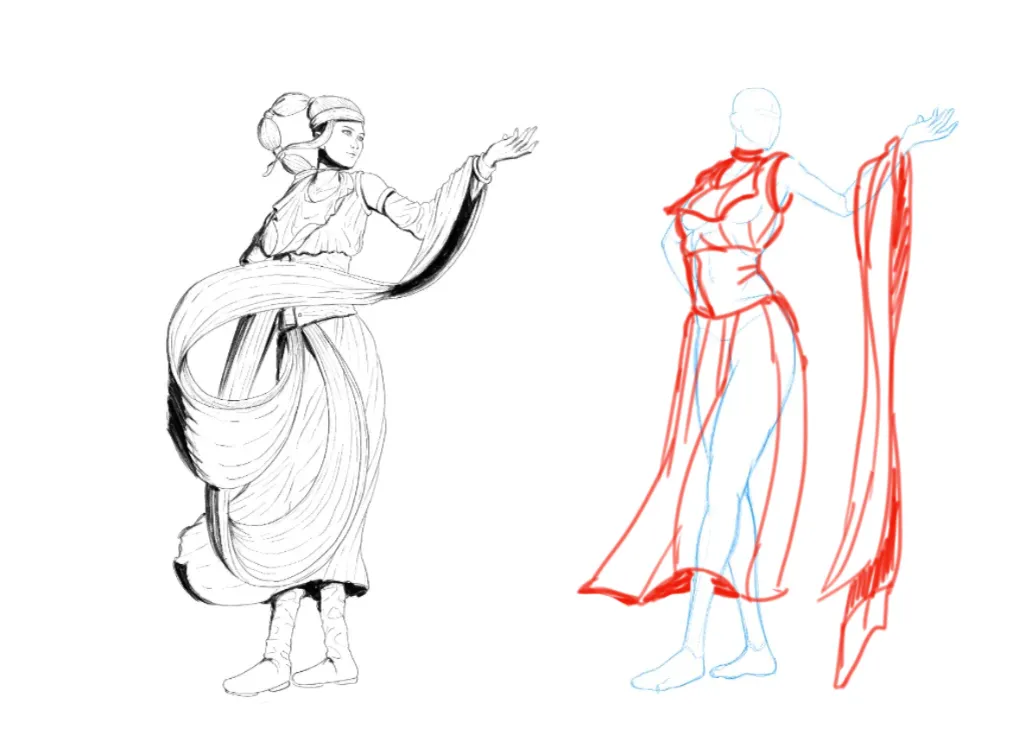

Hi HI! Great practice! Keep up! I will use your blank figure to demonstrate your vision. When approaching folds, we have two key rules: keep it simple and follow the principle of big>medium>small. Understanding the underlying anatomy and how cloth responds to strain and gravity is necessary when creating folds on figure drawings. Depending on how the fabric is pressed, many kinds of folds can form. These include zigzag folds, which form when fabric is compressed, pipe folds, which appear in hanging fabrics like a cape or skirt, spiral folds, which wrap around cylindrical forms like sleeves on an arm or pants on a leg, and tension folds, which happen when fabric hangs between two points of support, like a neckline. Determine the center point of the fold—the deepest area of the crease—and draw light, loose lines to depict how the fabric hangs or moves. Make sure the folds wrap around the limbs and follow the shape of the body beneath. Hope it helps! Keep up!
Participez à la discussion
Inscrivez-vous pour donner votre avis sur cette œuvre.